
All Episodes
EPISODE 11
·
·
20:20
Keeping referrals flowing during an EHR migration
Ken Takenaka
·
Director of Operations,
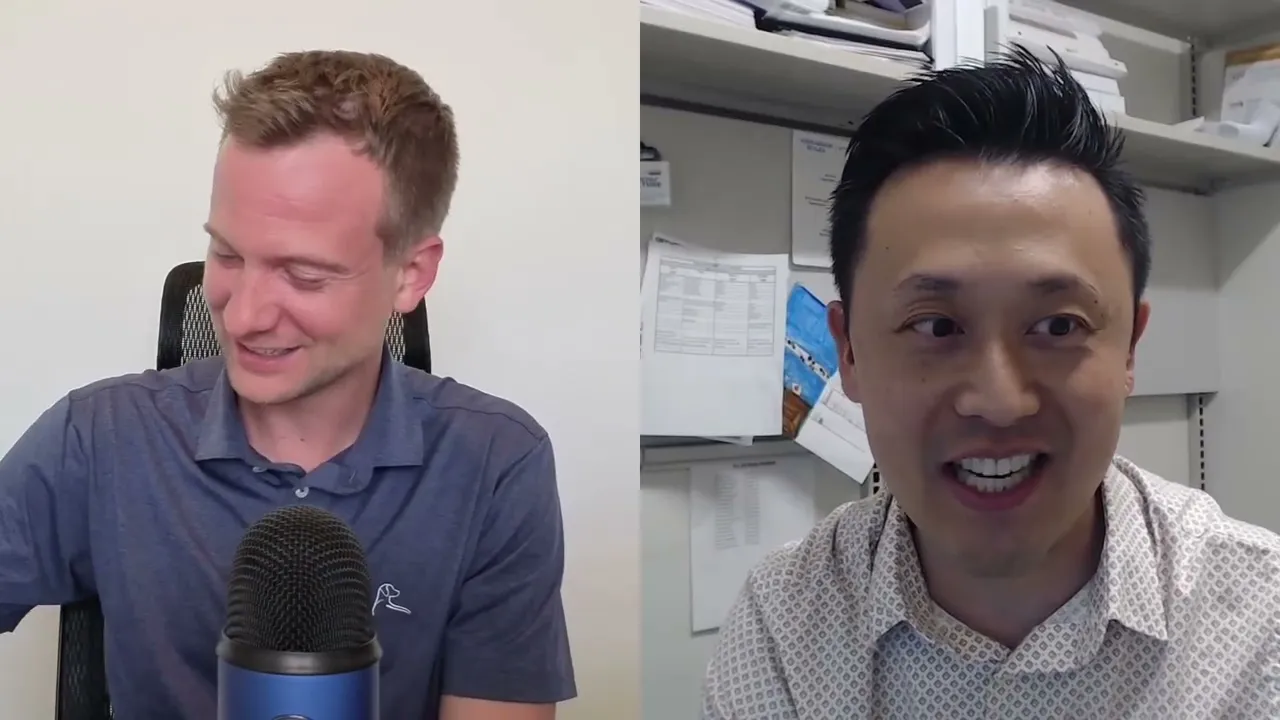
Ken Takenaka spent more than a decade as a certified athletic trainer and first assistant in the operating room before moving into operations at Orthopedic and Fracture Specialists, a 32-provider private practice in Portland. He walks through this year's EHR conversion — including the referral channels a migration quietly breaks — and why being honest that it would be rocky worked better than promising it wouldn't.
LATEST · E-- · —
0:00 / 0:00
Your EHR Already Knows Why Your Volume Dipped
The Growth Happens After Hours
Top takeaways
1. Operations is the brakes, and brakes are how you take the corner
Ken's framing for the growth-versus-operations tension is the best metaphor in the episode. Being the brakes sounds negative until you notice you can't navigate a turn without them. A great motor isn't enough. Braking well is what lets you reach the destination faster.
From training people to assist in the operating room, he brought over a line that carries the same idea: slow is smooth, and smooth is fast. Get it right the first time.
He's careful that this isn't about being the person who says no — or the person who says yes to everything. It's about making the best informed decision available, and building a culture where people feel able to raise both their concerns and their enthusiasm. In his role he plays both parts: sometimes the one saying let's really go, sometimes the one asking what the downstream impact is.
2. Culture starts with a clear sense of self, said out loud and repeatedly
Asked how you actually build that culture, Ken starts somewhere unexpected: knowing who you are and what your mission is. His own is specific — to help others achieve more than they thought they could — and it applies identically to patients, to the people who report to him, and to the people he reports to.
The mechanism is consistency. Not stated once at the start of the year, but repeated: here's what I'm trying to achieve, here's the culture I'm trying to build. And crucially, said, not just demonstrated through the work. The payoff of saying it out loud is that a good team will hold you accountable to it.
3. An EHR conversion is not a leadership project
OFS converted EHRs this year, after a couple of decades on the old system. Ken's central lesson: everyone has a perspective, each can be valuable, and the value arrives when you least expect it. Try to do it yourself and you will miss something. Yes, involving people costs more time — but it's an investment, and he considers the payoff immeasurable.
Two things made it work. Trust, built with a team he'd already worked with for a long time. And a spoken goal, tested against every decision: does this move us closer or further away? That test makes disagreement survivable — you can think something should be done differently and still honestly say it gets the group closer.
His rule for triage is the one most worth stealing: if it's important to somebody, pay attention to it. In an organization that size, the thing you'd dismiss as not important to you is critical to fifteen or twenty other people. Leading an implementation isn't about the leaders — it's about everyone being bought in.
4. During a migration, honesty beats morale-building
People dislike bad news, but they dislike uncertainty more. So OFS told staff plainly: it's going to be rocky, and here's exactly how. You'll be looking in two systems for a period of time. We know that's a lot of work, we know it's inefficient, and here's why we're asking. Here's what we did to make it least impactful. Can you get on board for three months? For six?
The alternative — promising everything will go great and life will be better — might build morale briefly, but Ken's point is what it costs later. Once you've oversold, people start asking what else isn't going to be what they were told.
5. The referral stream doesn't stop — it arrives somewhere you're not looking
Planning the conversion meant naming the things that could genuinely damage the organization, and a referral stream drying up sits at the top of that list. But the risk wasn't that referrals would stop. It was that OFS might not know every path they arrived by.
Community partners were faxing to an older number, using the old patient portal, sending to a legacy direct messaging address. So the team kept all of it running through the transition, checked those channels on a defined cadence, and had a documented process for moving what came in over to the new system. More work, deliberately taken on — and grounded in being realistic that new technology has limits, or that your understanding of it does.
6. Know your data structure well enough to know what to go looking for
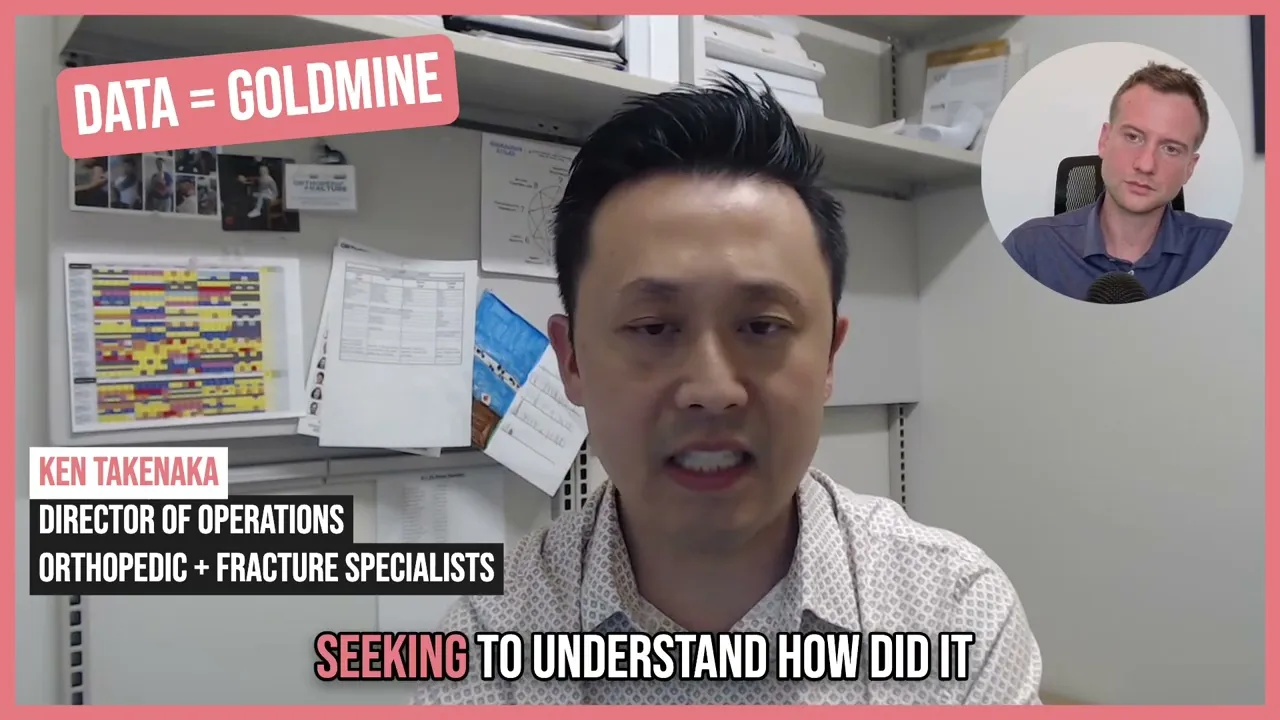
Ken treats understanding where the system puts information as a core operations skill. It's a goldmine if you know how to be inquisitive about it — and if you don't know where a piece of information lives, you may not know to look for it at all.
He also separates direct from indirect signals. A dip in patient volume is indirect: there could be any number of causes, and the job is being prepared to trace which one it actually is.
One detail says a lot about the team. Most of them don't want a PDF report — they want the raw, granular data, because there's a story in it. Their business analyst doesn't stop at what the data says but asks how it could answer a different or follow-up question, and, most importantly, whether it drives a change. In a period with access to overwhelming amounts of data, knowing what to do with it matters as much as reaching it.
Bonus: advice for moving up in practice operations
If it's important to the people in the role you aspire to, make it important to you. Ken's example: if you've heard someone say an acronym three or four times and you don't know what it means, learn it — you may only know MIPS as more questions to answer, but its recurrence tells you it matters.
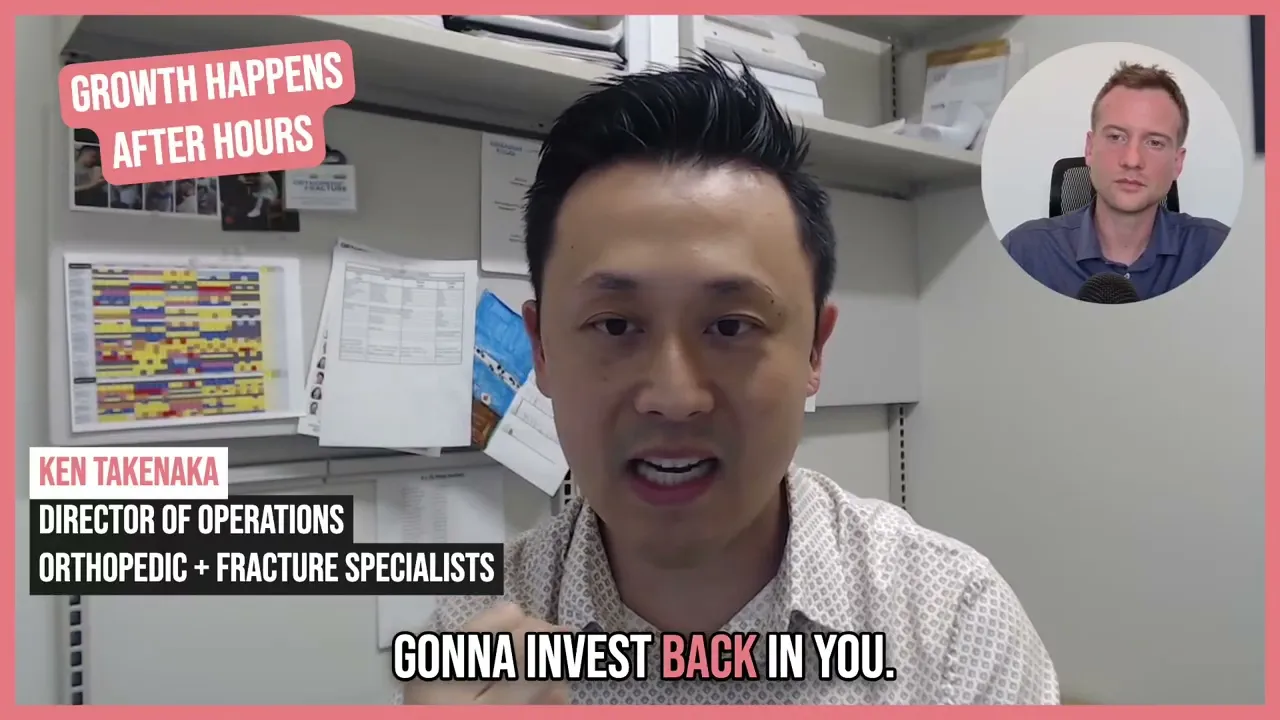
Then find mentors. Ask anyone in a leadership position and almost none will say they got there alone. And be honest about where growth happens: if you expect it inside your eight hours at work, it probably won't. It happens after hours — which is where the second clip from this episode gets its title. His closing note is an open door: if a stranger reached out saying they'd heard him on the podcast, he'd stop what he was doing and answer.
Questions this episode answers
How do you protect referral volume during an EHR migration?
Assume referrals will keep arriving by paths you've forgotten about. Ken Takenaka's team found community partners faxing to an older number, using the previous patient portal, and sending to a legacy direct messaging address. Rather than shutting those down at cutover, OFS kept every channel live, checked them on a defined cadence, and had a documented process for moving what arrived into the new system. The risk isn't referrals stopping — it's not knowing every way they come in.
What should you tell staff before a major system migration?
The truth, in detail. Ken Takenaka's view is that people dislike uncertainty more than they dislike bad news, so OFS told staff it would be rocky and exactly how — including that they'd be working in two systems for a period — along with why, what had been done to reduce the impact, and how long it would last. Promising a smooth transition might lift morale briefly, but once you've oversold, staff start questioning everything else they've been told.
How should an operations leader balance growth pressure against caution?
Ken Takenaka compares the role to the brakes on a car — which sounds negative until you realize you can't take a corner without them, and that braking well is what gets you to the destination faster. From his years in the operating room: slow is smooth, and smooth is fast. The job isn't saying no or saying yes, it's making the best informed decision available and building a culture where people feel free to raise concerns.
Scale referral operations to drive growth and efficiency
Full transcript
Transcript
[00:00:00] And specialty healthcare growth is not optional, but scaling with operational excellence. That's the hard part. I'm Joseph Zboch. This is Scaling Specialty Growth.
[00:00:08] Joe: Thanks for listening. Today's guest is Ken Takenaka, director of operations at Orthopedic and Fracture Specialists, a 32-provider private ortho in Portland, Oregon. Ken spent more than a decade as a certified athletic trainer and first assistant in the operating room before moving into operations leadership, so he brings a rare perspective to the work. It's this clinical fluency that shapes how he leads, because he understands what every decision feels like on the floor for both clinicians and the patients that they serve.
Ken, welcome.
[00:00:39] Ken: Thanks for having me.
[00:00:41] Joe: So, clinical background, now in operations — how has that shaped how you approach the job? We'll start there and kind of go deep.
[00:00:52] Ken: Yeah, I think it's been really foundational for me, simply because I understand, having been in the organization at multiple levels — whether that is direct patient care, supervisor, manager, director level — each of those experiences gives me a different perspective on the patient experience, direct patient care, and then into how does that impact the way that our employees show up to work?
And then from there, how does that impact our physicians? And then in a physician-owned practice, how does that ultimately show up across an entire organization and help shape its culture? And being able to communicate with the physicians and the employees in a way that really connects with them. So talking about clinical scenarios and understanding the impact that they have on the patients, I think is huge.
[00:01:43] Joe: Yeah. I don't know if I've ever explicitly had that thought. That's gotta feel like a superpower, being able to speak the same language as the physician owners. 'Cause it can be an interesting dynamic. Obviously the physician owners, they bring in a lot of the revenue and they need support in order to provide that care, so it can be an interesting relationship.
It sounds like the clinical background has been a real gift in terms of translating what needs to be done on the business side, the growth side, as it relates to your shared clinical background.
[00:02:13] Ken: Yeah, exactly. It's about being able to speak the same language, so that the verbiage that I use with physicians in my role today might be different than how I spoke to them when I was on the floor. But I can still speak both languages, you know what I mean? And so being able to shift gears like that in the middle of one conversation — we could be talking about a patient scenario and then lead right into something operational or something business related — that is something that somebody without a clinical background may not be able to do as well.
[00:02:43] Joe: Yeah, that's a good point. The same literal scenario can have the clinical slice, the operational slice, the patient experience slice, and you can context switch between those. That's really cool.
So obviously growth is really important, especially if you're an independent orthopedic practice in a competitive market. I'm sure you're not the only player in Portland. So when it comes to operations in your role, people like you in your role, you're really tasked with building the support systems to hit those aggressive growth goals. And it's easy to overlook what it really takes to make something successful. I saw you smile when that happened — I'm guessing I'm resonating.
So what is your mindset in terms of: hey, I'm all about growth too, I am not gonna kill the fun or be a blocker here. What's your take on how you support it? Give me your overall framework.
[00:03:40] Ken: I think you have to balance it really carefully. You're sort of like the brakes on a car, and at first that might sound like a negative, but you can't navigate a turn without the brakes. You can have a great motor, but if you don't have great brakes — and that's not to say that you're not gonna... That actually helps you get to your destination faster, right? So sometimes you have to slow down to speed up a little bit. In the operating room, what I used when I was training people to assist, the thing that I would say is, "Slow is smooth and smooth is fast."
[00:04:10] Joe: Smooth is fast. Yep.
[00:04:11] Ken: So get it right the first time. And it's not about saying no, and it's not about saying yes all the time. It's about making the best informed decision that you can make, and building a culture where people feel like they can speak up about their concerns and what they're excited about.
So I think it's about knowing who on your team is playing what role. And for me, I have to play all roles. In my position, I might sometimes have to be the one that says, "No, we gotta go, go, go. Let's really go." And then other times I might be the one that goes, "Ooh, let's just hit the brakes a little bit. Let's think about this. What's the downstream impact?"
[00:04:52] Joe: Do you have any tips or best practices or mindset when it comes to building that culture? Any specific rituals? I'm assuming — well, in fact I know — the root of it is gonna be some form of communication. But specifically with people on your team, whether they're reporting to you or your peers in leadership, what are some of the specific things that you're doing to really foster that sort of culture where you can have real conversation?
[00:05:18] Ken: I think it starts with a very, very clear sense of self. Who are you at your core, and what is your goal? What is your mission? Whether that is a personal one or a professional one, what does that look like? So for me, I wanted to have something that was very clear. And I start with the fact that what I wanna achieve is to help others achieve more than they thought they could.
That's my mission, and I can apply that to patients, to people that report to me, and people that I report to. I wanna help you achieve more than you thought you could.
So once you start there, then it is about, like you talked about, communication. I like to be consistent, meaning I don't wanna say it at the beginning of the year and never say it again. I wanna be consistently saying, "Here's what I'm trying to achieve. Here's the culture that I'm trying to build." I wanna be consistent with it, and then I wanna make sure that I'm saying it, not just acting it. Not just doing the work, but actually saying the words out loud. That repetition I think is really important, and then it's up to people around me — and they will hold me accountable. If I've built a good team, they will hold me accountable to that.
[00:06:33] Joe: If there is a project that really puts clear, consistent communication, being held accountable, moving fast when you need to, slowing down when you need to — it's an EHR migration. Take it from there, Ken. Tell us about it.
[00:06:49] Ken: Yeah. Boy. So we had an EHR conversion this year, and I think the big thing to learn is that everyone has a perspective, and each of those perspectives can be so valuable, and the value can come when you're least expecting it. If you try to do everything yourself, you're probably gonna miss something.
And yeah, is it a greater time investment? Absolutely. But it is an investment, and the payoff is immeasurable. So I think being able to undertake an EHR conversion with a team that I had already been working with for a long time was a huge advantage, because we all trusted one another, and I think trust is absolutely key.
Everyone has to know that you're all trying to reach a similar goal. And when you say what that goal is, when you speak it into existence and you say, "Does every decision that we make, does it move us closer to that goal or further away from that goal?" — then the decision-making becomes a little bit more clear, even if you don't agree with it. Even if you say, "I think we could do this differently," you can honestly say, "But it does get us closer to our goal. It absolutely does."
Some of the things that I really learned about this process were: if it's important to somebody, pay attention to it. Because in an organization this size, if you say, "Well, that's not really that important to me," there's probably about 15 or 20 other people who that's critical for. I think involving as many people as possible to have an input gets them to buy into the process as well. So leading through an EHR implementation isn't just about the leaders. It's about every single person in the organization being bought in and having a clear vision.
[00:08:41] Joe: Yeah. The scope in rebuilding integrations, rebuilding the workflow — OFS, you guys have an ASC, you have MRI. Tell me a little bit about what it looked like to... Something you said in our conversation before this was really about maintaining the volume without everybody just throwing up their hands and being like, "I'm out." How'd you strike that balance, calling back to the balance from before?
[00:09:09] Ken: It was about honesty. It really was. As much as people don't like bad things, people really don't like uncertainty. And so if you say, "Yes, it's going to be rocky, and here's how it's going to be rocky. Yes, you're going to have to do X, Y, and Z. For a period of time, you're gonna have to look in two systems, and I know that's a lot of work. I know it, and I know it's gonna be painful, and I know it's inefficient. Here's the why we're asking you to do this. Here's all the things that we tried to do to make it least impactful for you. Can you get on board with it? Can you do this for three months? Can you do this for six months?"
And I think having that level of transparency and just being honest — and not saying, "Hey, I think everything's gonna go great. Your life's gonna be so much better. We're gonna have no problems" — that might work in terms of building morale in the short term, but if you've oversold that, then they start questioning, "Okay, well, what else isn't gonna be what I thought it was?"
So I think removing that uncertainty, even if it's, "Hey, I'm pretty certain that this is gonna be hard before it gets easy."
[00:10:15] Joe: Yeah, I think that's worth repeating. I've heard that clarity is kindness, in speaking with certainty. The interesting nuance that you just shared is it's not just certainty in terms of everything's gonna be fine and everything's gonna be roses, 'cause that's shallow ground. It's certainty of — it's going to be a rocky road, here's what we've done to mitigate that ahead of time, so when it does happen, we'll be in there together and working it through. I think that's a really great perspective, 'cause not everything goes right.
You're out of the woods now in many ways. But tell me a little bit about what happened on the referral side of things. We talked a little bit about some of these referral patterns, and you knew with certainty that there was going to be some of this rocky road on this front. Tell me a little bit about it, how you worked with the team that you built trust with to make it through some of those changes.
[00:11:12] Ken: Yeah. When you work on a project like this, you try to anticipate all the challenges that you're gonna face, and you start thinking, "Okay, what are the things that are absolute killers in an organization?" So if your referral stream dries up, that's a big problem. That is a critical problem.
And on the other hand, we were certain that was a real possibility — not because the referrals were gonna stop coming in, but because we might not know all the different ways that they were going to come in. So, for example, we had community partners who maybe were faxing referrals to a different number, or were using our old patient portal, or an old direct messaging address.
But we anticipated all those things, and we said, "We're gonna continue to keep those up and running, and we're gonna check them, and we're gonna check them on this cadence, and here's why we're gonna check it, and here's the process that we're gonna have for moving those over, and here's how we're gonna handle it."
Again, added work. But I think being realistic about the fact that there are limitations to not only newer technologies — whether it's a limitation of the technology or a limitation of your understanding of it — just being realistic about that fact, and making sure that you have a solid plan for it.
Knowing how to measure something, what to measure, and how to make sense of it, I think that's really important as well. You have to know what you're looking for that is a red flag, 'cause some of these things are directly measurable and some of them are indirectly measurable. So for example, if patient volume goes down, that's sort of indirect. There could be a number of reasons why that is, and you've gotta be prepared to know where each of those is coming from and how to identify exactly what the problem is.
[00:13:01] Joe: Yeah. And the nature of the conversation and the balance around growth and operations — to go fast around a corner, you need to be really good at when to brake and when to step on the throttle. So tell me a little bit about some of those metrics, some of those reporting systems, things you've put in place. Not just related to the EHR migration or that first project, but in general, to say, as an operational team, here's where we need to focus in order to support this growth — almost like an early warning indicator of work that needs to be done to support the growth.
[00:13:41] Ken: Yeah. It really is about understanding data structure. And as an operations leader, I think that's a critical thing. You've gotta know how your system thinks, where it's putting information, because it's an absolute goldmine if you know how to be inquisitive about it. So if you don't know where certain pieces of information are, you may not know to go looking for it, right?
So I think that curiosity is really important for somebody in my role. Not just identifying problems, but seeking to understand how did it occur, and what pieces of information could I have had to help prevent this or to make it better in the future.
We have some really, really great minds on our team who think about data in that way on a very regular basis, and we share that information. And most of our team members, they don't want just a PDF report. What they want is the raw data. They say, "I wanna see the final product, but I wanna see the granular data too, because there's a story to be told there." And when you have a team that's that invested in understanding the nooks and crannies, I think you just get a much, much clearer picture of the health of your organization.
So we have a business analyst who takes a look at all that data, but is super smart — very intelligent — and doesn't just look at what the data's telling you, but says, "How can I use this in a different way? How can I help answer different questions or follow-up questions?" And then most importantly, does the data drive a change in some way? I think we're in a place and time where we have access to an overwhelming amount of data, and knowing what to do with it is just as important as being able to get to it.
[00:15:35] Joe: Now that you're through that major win of the EHR conversion, what do you have your eyes on next? Do you think about it in terms of something to fix to enable future growth, or there's an initiative that needs to be built? I'm assuming maybe it's a balance. What's next?
[00:15:55] Ken: Yeah, it's definitely a balance. It is about maximizing what we have. We are on a new EHR. We were on the old system for a couple of decades. So leveraging the new technologies to help us grow, get more efficient — and we've already seen the benefits of that. We've become more efficient in some areas, and in other areas, we feel like, hey, we still have room to maximize what we're currently doing.
I think that's probably the primary thing that we're looking to do: get really, really good at using and leveraging this system to deliver care in a much more efficient way, and allow the technology to do the work that tech is supposed to do so that we can focus on the patients and their experience.
And I think that's a really key thing. We can talk about operational efficiencies, and we can talk about the numbers, and we can talk about all of that, but at the end of the day, healthcare is a service profession, and we are here to serve our patients. How do we remove barriers to patient access? How do we make it easiest for us to meet the patients where they are?
People are coming to outpatient orthopedics not because they want to, but because they kind of need to. Something is happening in their life that they don't like, that their body is limiting them in some way. How do we meet them there? Sometimes it's a chronic problem — "Ah, yeah, it's been bothering me a long time" — and other times it's completely unexpected. Nobody expects to fall and break an arm. And so when the need arises, how can we be there for our patients in a way that doesn't feel like, "Well, I have to fill out all these forms"? How can we help navigate a system so that we can really focus on that patient and their recovery?
[00:17:41] Joe: As a last question — making it to where you are now from the clinical path I think has suited you really well. Others take different paths. For someone that is looking to make the next step in orthopedic leadership on the operational side, what advice would you give?
[00:17:56] Ken: The advice I would give is, look at the people that are in a similar role or position as you. Look at people who are in a role or position that you aspire to. And if it's important to them, make it important to you.
In other words, if they're talking about some acronym and you have no idea what that acronym is, but you've heard them say it three or four times, you should know what that acronym means, because it's clearly somewhat important. Being able to insert yourself and understand why somebody thinks MIPS is important when I don't even know what that means — all I know is I have to answer more questions, I have to do more things. But it must be pretty important, right? And if you take it from that lens and say, "What's critical to the person that I aspire to be?" I think that'll help you get to where you wanna be.
The other piece of advice that I would give is find strong mentors. If you were to go around asking people in leadership positions, very few, if any, would tell you that they got there themselves. The vast majority, if not all of them, are gonna say, "I couldn't have gotten here without so and so." Find a mentor, invest in yourself. Invest in folks that are gonna invest back in you. There are so many resources out there, whether they're leadership courses, personal development courses. There are tons of resources out there.
If you expect to grow within the eight hours that you are at work, it probably won't happen. Growth is gonna happen after hours. That's when you're really gonna learn more about yourself, learn more about how to achieve what you want to achieve. And don't be shy about it. If anybody out there were to reach out to me and said, "Hey, Ken, I heard you on that podcast, and I don't know you at all, but here's what I'm trying to do," I would stop what I was doing, and I would answer that. So complete strangers will go out of their way to help if you're willing to ask.
[00:19:55] Joe: Ken Takenaka is on LinkedIn. Send him a DM. Ken, thank you so much for your time. I really appreciated the conversation.
[00:20:04] Ken: Thank you. It was a pleasure.
[00:20:06] Hey, it's Joe. Thanks for listening. If you like what you hear, share with the peer, and if you're looking to scale referral operations to drive growth and efficiency, visit hatchcare.com.