Workers’ Comp Referral & Case Management

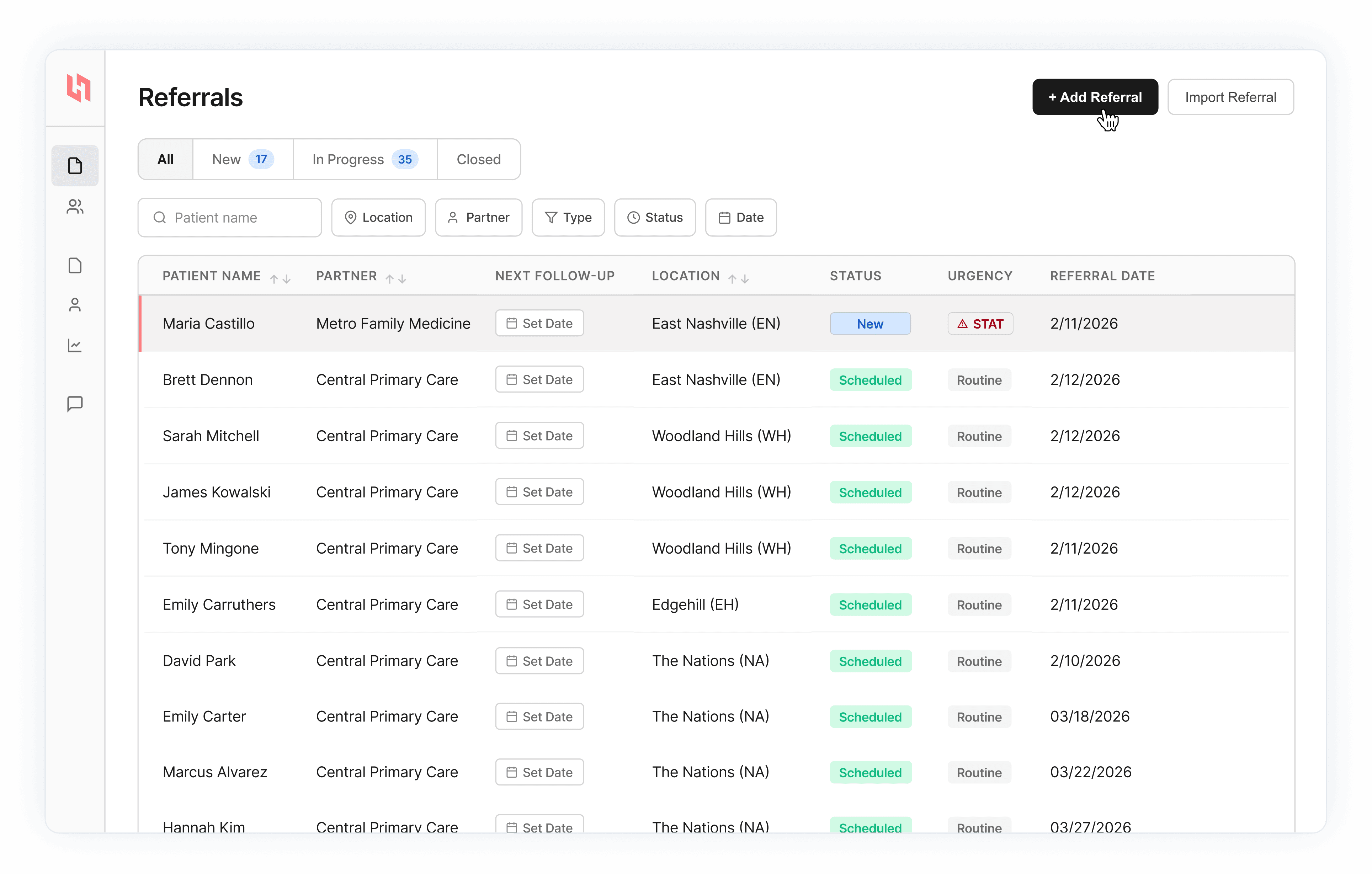

The Problem
The Solution
Referral Concierge
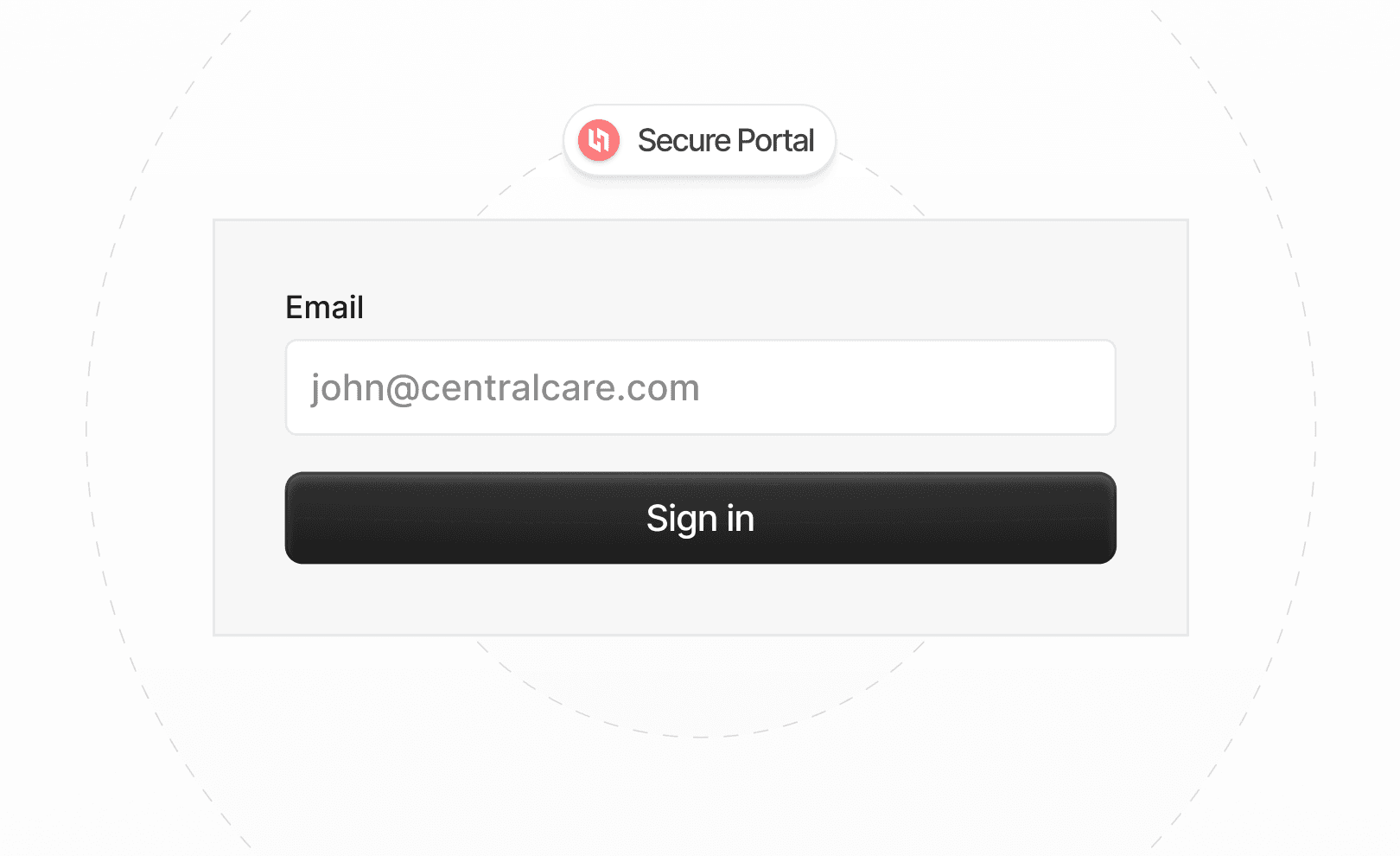
Partners send referrals the way they always have, by fax, email, or phone, including a dedicated Hatch address they can forward into. Referral Concierge does the rest. When a status changes, a document lands, or a message is sent, it updates every assigned stakeholder by email. One click, no password, and they are on the case.
No account, no password, no app
No change to how they submit referrals
Access at whatever hour they work







Case Continuity
Adjuster and nurse case manager turnover is high, and cases stall when the history lives in one person’s inbox. In Hatch, the history, documents, messages, and appointments live with the case, and every attached stakeholder sees the same current status.
Multi-stakeholder case assignment
History, documents, and messages in one record
In-case messaging with files attached
WC Intake
Every case starts quick and clean.
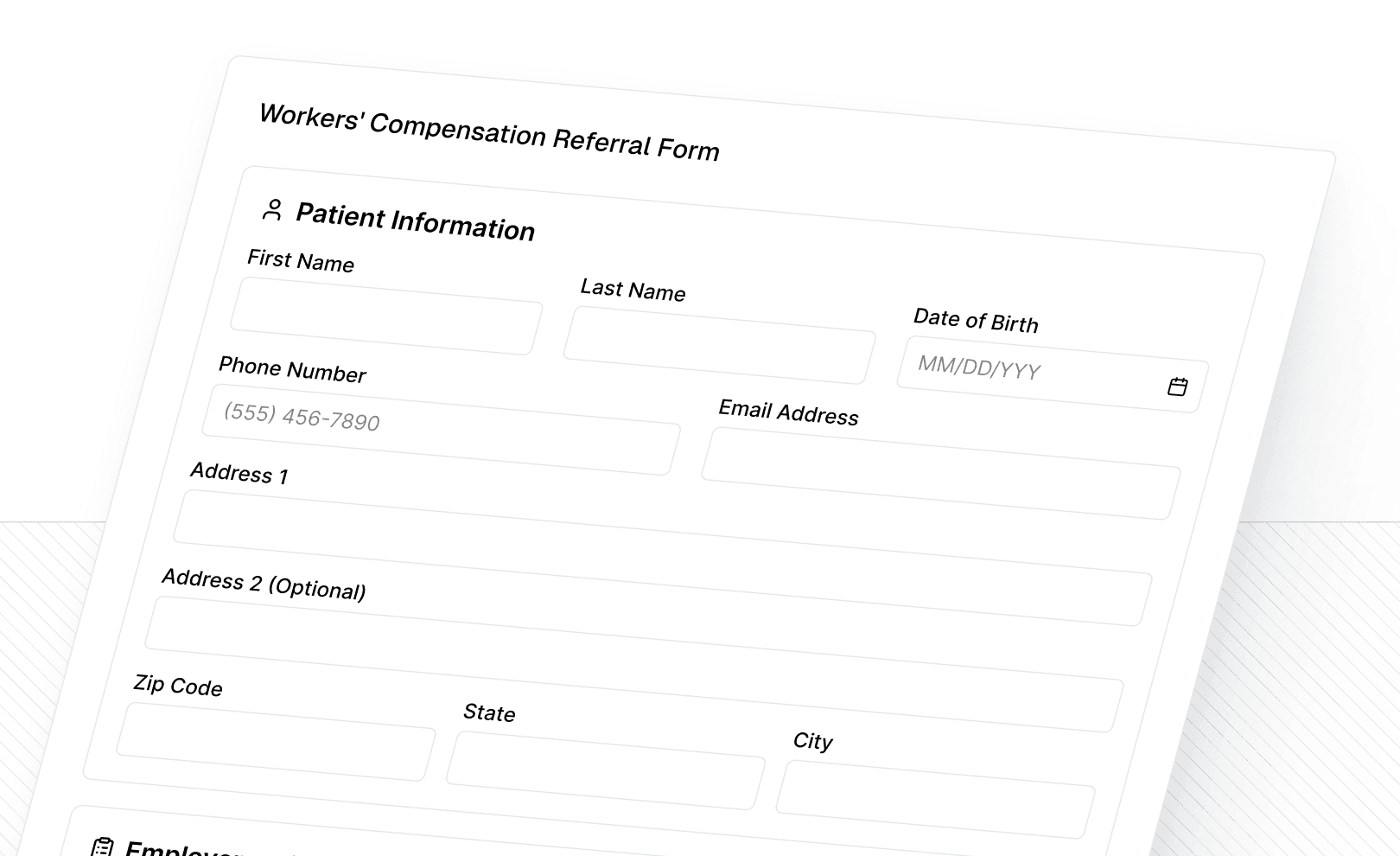
Hatch is trained on workers’ comp documents and extracts the claim number, date of injury, state of injury, employer, adjuster, and billing information as the referral arrives. Your team reviews rather than transcribes, and missing information is flagged before it becomes a denied authorization or a delayed payment.
WC-specific intake fields and digital forms
AI extraction with human review
Fax packets split, labeled, and matched to the right case
Duplicate detection and urgency flagging
Chart creation and document upload for integrated EHRs

Channel Visibility
Workers’ comp arrives through relationships almost no group can measure. Hatch attributes every case to its source, person and organization, so a steady decline from one TPA becomes a question you can ask before the relationship is gone.
Volume by TPA, employer, and case manager, with trends
Body part mix by partner
Surgical conversion by referring partner
Time from referral to appointment and case completion

What makes workers' comp different from general referral management in Hatch?
The partner side. Adjusters, nurse case managers, employers, and sometimes attorneys all need status, and none of them have access to your EHR. Hatch adds WC-specific intake fields, multi-stakeholder assignment, and automatic updates to everyone on the case.
Does Hatch replace our EHR?
No. Providers stay in the EHR. Hatch handles intake, communication, tracking, and the partner experience, and creates the chart and uploads documents for integrated EHRs.
What if our referral sources still fax or email?
That is how most workers’ comp arrives, and none of it needs to change. Hatch reads the document, extracts the case information, and your team confirms it.
How does Referral Concierge work for our partners?
It sends the update to them. When something changes on a case, the assigned adjuster or case manager gets an email, and one click, with no password or account, opens the case with its status, documents, and messages.
Our workers’ comp problem is getting paid, not getting referrals.
Hatch is not a billing system. It affects the information a claim depends on, captured and verified at intake, which is where authorization delays and missing-information denials start. If the problem is collecting on correctly documented cases, Hatch is not the answer.