
All Episodes
EPISODE 21
·
·
25:51
Operational excellence is the rate limiting factor for growth
Cecily Sheats
·
Executive Director,
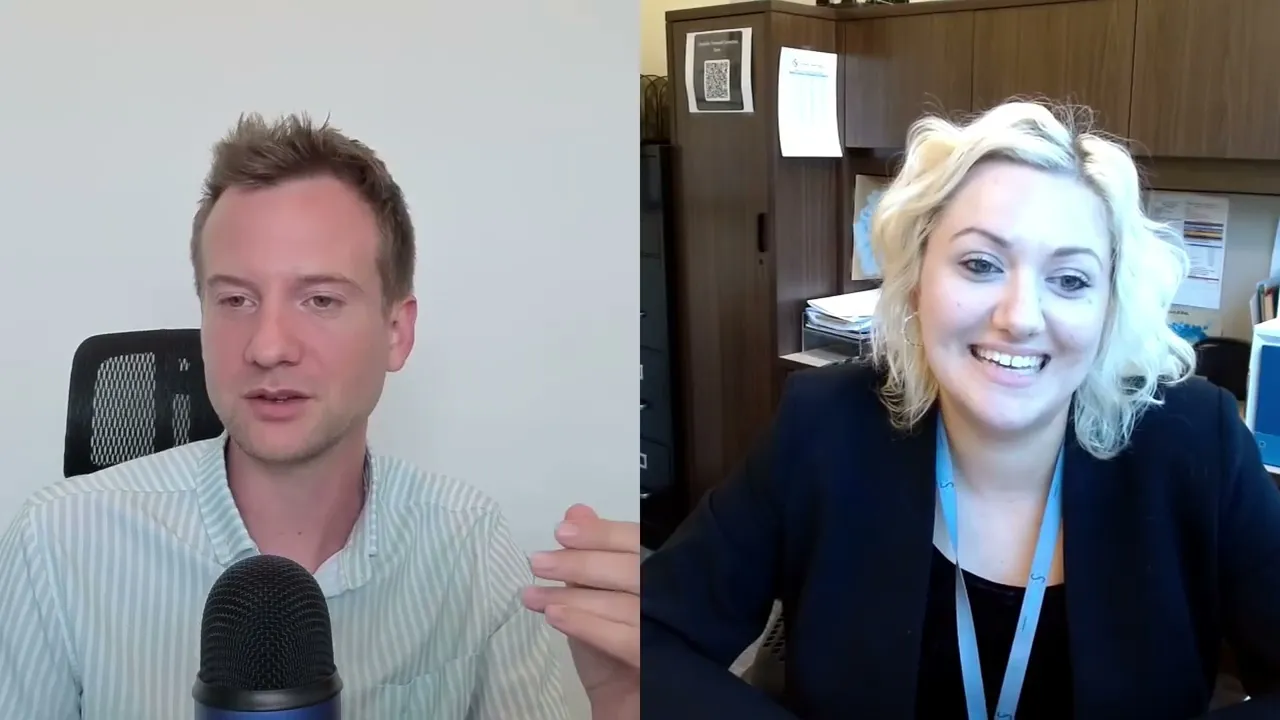
Cecily Sheats, executive director of Creekside Surgery Center in Anchorage, argues operational excellence is a prerequisite for growth, not a reward for it. She walks through the process improvement available before spending on FTEs or technology, the three-legged stool behind her employee incentive model, and how she builds a benchmark from scratch when one doesn't exist.
LATEST · E-- · —
0:00 / 0:00
What Got Us Here Is Not Going to Get Us There
Top takeaways
1. Alaska makes operational excellence a survival requirement, not a nice-to-have
Cecily Sheats runs Creekside Surgery Center, a four-OR ambulatory surgery center in Anchorage seeing up to 3,000 patients a year. The nearest referral centers for critical care are often Seattle or Portland, and patients travel farther than Dallas to New York City for services many regions take for granted. With about 800 miles of paved roadway in the entire state and an Arctic climate, you cannot solve a capability gap by posting an open role and waiting for someone to move there.
Her framing: the rate limiting factor for growth is usually the lack of operational excellence, not the lack of demand. A solid foundation has to exist before growth is even possible.
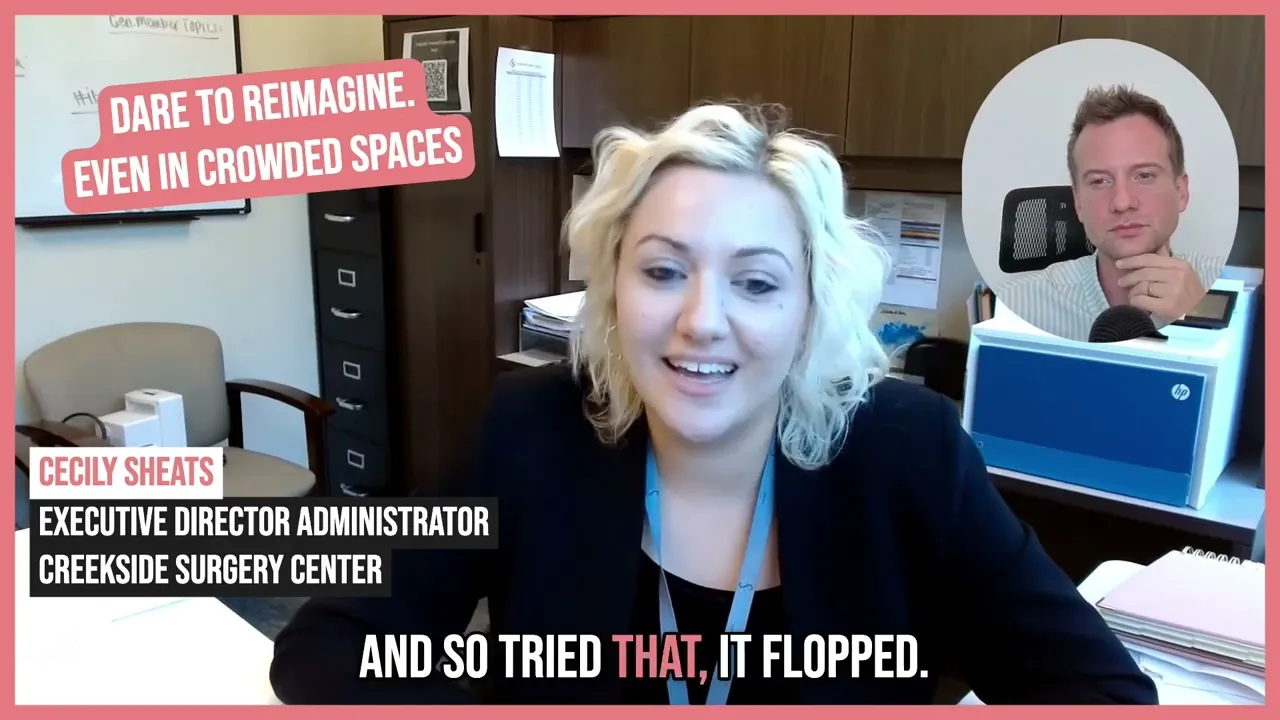
2. "Dare to reimagine, even in crowded spaces"
Cecily found the line in a LinkedIn comment on a Simon Sinek post, and it's become central to how she runs her team. Healthcare culture defaults to we've done this before, or so-and-so tried that and it flopped, we can't do that. Her counter is giving the whole team a seat at the table and a safe space to throw ideas at the wall, including when she herself tries something publicly and it fails, she comes back and tells the team so, humbly.
Her underlying belief: there's no permanence in organizational excellence. What got the team here will not get them to the next stage. It's constant reiteration, not a one-time fix.
3. Strategic planning that doesn't end up on a shelf
Rather than an annual document that gets boxed and forgotten, Cecily runs department-level strategic planning built on genuine feedback loops, telling the team what was heard last year (more transparency, more team-building) and what's been done about it, then going deeper into department-specific challenges and opportunities.
The unconventional part: sticky notes, planting succulents, a three-minute pipe-cleaner tower competition, rock painting, and a five-question survey fed into AI to generate meme animals for each team member, posted in the break room as the "Creekside Spirit Animals." Playful on the surface, but the mechanism is genuine: team members bring forward both wild ideas and hard truths because they trust the process will actually be heard.
4. A three-legged stool behind the incentive model
Operational excellence and growth aren't competing priorities for Cecily, they're tangential to each other, and the incentive model reflects that directly. First leg: the organizational goal, tied to patient satisfaction scores that are tracked and posted anonymously in the break room, not just measured to check a box. Second leg: personal accountability, including attendance, since one person's tardiness cascades into the rest of the team scrambling. Third leg: department-level SMART goals, submitted each first quarter and reviewed with support throughout the year.
The first year running this model, Cecily calls the results genuinely inspiring, teams brought creativity and energy to real access and quality-improvement work.
5. Building a benchmark when none exists
Cecily's starting question when there's no industry benchmark: what are we solving for. From there, she builds a unit of measurement grounded in real data. One example: mapping the physical distance of critical equipment from the emergency department, converting it into transport time, staff hours, and injury risk, then modeling what cutting that distance in half would actually change. Catchy, concrete data storytelling makes the case where no external benchmark exists to point to.
6. Mapping the referral journey end to end, even without a shared EMR
Not every technology gap has a clean fix. In a perfect world every partner practice would share the same EMR, but that isn't reality. Cecily's team instead works through Lean Six Sigma process mapping with referral partners directly, walking the entire patient journey from primary care through specialty referral through prior authorization to arrival. Her framing for staff: patients have often waited months, dealing with chronic pain, by the time they reach Creekside. The team is who they've been waiting for.
Bonus: "hey, great job" and "hey, I noticed" are foundationally different
Asked for a single piece of advice, Cecily draws a sharp line between generic praise and specific recognition, noticing that someone jumped into a bay, helped turn over a room, and supported a family on their way out the door, and naming it. Her framing for why this is rare right now: the ground is literally shifting beneath everyone in healthcare, and leaders still have to look up and notice their people. She leads by walking around every morning before touching her own work, and has replaced one-page performance evaluations with summer performance development sessions built on one standard: the employee has to walk away with something.
Questions this episode answers
What is the rate limiting factor for growth in a healthcare practice?
Usually operational excellence, not demand. Cecily Sheats, executive director of Creekside Surgery Center in Anchorage, argues that a solid operational foundation has to exist before growth is even possible, and that the process improvement available before spending on new hires or technology is often the highest-leverage first step. In a market like Alaska, where you cannot simply post an open role and quickly fill it, this becomes unavoidable rather than optional.
How can a healthcare team build a culture that welcomes new ideas?
By giving the whole team a genuine seat at the table and normalizing failure, not just success. Cecily Sheats cites a line she found on LinkedIn, dare to reimagine even in crowded spaces, as a counter to healthcare's default culture of we tried that before and it flopped. When she personally tries something in front of her team and it fails, she comes back and tells them so. Her point is that organizational excellence has no permanence, what got a team to its current state will not get it to the next one.
How should an employee incentive model be structured in healthcare?
Around a three-legged stool, in Cecily Sheats's framing at Creekside Surgery Center: an organizational goal (tied to patient satisfaction scores, tracked and shared transparently), personal accountability (attendance and reliability, since one person's lapse cascades onto the whole team), and department-level SMART goals set and reviewed each year. She argues operational excellence and growth are not competing priorities but tangential to each other, and the incentive model should reflect that directly.
How do you set goals when there is no industry benchmark to measure against?
Start with the question, what are we solving for, then build a unit of measurement from real data rather than an external comparison. Cecily Sheats describes mapping the physical distance of critical equipment from the emergency department at Creekside Surgery Center into transport time, staff hours, and injury risk, then modeling the impact of cutting that distance in half. Concrete, specific data storytelling replaces a benchmark that simply doesn't exist yet in a market like rural Alaska.
How can healthcare leaders improve staff recognition and retention?
By replacing generic praise with specific, witnessed recognition. Cecily Sheats contrasts hey, great job with naming exactly what someone did, for example noticing them step into a bay to help turn over a room and support a family on their way out, and calls the two foundationally different. She leads by walking around every morning before starting her own work, and has replaced one-page performance evaluations with development sessions built on a single standard: the employee has to walk away with something.
Scale referral operations to drive growth and efficiency
Full transcript
Transcript
[00:00:00] And specialty healthcare growth is not optional, but scaling with operational excellence. That's the hard part. I'm Joe Zboch. This is Scaling Specialty Growth.
[00:00:09] Joe: Thanks for listening. Today's guest is Cecily Sheats. She's the executive director and administrator at Creekside Surgery Center in Anchorage, a four OR ambulatory surgery center with 50 staff handling up to 3,000 patients a year. Cecily also serves as president of the Alaska Healthcare Executives Network, and before Creekside she ran cardiac, neuroscience, and orthopedic service lines for Providence in Anchorage.
[00:00:30] Joe: Now, delivering care in Alaska comes with logistical and cost realities that really don't exist in the lower 48, and that's a lot of what we're getting into today. Cecily, welcome.
[00:00:39] Cecily: Thank you so much for having me. I'm really excited for today's conversation and excited to be talking about something I'm so passionate about. Alaska, if you haven't been, you have to go. And care delivery here is unlike anywhere else. I've been privileged to work in healthcare across the country, from California to Louisiana to Colorado to now Alaska, really getting to see how healthcare delivery models evolve with the environment.
[00:01:08] Cecily: And yet there are still some traditional, tried-and-true benchmarks and goalposts that as organizations delivering healthcare we all aim to achieve. In Alaska, it's unlike anywhere else in that patients are often traveling a distance greater than Dallas to New York City to access critical healthcare services — cardiac intervention, stroke intervention, CT scanners. We only have about 800 miles of paved roadway, incredibly harsh climates, and our environment includes the Arctic Circle.
[00:01:46] Joe: On the homepage of your website there are literally dogs lined up — and that focus on people and the logistics realities is exactly what I wanted to dive into. You said something interesting, that operational excellence is like a prerequisite, absolutely required for any growth down the road, and that there's a lot of process improvement that can happen before you need to invest in FTEs or technology.
[00:02:46] Joe: So tell me more from an operational reality standpoint — what are the things you have to deal with and build around, in terms of access, experience, and the people side of things, and how that permeates through the culture at Creekside?
[00:03:05] Cecily: Yeah, absolutely, happy to talk about this. Fundamentally, being in Alaska, there's this community investment in healthcare delivery for Alaskans, because there's nowhere else — the nearest referral centers are often Seattle or Portland, a significant distance away for patients in a place of critical need. So there's a deep, resounding mission across our entire community to serve Alaskans to the best of our ability, and quality improvement is embedded in every healthcare organization here as a result. We're fortunate because there's such a deep-seated understanding that we are all each other has, and partnerships, collaboration, and community involvement matter.
[00:04:00] Cecily: It circles back to, my kids will access a pediatric cardiologist in the state of Alaska, it's so important for us to have a pediatric orthopedic surgeon in the state despite maybe not having a huge population requirement for that. So when you talk about organizational excellence, you have to have a solid foundation before you grow. And oftentimes the rate limiting factor for that growth is the lack of operational excellence. That's the first thing to circle back to and evaluate — where are we making it difficult, why do we always do it this way, have we thought about throwing spaghetti at the wall and trying something new.
[00:04:48] Cecily: I have a favorite quote I found from someone commenting on a Simon Sinek LinkedIn post — dare to reimagine, even in crowded spaces. That's so fundamentally powerful in healthcare, because there's a lot of we've done this before, we tried it and it didn't work, so-and-so tried that, it flopped, we can't do that.
[00:05:11] Cecily: But the reimagining component — the excitement, the engagement, really making sure your whole team has a seat at the table to vet out creative, out-of-the-box, wild ideas, and they feel like they have a safe space to throw spaghetti at the wall and see what sticks. There's no permanence in organizational excellence, because it isn't permanent. What got us here is not going to get us there. It's constant reiteration, over and over. I try to embed that ideation into our culture — I tell my team all the time, and anyone on my team watching this podcast will attest to how ridiculous and outrageous my approach is, but it's because I want everyone to feel safe.
[00:06:15] Cecily: If I'm comfortable standing up front or sitting beside my team and saying, hey guys, can we try this, it may or may not work, and then it flops, I can come back humbly and say, hey guys, this totally didn't work.
[00:06:32] Joe: Tell me about the sticky notes in the break room, related to the early parts of the strategic planning process. That's something I really appreciate about your approach — it's very people-forward, with open lines of communication, and you have a unique way of making sure you're getting the full story without things being held back.
[00:07:09] Cecily: For sure. Another thing I'm super passionate about is strategic planning — not in the sense that it becomes a piece of paper on a shelf collecting dust. We did the strategic planning, box checked, moving on. The way I like to invite strategic planning is looking at a 360-degree focus as an organization, and the heart of that is what my team sees. Really inviting them into the process — where are we going, but how do we understand that if we don't understand where we've been and where we are.
[00:07:46] Cecily: So we have open dialogues — this time last year, I heard from you that you wanted more transparency and communication, more opportunities for team-building. Here's what we've done about that. Now we're not just having broad team discussions, we're having department-level discussions getting into the minutiae of specific challenges, obstacles, and opportunities for every department and role. How do we make it better, how do we keep improving.
[00:08:25] Cecily: And beyond that, inviting wild activities at the beginning of every team meeting — the team rolls their eyes, but I know they secretly love it. We planted succulents, we were all gardeners for a day talking about the beauty of growth: anything is possible, but we have to see those possibilities, and invite them by recognizing everyone's perspective is foundationally important.
[00:08:52] Cecily: We did an activity with pipe cleaners and paperclips, three minutes on the clock, teams of two competing to build the tallest tower. We do rock painting, silently lining up chronologically by birthday just to get to know the team better. We had a five-question survey — first job, night owl or morning person, a few words describing your work — and fed it into AI, which kicked out meme animal pictures. We called it the Creekside Spirit Animals, posted on the break room wall, and everyone had to guess who was who.
[00:09:59] Cecily: So we really invited that feedback, and kept communicating back — here's what we're doing, we heard you. Strategic planning is no different. It's actually the most important work because it guides our direction, but we need trust and awareness that we've built an infrastructure where every team member brings forward not just wild, funny ideas, but also the real hard truths.
[00:10:38] Joe: Let me jump in, because for anyone listening, they've heard how you're quite literally applying your philosophy — bringing the team together, open communication, doing fun things. From an outcome standpoint, your turnover is unrivaled. Organizations in the lower 48 would be jealous that you've retained team members for so long. Geographically speaking in Alaska, people being a focal point is required — you said we are all that we have. Attracting physicians when you want to grow must be quite a task.
[00:11:30] Joe: You talked a lot about soft skills, but I don't want you to underplay what you've done to harden some of those into results — you have an employee incentive model that plays a huge part in ultimately how you take care of people and stay at a rate of excellence for quality, experience, access, and outcomes that's actually required.
[00:12:26] Cecily: Yeah. Going back to operational excellence and growth — they're not competing priorities, they're tangential to one another. When we talk about an employee incentive model, many organizations have one and it evolves over time. But truly capturing the foundational emphasis of a people-first culture, we did that with a three-legged stool model.
[00:13:00] Cecily: The first leg is our organizational overarching goal, which has everything to do with how patients feel when they walk through our doors, how they experience our care. When we're looking to get Alaskans back to doing what they love, we have to measure ourselves against a benchmark of satisfaction scores, monitored, not just measured to check a box. We post the anonymous feedback on the wall in our break room so we can truly see where we stand. Achieving that unlocks one of the three legs of the incentive model.
[00:13:45] Cecily: The second leg of a people-first culture is personal accountability when we show up to work — attendance expectations included. If you're tardy every day starting a room and your team is running around hyperventilating to get everything done, that's unfair, and it doesn't build the culture we need to thrive and grow.
[00:14:31] Cecily: The third leg is that as an organization, our departments have to work together, focused on true north goals we design ourselves. There's a process in the first quarter of each year where each team develops its own goal — it has to be a SMART goal, a team goal everyone can participate in, specific, measurable, achievable, relevant, time-bound. They submit it to me and our clinical director, we review it, and offer support throughout the year so each team is set up for success.
[00:15:26] Cecily: At the end of last year, our first year running something like this, it was downright inspiring. The work our team did on access improvements and quality improvement, and just the act of working together toward a focus, energized, bringing ideas and creativity, refining as they went, was brilliant.
[00:16:00] Joe: You mentioned SMART goals — I'm curious how you measure success when there's not really a benchmark in place. The goal can still be SMART, but given the logistics experience you've had, running access in a geographically tough environment, what mindset do you have when this hasn't been done before and there are no benchmarks?
[00:16:43] Cecily: That's a great question. When you don't have a benchmark, the first question becomes, what are we solving for. Is it increasing access and capacity? Is it reducing door-to-needle times for emergent interventions? What are we solving for, and then developing a unit of measurement, getting into the data of the problem.
[00:17:06] Cecily: One example: we looked at the distance of some critical equipment from the emergency department, getting into the weeds on the number of minutes it takes to transport a patient from A to B, the distance equivalent to a football field or whatever it was. We added layers of descriptive, catchy data storytelling to speak to what we were solving for — how many staff hours does that journey take if we make that trip this many times, are there injuries associated with it, what would it look like cut in half.
[00:18:07] Joe: When there's not a benchmark and nobody's done this before — in healthcare I'd call it not wanting to be the first, rather than monkey-see-monkey-do — you have to be the first. You've got a clear way of mapping what needs to exist: what are we solving for, what data do we have, what data do we need to fill in the next blank. Talking about moving forward without a clearly charted path, what does the future hold for you and Creekside?
[00:18:56] Cecily: I think what we're looking forward to, and this is probably true across the spectrum, is how do we leverage technology in every way we can to make a better experience for patients and a more seamless experience for our referral partners — going back to where do we make it hard, how do we ease the way, how do we meet different practices where they are while still capturing everything we need.
[00:19:25] Cecily: In a perfect world everybody would have the same EMR and it would all talk to each other beautifully, but that isn't real. How we navigate that, to help fill in those blanks and grow capacity, not just for us but for the referring practices too — because growth isn't just, hey, our numbers need to beat last year's. We can grow and expand capacity through process improvement, looking at workflows, doing some Lean Six Sigma work beginning to end with our referral partners, understanding how the whole process starts for our patients and every step they walk through to get to see us.
[00:20:33] Cecily: One thing I constantly share with our staff: patients have been waiting a long time for us. They go to primary care, wait for a specialty visit, wait for prior authorization, and months down the road they've been dealing with chronic pain and then they arrive. We're the team they've been waiting for, helping them get back to doing what they love. So how do we support that arrival by being an invested partner who truly understands the workflow end to end.
[00:21:20] Joe: I think that's a great cap to the conversation, bringing us full circle — it starts and ends with people, and you have to have open lines of communication to actually meet people where they are. It's not a selfish thing at all, it's entirely about figuring out ways to serve other people. And clearly you're comfortable going first, showing what it looks like to throw something on the wall to fix a process, since geographically there aren't a ton of people to draw from — you can't quickly fill slots.
[00:22:09] Joe: Everything you've said points to, we're going to fix the process and squeeze everything out of it, because you might not have the luxury of just posting on LinkedIn or Indeed to fill a role instead of rolling up your sleeves and digging in. Maybe we'll end on one more question — one piece of advice you'd give a leader in your position looking to get closer with their team, to have a cultural breakthrough and more real conversations about what's actually preventing progress operationally or in growth.
[00:23:01] Cecily: Yeah. I'd say one piece of advice is recognizing the importance and critical nature of noticing. We all go to work every day wanting a level of inclusion, and there's a fundamental difference between, hey, great job, and, hey, I noticed yesterday when you jumped into that bay and helped turn over the room, and you really supported that family on their way out the door, and I could see that gratitude from across the room, and that is why we are here, and I appreciate you so much.
[00:23:44] Cecily: That is foundationally different, and I don't know that we, in the busyness of healthcare, navigating an environment where the ground is literally shifting from beneath our feet, always manage to look up and notice our people. How do we do that? We lead by walking around — that's the first thing I do in the morning, I drop my stuff off at my office door and I'm out walking, intentionally stepping away from the work. It'll be there no matter what, and we'll probably always feel a little behind. That's just the nature of leadership sometimes.
[00:24:27] Cecily: But taking that intentional effort — leading by walking around, building strategy into performance development too. One thing we're working on right now is a 360-degree review process. Rather than a one-pager that's essentially a scorecard with a few comments, we're setting up summer performance development sessions. They're no longer performance evaluations, they're development sessions, because we want our teams to have focused one-on-one time with leadership, and the goal we communicate to them is that they should walk away with something. If they don't, we did it wrong, and we need to be told so we can fix it. We want them to walk away feeling seen for how they show up every day, even when it's hard.
[00:25:24] Joe: Thank you so much. In the busyness of healthcare, it sounds like the best use of time can be just noticing the people. Cecily, thank you so much for your time, I really enjoyed our conversation.
[00:25:36] Cecily: Thank you so much.
Hey, it's Joe. Thanks for listening. If you like what you hear, share with the peer, and if you're looking to scale referral operations to drive growth and efficiency, visit hatchcare.com.