
All Episodes
EPISODE 20
·
·
19:18
The patient experience doesn't stop after the front door
Kaydi Siebeck
·
Patient Access Manager,
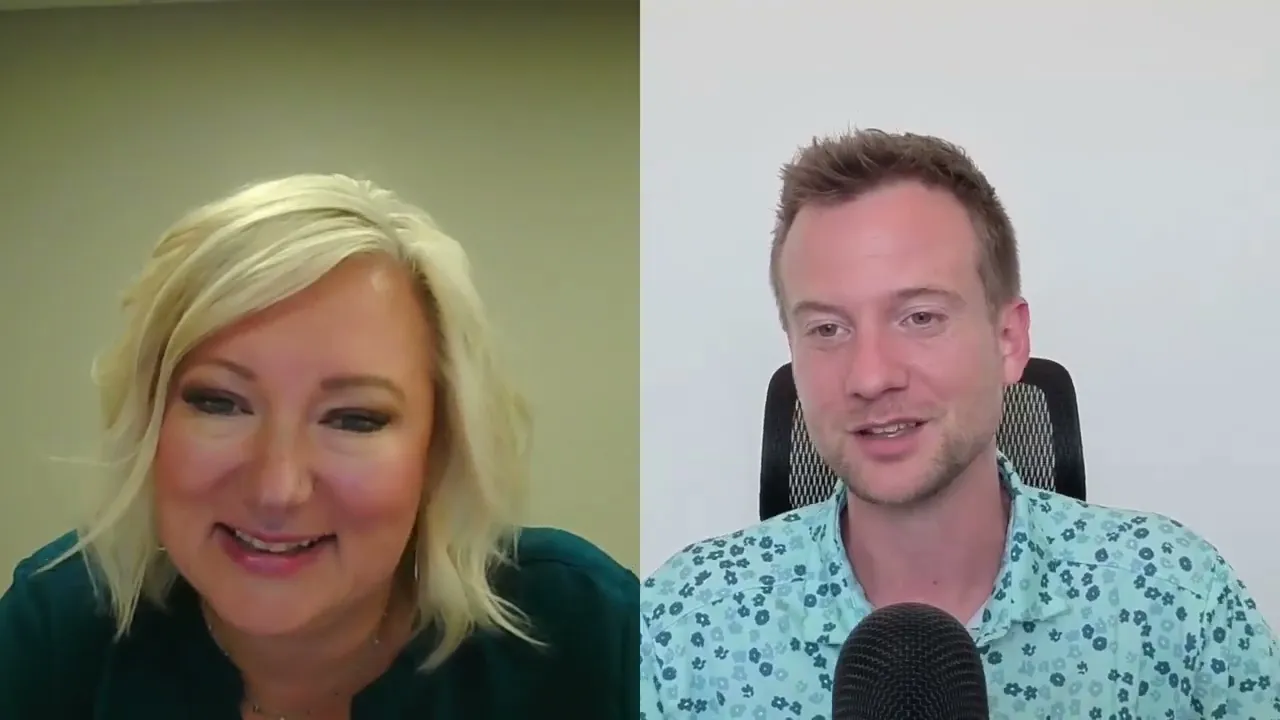
Kaydi Siebeck, Patient Access Manager at Moreland OB-GYN Associates, walks through nine years of change at the front door, from paper charts running alongside an EMR to a nurse care team model built inside it. She explains what survey feedback and phone routing data revealed, why Moreland still answers every call live, and what broke during the schedule build.
LATEST · E-- · —
0:00 / 0:00
Technology Buys Time for the Human Touch, Not a Replacement
That Is Healthcare in a Nutshell. Always Adjusting.
Top takeaways
1. COVID forced a paper-and-electronic hybrid to finally pick a side
Ten years ago, Moreland OB-GYN ran paper charts alongside an electronic medical record, doing both at once. Kaydi Siebeck describes COVID as the forcing function that made the practice actually examine every process and push toward digital, less paper, and workflows built around the technology already available rather than around old habits.
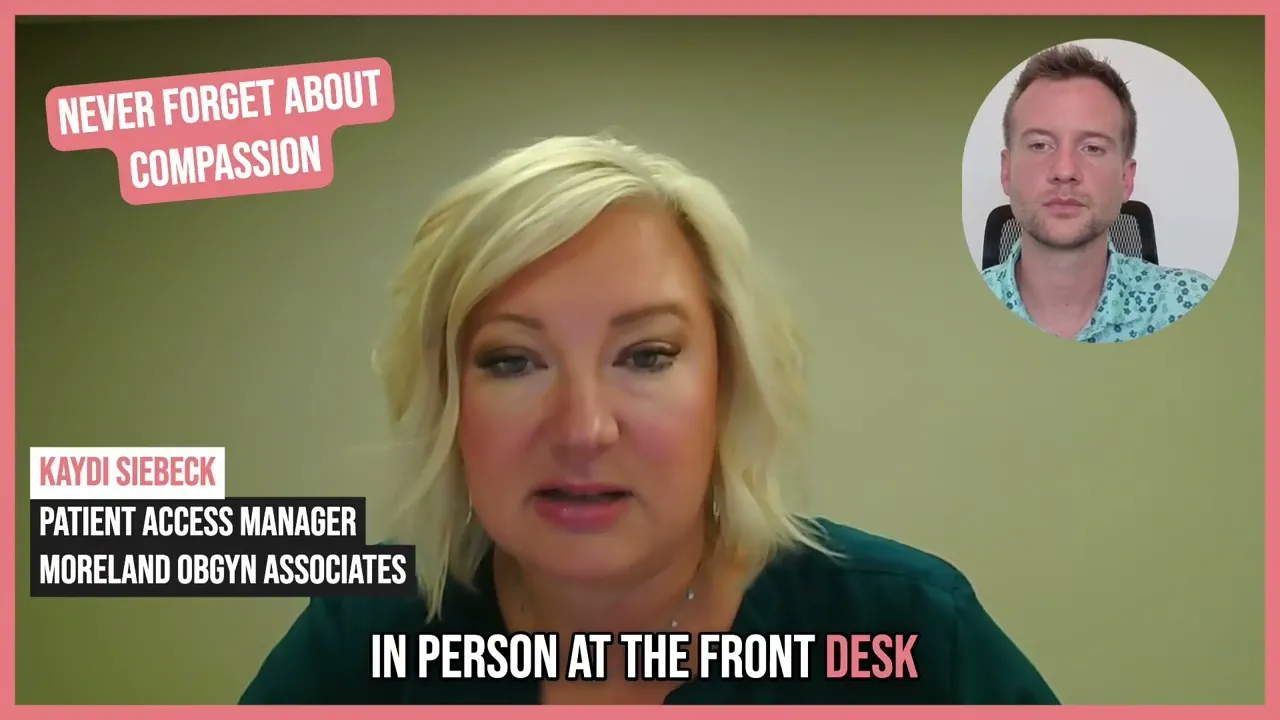
2. The line she draws: technology buys back time for the human moment
E-check-in, document uploads to the chart, automatic messages, referrals and orders placed, all administrative tasks the system now handles. What that frees up is time, specifically the time to be face-to-face at the front desk or on the phone with a patient. Her framing is explicit: technology has a ceiling, and past that ceiling is a human being who can say, I know you're nervous, I know you're scared for these results, we are here to help you. That's the part patients remember.
It shows up in a concrete policy too: Moreland answers every call live, with no automated system, despite having a large staff of operators to make that possible. Patients tell them directly they're relieved not to push buttons through a phone tree.
3. "What's your why" is compassion training with a personal anchor
Kaydi's own why is direct: she was diagnosed with breast cancer at a young age, the youngest in Waukesha County at the time, and she remembers exactly what it meant to have someone on the other side of the desk who explained results, followed her plan, and answered her questions. Staff don't need an equivalent story. The training just asks them to connect to someone they know who went through something hard, and builds role-playing and team events around that empathy.
The payoff isn't only patient-facing. Kaydi ties it to staff retention and morale directly: seeing your own effect on someone else's day, especially during something as hard as COVID, is part of what keeps people motivated and bought into change.
4. The nurse care team model: one continuous relationship, not a new person every call
Modeled loosely on a cancer navigator relationship, the idea is that a patient who calls in reaches the same nurse who already knows their history. Kaydi describes it plainly: a patient says that thing we talked about last week happened, and the nurse remembers and knows what's next. Building it meant combining schedules into one per provider's nurse, reserving rooms, and blocking time specifically for follow-up calls.
It wasn't a smooth rollout. Kaydi is candid that there was real apprehension going in, because change is always nerve-wracking. But patient feedback since has been specific: they value knowing who their team is and not having to re-explain their situation or their likely reactions every time.
5. The decision was built on data, not instinct
Two signals converged: survey free-text comments, which Kaydi's team reads seriously despite knowing patients get annoyed by the surveys themselves, and phone routing data showing patients requesting specific staff members by name because those staff already knew their history. Seeing the same names come up on the same providers' days, paired with patients actively asking to be routed to particular people, made the case for restructuring around continuity rather than availability.
6. The soft opening caught what planning couldn't
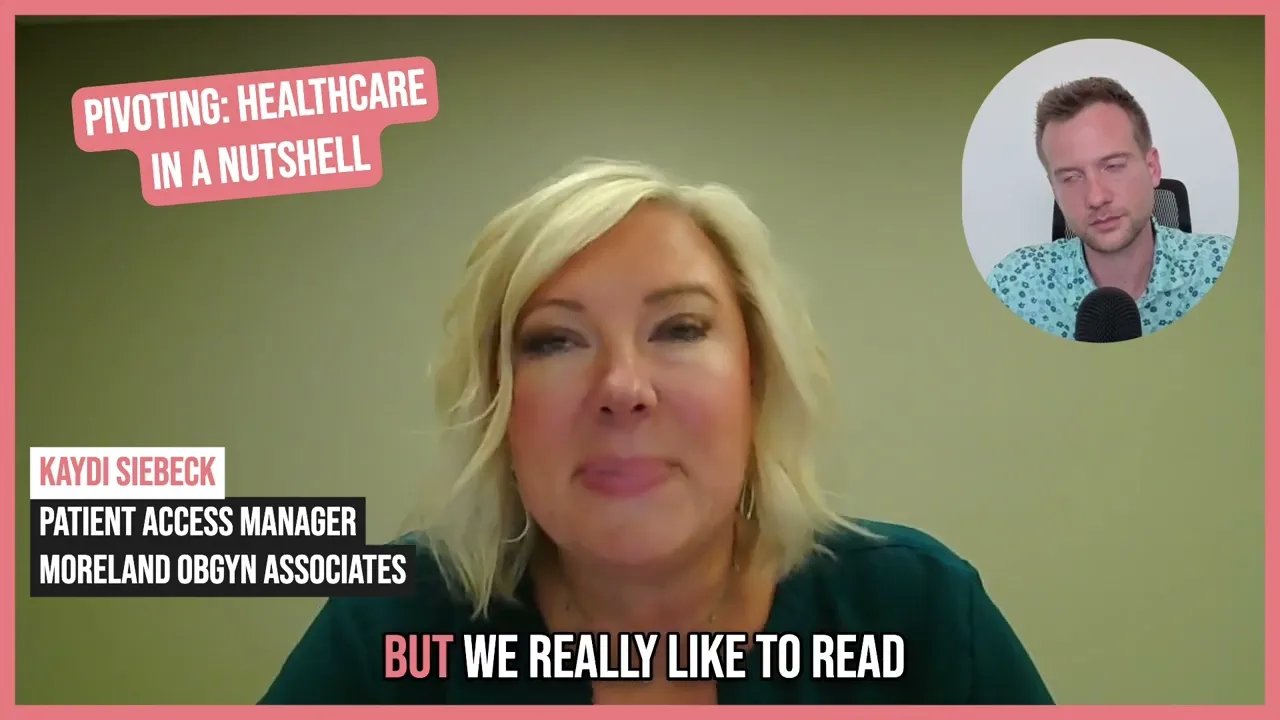
Building the new schedules surfaced appointment types the system couldn't actually support and, separately, a shortage of exam rooms once multiple providers' new schedules were opened at once. A soft opening trial caught both before patients felt the impact, and the team adjusted room allocation to match provider workload. Kaydi's summary of the whole exercise: that's healthcare in a nutshell, it's always changing, you're always adjusting.
Bonus: growth for an OB-GYN specialist runs through relationships, not ads
Referrals from family practice, presence in local high schools ahead of patients' eventual need for an OB-GYN, and networking through the practice's affiliated health system with adjacent specialties like pediatrics and orthopedics all feed the pipeline. Blogs and social channels round it out, but the core strategy is showing up in the relationships and communities patients are already in.
Questions this episode answers
How can a practice digitize the front desk without losing the personal touch?
By using technology only for the administrative load and protecting staff time for the human interaction. Kaydi Siebeck, Patient Access Manager at Moreland OB-GYN Associates, has e-check-in, document uploads, and automatic messages handle the paperwork, which frees staff to actually talk with patients face-to-face or on the phone. The practice also still answers every call live with no automated phone tree, specifically because patients have told them they value reaching a person directly.
What is a nurse care team model in a medical practice?
A scheduling structure where a patient consistently reaches the same nurse who already knows their history, rather than a different person each call. Moreland OB-GYN Associates built this by combining schedules into one per provider's nurse, reserving exam rooms, and blocking dedicated time for follow-up calls. Patient feedback specifically praised not having to re-explain their situation to someone new every time they called.
What data should a practice use to justify a scheduling redesign?
Patient survey free-text comments paired with phone routing data. Kaydi Siebeck's team at Moreland OB-GYN Associates noticed patients repeatedly asking to be routed to specific staff members by name, because those staff already knew their history, and cross-referenced that against which nurses worked which providers' schedules. That combination, rather than either data source alone, was what justified rebuilding around a continuity-based nurse care team model.
How does compassion training help with staff retention?
By connecting staff to their own reason for being in the work, which makes the emotional weight of patient interactions feel purposeful rather than draining. Kaydi Siebeck's own why is being a young breast cancer survivor who remembers what good care felt like from the other side of the desk. Her team asks every staff member to identify their own why, and pairs it with role-playing and team events, arguing that seeing your effect on someone else's day is part of what keeps staff motivated through burnout.
Where does referral growth come from for an independent OB-GYN practice?
Primarily from family practice referrals, community presence, and networking through an affiliated health system. Kaydi Siebeck describes Moreland OB-GYN Associates building relationships with local high schools ahead of students' eventual need for OB-GYN care, and networking with adjacent specialties like pediatrics and orthopedics through their affiliated hospital system. Blogs and social media round out the strategy, but the core growth channel is relationship-based rather than paid marketing.
Scale referral operations to drive growth and efficiency
Full transcript
Transcript
[00:00:00] And specialty healthcare growth is not optional, but scaling with operational excellence. That's the hard part. I'm Joe Zboch. This is Scaling Specialty Growth.
[00:00:08] Joe: Thanks for listening. Today's guest is Kaydi Siebeck, patient access manager at Moreland OB-GYN Associates, Wisconsin. In the last year, she's been running the practice's front door end to end — scheduling, registration, insurance verification, and everything else that happens before a patient ever sees a provider. She's also the operational lead on system transitions and access technology, which puts her at the center of most change the practice goes through. Kaydi, welcome.
[00:00:33] Kaydi: Thanks, Joe. It's so nice to be here.
[00:00:36] Joe: I'm excited for our conversation. We were talking before this, and we've got quite a few topics and probably not enough time to get through all of them. I like to start with how you see the world. You've been at Moreland, I think, nine years, right?
[00:00:50] Kaydi: Correct.
[00:00:51] Joe: You've been through a lot of change — access, process, experience, evolving the practice. I'd be interested from your perspective, how has that experience changed from 10 years ago to now? You're not only experiencing the change, you're the driver and implementer of a lot of it, since you're right at the front door. What's your perspective on how you've had change support growth and new operational flows?
[00:01:22] Kaydi: Change is inevitable for us. In order to stay relevant and keep a great patient base, we have to always evolve. Working through COVID really made us take a look at all of our processes. Compared to 10 years ago, we had a lot more paper charts — even though we were on an electronic medical record system, we were still doing kind of both paper and electronic. So we've really had to push forward and move into more digital, less paper, looking at these workflows, trying to streamline things, using the technology available to us, and adjusting our workflows to what's available.
[00:02:08] Joe: Let me ask you this. I feel like I hear a lot, when it comes to going digital or new technology or basically less paper, that the personal touch is also wrapped up in that. How have you thought about maintaining the patient experience at a high level during that transition? Is it always top of mind, or how does that compare to the paper world?
[00:02:40] Kaydi: There always has to be, in my opinion, a personal touch to it. That is how we promote compassion for our patients — we can make connections with them. It's great that the system and technology can do some of the administrative tasks. Having a patient do an e-check-in, or upload documents to their chart, that's great. If there are messages that can be sent automatically, or information, orders, referrals placed, and that can reach the patient on the technology side, it gives us more time to have that face-to-face at the front desk or pick up the phone and call, and talk with the patient, see what they're actually looking for.
[00:03:27] Kaydi: We can leverage the technology to a certain point, but to be able to put that human touch to it and grab someone's hand when they're across the desk from us and say, listen, I know you're nervous, I know you're upset about your baby, I know you're scared for these results, we are here to help you — it always has to be, patient experience always has to be top of mind.
[00:03:47] Joe: That really resonated. I've got two babies at daycare right now, and I know those conversations. With the personal touch, the people, that's really important. What are you doing to invest in the people on your side, outside of process or technology, to get them bought in — especially since there's always going to be change, like you said, it's inevitable?
[00:04:17] Kaydi: A big thing we do is ask our staff, what's your why. My why, if I can share, is that I was diagnosed with breast cancer at a very young age — I was the youngest in Waukesha County at the time. I appreciated everything I went through, and everyone on the other side of the desk who was helping me with my care, talking to me about results, following my plan, answering my questions and helping me along the way.
[00:04:55] Kaydi: It's scary, and we have patients going through scary things, but also very happy things — having a baby, getting married, these life-monumental moments we get to be part of. So we do a lot of compassion training, we ask our staff what's your why.
[00:05:17] Kaydi: Not everyone needs a story like being diagnosed with cancer and being a 20-year survivor like I am. But to understand and relate and have that true empathy or sympathy — everyone knows someone who's gone through a hard time, or has been on the other side of the desk themselves — we want to give staff the training and resources to talk through that.
[00:05:44] Kaydi: We do role-playing, we constantly look through our training materials, there are a lot of quotes and inspirational things we use, and we do a lot of team-building events together. The compassion part matters because we're in a role where we may not always understand how we leave someone feeling.
[00:06:07] Kaydi: My staff checks in patients — they're the first person a patient sees when they come in, and when the phone rings, they're answering it. We do not have an automated system, we answer every call. I have a very large staff of operators to make that possible, but we hear from patients all the time, thank you so much, I'm so glad I get to talk to somebody, I didn't want to have to push buttons, I just want to get to where I'm going.
[00:06:28] Kaydi: So we train a lot on questions and matching empathy level with the patient — if they're excited, we can match that intensity, if they're upset, we can bring it down, we can be professional, and we know how to grab a hand if needed.
[00:06:49] Joe: Let me ask this, and it might be oversimplifying, but do you find that leading with compassion and having compassion training is actually helpful for getting buy-in for change, for keeping folks on board longer, for them feeling more purpose in their work? Was that intentional, or a happy byproduct? Tell me about that side of it, beyond just the face-to-face interaction with the patient.
[00:07:35] Kaydi: I think at the end of the day it's very motivating to see how you, as one person, can influence someone else's feelings. Even through burnout — we've talked about COVID, it was rough — just knowing we were part of a patient's care, having that moment where a patient says thank you for listening, I appreciate that, I'll see you next week, that kind of thing. The goal is still the same. We try to keep our staff motivated and give them opportunities to bring their ideas forward, share different experiences with patients, things that worked and things that definitely didn't work that we don't want to repeat.
[00:08:36] Kaydi: There's a lot of collaboration on the team talking through how something ended up being a happy experience, because we don't always realize how much we can influence someone else's day, even with just a smile or a compliment. We've had staff come in and say, today's kind of rough, I've got things going on at home, a deadline to meet — but they're coming together, having that experience with their teammates, with patients, with other staff and offices.
[00:09:14] Joe: I've said this before and I believe it — even though I've never been on the practice or clinical operations side — your every day is somebody else's once-in-a-lifetime. That perspective has been really meaningful to me, because there's a kind of radical humanity in a lot of what's required to provide excellent care.
[00:09:37] Joe: I don't want to overshare, but going through our fertility journey, even being in the moments where the whole team does a sound-off to make sure operationally everything is shipshape — it's their every day. That leads to the next thing I wanted to discuss, which is: compassion training is great when you have opportunities to be face-to-face, but one of the places compassion can completely get inverted or drop out is when the process or the technology around a care journey breaks.
[00:10:13] Joe: You have a unique perspective as both the front door operator around patient access and the systems transition lead, which means you can walk a patient through the front door, through the hallway, and into the room. Can you tell me about the project you have ongoing with the nurse care team model?
[00:10:32] Kaydi: Similar to a navigator for someone going through cancer, we'd really like our patients to have a stable, continual relationship with their care team — nursing, their physician, and the front desk too. If a patient calls in concerned about something, we want them to have that relationship with their nurse. Hey Kaydi, that thing we talked about last week, it happened. Oh yeah, that's right, I remember that, here's what we're going to do moving forward. Being able to remember that and build that relationship is something we're truly focusing on with this nurse care team.
[00:11:19] Kaydi: We're leveraging the EMR we have to build new schedules right now, combining all these different schedules into one particular schedule for each provider's nurse, so they know how to run their day. It's been quite the transition — we've gotten other leaders involved, and we're reserving rooms for different appointment types and blocking time for follow-up phone calls, so patients feel as cared for as possible and leave without any questions. This has been ongoing, and I wouldn't be lying if I said there wasn't apprehension in the beginning, because change is always nerve-wracking.
[00:12:13] Kaydi: But it has really shown — we've gotten feedback from patients saying it's so nice to have the consistency of knowing who their team is, getting the same answer, having someone who remembers what they talked about last week or the month before, who knows their feelings and how they're going to react, so they can anticipate that and help with their care.
[00:12:34] Joe: It's really painful to have to tell another nurse you've already gotten the RhoGAM shot. Take me a step back — what led to committing to a monumental change like this? Where did the data come from? Was it anecdotal, or was it data? I know on the EHR side you're starting to get an inflow of new analytics around workflows. Was that involved? Did the technology come into play?
[00:13:01] Kaydi: Absolutely.
[00:13:02] Joe: Tell me about the situation.
[00:13:03] Kaydi: A lot of it is patient experience. We listen to our patients, we take their feedback very seriously. I know patients get frustrated when a survey goes out, but we really like to read through what comes back. The feedback we're getting is patients saying they don't want to have to re-explain their story to different staff members, things that are already in their chart — well, can't you see that in my chart? Yes, we can see it, but we also want to confirm it's correct so we can answer appropriately moving forward.
[00:13:45] Kaydi: Looking at the analytics too, and what we were seeing with nursing — we'd see that on the same days and times these nurses were working with our providers, the same patients would continue to see them. And with phone calls, patients were asking for specific staff members to answer their questions, because they knew what was discussed at the last visit and didn't want to re-explain. That data, the comments and the phone routing compared to where calls were being routed, played a very large part in this.
[00:14:22] Joe: Can you share a specific example of something along the way that didn't go well, and why you were able to overcome it, either because of the work you'd done investing in the team or the data you had access to diagnose the issue?
[00:14:40] Kaydi: The example I can really think of is when we were building out the schedules — there are always things you don't think of, so you have to pivot and adjust in the moment. That is healthcare in a nutshell. It's always changing. You're always adjusting.
[00:14:57] Kaydi: We built out schedules, but there were appointment types we needed to add that we hadn't anticipated. Thankfully we did a soft opening, trialing different appointment types and workflows, and found what we couldn't actually make the system do — we realized we needed more rooms. Opening up schedules for so many providers with only so many rooms to do it in, we had to analyze the schedules and make sure they matched our provider schedules and the workload.
[00:15:44] Joe: Looking forward, tell me a little about what's on the horizon. I know the care team model project is still ongoing — are you looking to add docs, expand locations, or is there something on the technology side you're excited to take advantage of?
[00:15:58] Kaydi: Through patient communications, we're looking to do more integration through our EMR for reaching out to patients. Right now we use a separate system — we're using our EMR, but logging into another system to get reports, to see what messages were sent and when. Having everything integrated is going to streamline things incredibly, let us get everything from one spot, and give us more analytics — open rates, how often patients are actually responding, whether referrals we're sending are working, whether they're receiving and responding to them. We want it to be seamless, so it's a slow process — we don't want to give up what we currently have with our patient experience, or compromise anything we've built so far.
[00:16:58] Joe: I think it's always the balance of trying to grow and evolve the experience around patients while making sure you have the operational systems in place to support whatever that change might be.
[00:17:11] Kaydi: Exactly.
[00:17:12] Joe: Maybe a last question — and maybe I should've asked this earlier, but here we are. From a growth standpoint, I know you have a pretty tight relationship with the local health system. What other areas are you exploring to keep growing and keep patient volume going? Referral streams, the way patients find and access care, are always changing, and sometimes a stream can completely dry up. I'm curious on the innovation side, outside the four walls of the practice — how are you working with executive and physician leadership to map out the next two, three, four years of growth in terms of where patients are going to come from?
[00:17:47] Kaydi: Sure. Being an OB-GYN specialist, we're really relying on a lot of our networking and referrals. We're focusing on referrals from family practice, getting out into the communities, going to high schools, doing our marketing with these younger patients, since there are events where they're eventually going to need an OB-GYN and we're the specialist for that.
[00:18:11] Kaydi: Having relationships through networking, going to different networking events in the area, even through our larger affiliated health system, talking with other practices — whether it's their staff or their patients, a pediatrics office versus an ortho office, we're just trying to get out there as much as we can. We're doing blogs, we've got all the socials, so it's really giving relevant information about what's going on, while also making sure we can network and build those relationships.
[00:18:58] Joe: Kaydi, thank you so much for your time. I had a blast.
[00:19:01] Kaydi: Thank you. Thanks for having me, Joe. I appreciate it.
Hey, it's Joe. Thanks for listening. If you like what you hear, share with the peer, and if you're looking to scale referral operations to drive growth and efficiency, visit hatchcare.com.