
All Episodes
EPISODE 15
·
·
22:41
Using therapy sites to test a market before building an ASC
Jessie Brovold
·
Chief Operating Officer,
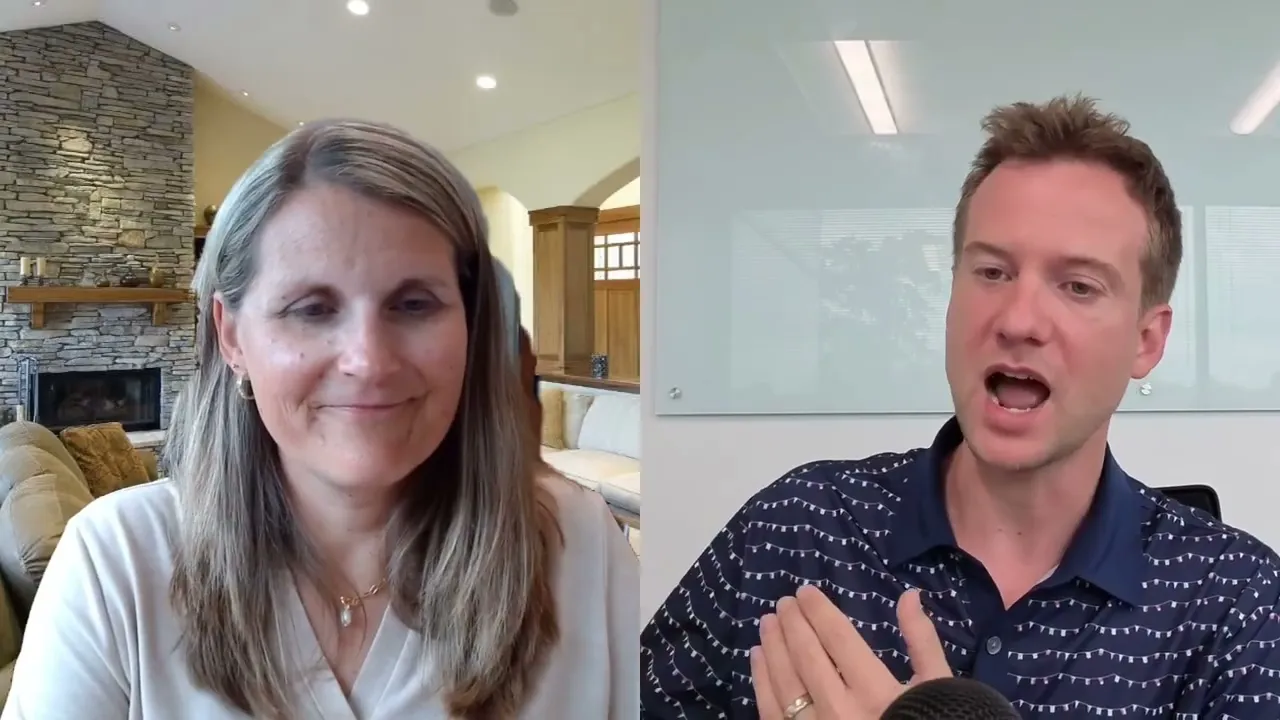
Jessie Brovold has spent 16 years as COO of Orthopaedic Associates of Wisconsin. She explains how OAW uses physical and occupational therapy sites to validate demand in a market before committing to a clinic or a surgery center, and the access gap analysis behind every location decision.
LATEST · E-- · —
0:00 / 0:00
Your Best Leader Is Someone Who Can Still Do the Job
Stop Reinventing the Wheel Every Time You Expand
Top takeaways
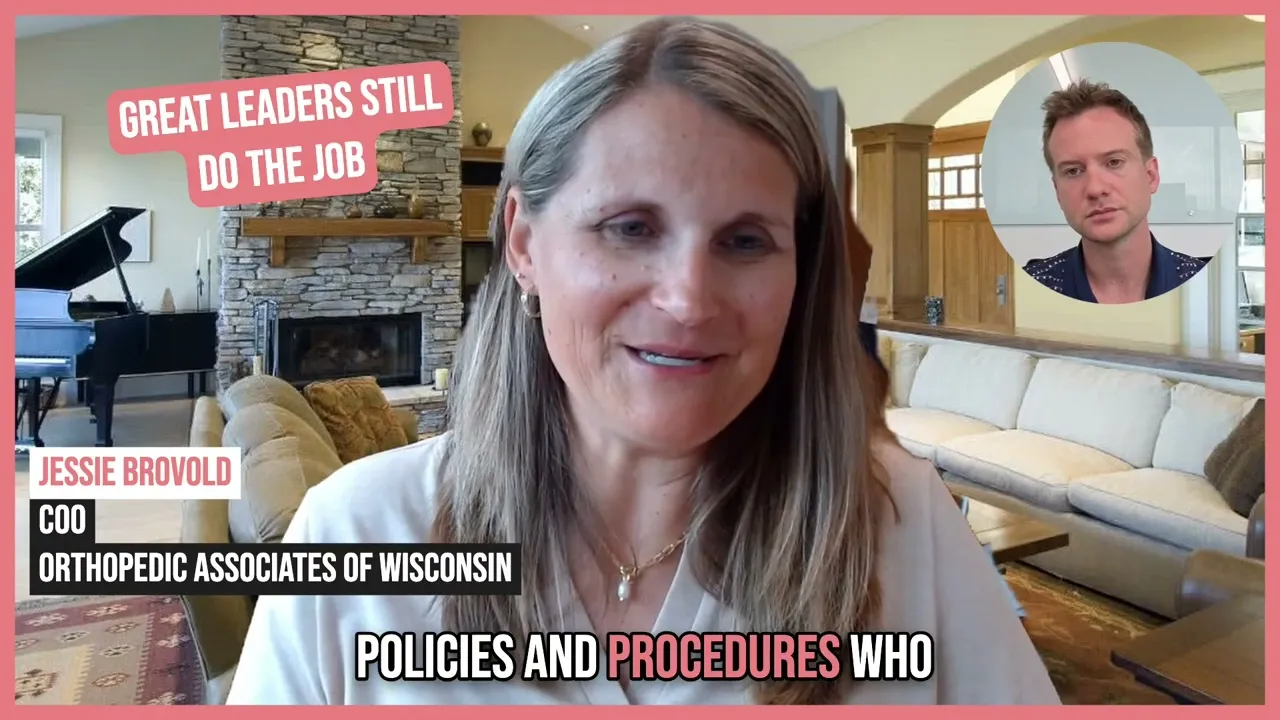
1. Your best leadership is someone who can still do the job in a pinch
Jessie trained as an athletic trainer and was boots on the ground in clinic before she ever ran operations. Sixteen years into the COO role she still holds the license. If someone calls her from clinic needing help with a cast, rooming a patient, or drawing up injections, she steps in.
Her reasoning is practical, not sentimental. You lose your team's respect fast when you ask them to do something you wouldn't do yourself, and you can't write a policy that makes sense for a workflow you've never worked. She wants buy-in from the people doing the job, which means being close enough to the job to earn it.
The evidence shows up in retention. Across departments, most of her team has been there ten years or more, and OAW doesn't see much turnover. Her advice to anyone stepping into a new leadership role: don't lose the piece of where you came from.
2. Run an access gap analysis before you pick a location
Before OAW opens anywhere, it works through a specific sequence:
Pull EMR data by department and zip code. Where are current patients coming from, and which departments are they coming to? A therapy patient referred by their primary care physician may never have been an established clinic or ASC patient, so every department gets its own report.
Check the ancillary coverage. Are MRI, therapy, and the other ancillary services actually offered in the geographies those patients are coming from? If not, that's the gap.
Read the competition. A big-box hospital system in the area is an opportunity, not a deterrent. Some patients actively prefer a private, physician-owned practice over a sprawling multi-campus system.
Look at the referrals that never converted. This is the step most practices skip.
That last one is the sharpest idea in the conversation. Referrals arrived, but the patient was never seen and the loop never closed. Maybe the practice called repeatedly and never connected. Maybe the patient's insurance changed. Maybe they started feeling better. Or maybe the drive was simply too far, which means the access assumption was wrong. As Jessie puts it, don't let those go by the wayside. Unconverted referrals are a map of where your access is failing, and most groups never look at them that way.
3. Use therapy as the wedge that validates a market before you build
When OAW identifies an untapped area, the first ancillary it opens is almost always therapy.
The logic follows the patient. Someone will drive twenty minutes to an hour for an injury visit or a follow-up, because it's a one-time trip. But physical and occupational therapy means coming back multiple times a week for several weeks, often while on medications they shouldn't be driving on, or depending on a caretaker to get them there. For that, patients want something near where they live or work.
So therapy is both the service patients need closest to home and the cheapest way to prove demand before committing to a clinic or a surgery center. OAW has opened four therapy locations in roughly two years: two by taking over the leases and equipment of a failed therapy practice at a discount, and two as new builds. One of those new builds sits alongside the surgery center, clinic, MRI, X-ray and DME under one roof, and the other opens in a market the data flagged, where patients were already driving to OAW for clinic appointments but not for therapy.
Bonus: what she'd tell someone about to open their first site
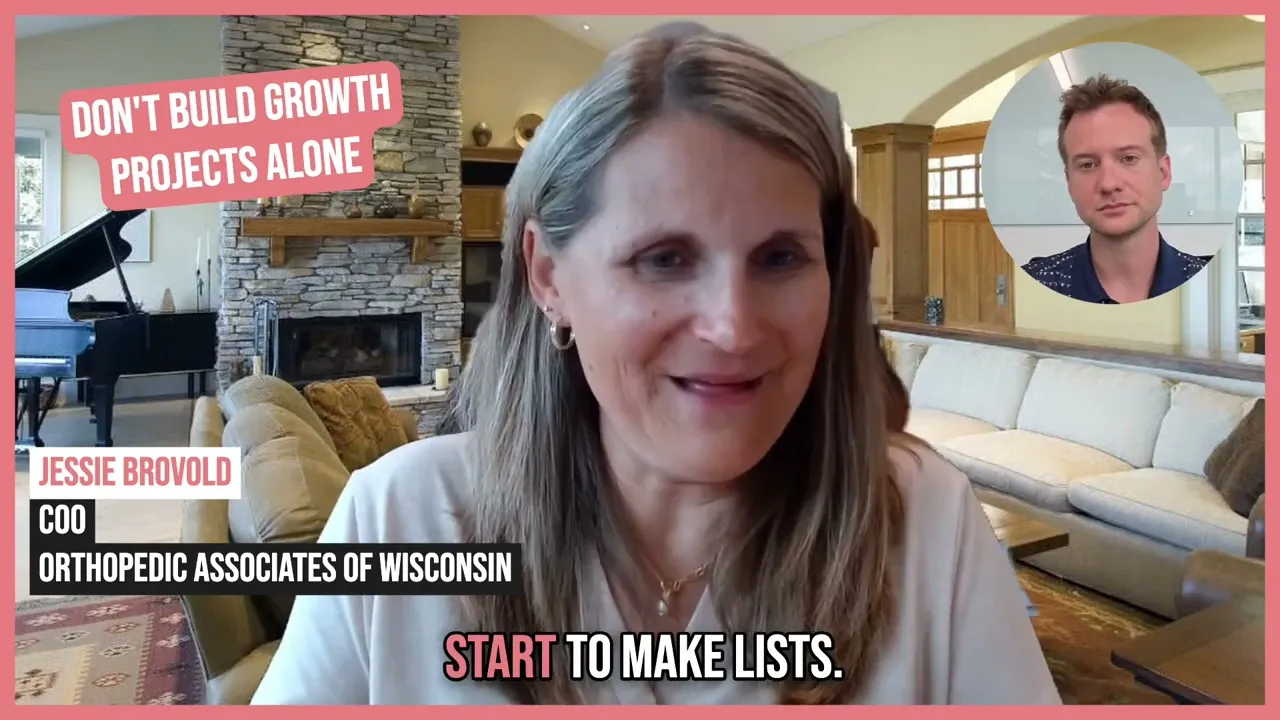
Start with your internal team, not the contractor. OAW's operations team pulls in the CEO, the surgery center executive director, the COO, the CFO, marketing, data analytics, the business office manager, HR and the therapy director from day one. Everyone holds a piece of the puzzle.
Then make lists, so the next build doesn't start from zero. And use your resources, including GPOs and industry forums, because someone out there has already written the list you're about to write from scratch. In Jessie's words, you don't know what you don't know, and no question is a dumb question.
Questions this episode answers
How can an orthopedic practice test a new market before building a surgery center?
Open a physical or occupational therapy site there first. Therapy requires patients to return multiple times a week, so demand for it proves that patients in that area will actually travel to you regularly. It validates the market at a fraction of the cost and risk of a clinic or an ASC. Orthopaedic Associates of Wisconsin uses therapy as its standard first ancillary in any untapped area.
What data goes into an access gap analysis?
Four inputs: EMR reports showing where current patients come from, broken out by department and zip code; whether ancillary services like MRI and therapy already exist in those geographies; the competitive picture in the market, including whether a big-box hospital system creates an opening for a physician-owned alternative; and referrals that came in but never converted to a visit.
Why do referrals that never converted matter for expansion planning?
Because they show where access is failing. A referral that arrived but never became an appointment may mean the patient couldn't reach you, changed insurance, improved on their own, or found the drive too far. That last case is a direct signal that your locations don't cover the patient population you assumed they did.
Who should be involved when opening a new practice location?
Every director and leadership role, from the beginning. At OAW that means the CEO, surgery center executive director, COO, CFO, marketing, data analytics, business office manager, HR, and the therapy director. Each one holds a piece of the puzzle, and pulling them in early prevents avoidable mistakes on the next build.
How do you keep staff turnover low while a practice is scaling?
Stay accessible and be willing to do the work yourself. Jessie Brovold still holds her athletic training license and steps into clinic when the team needs help. Leaders who understand the role earn buy-in when they change a workflow, and OAW's teams commonly stay ten years or more.
Scale referral operations to drive growth and efficiency
Full transcript
Transcript
[00:00:00] And specialty healthcare growth is not optional, but scaling with operational excellence. That's the hard part. I'm Joseph Zboch. This is Scaling Specialty Growth.
[00:00:08] Joe: Thanks for listening. Today's guest is Jessie Brovold, COO at Orthopaedic Associates of Wisconsin, a role she's held for 16 years. OAW is Wisconsin's premier multi-physician orthopedic practice with over 50 years in the community, over 20 physicians, and locations across southeastern Wisconsin. Jessie's been at the center of that growth, steering operations through expansion and everything else the orthopedic landscape has thrown at practices over the last decade and a half.
Jessie, welcome to the show.
[00:00:35] Jessie: Thank you, Joe. Happy to be here.
[00:00:37] Joe: Operations is a role where you're responsible for making sure things run smoothly, but a lot of times, especially with a growth-oriented practice — and I know we're gonna get a lot into the expansion side of things and access and all that — you're kind of building the plane while flying it.
You're keeping things going, making sure the wheels don't fall off, not just of the systems that you're building, but making sure, from the physician side and certainly from the staff side, that burnout doesn't creep up and people leave when you're trying to work. And so it's striking that balance of being a driver but also listening and being empathetic and having ears.
So tell me, finding that balance of really operational excellence, what it takes to run a competitive practice with a growth mindset — how do you find that balance? What's your approach been over the last decade and a half, this wealth of experience that you've built up?
[00:01:31] Jessie: When I started here a little over 16 years ago, it was very different. It was a smaller practice, a lot less physicians, a lot less staff to have to manage and keep operationally. Well, we had more sites, I should say, but they were more small satellite locations.
And as we've grown, the one thing I've always kept at the center is knowing that you have to be approachable, you have to be accessible to your team, and it's okay to ask for help. Know that you have those resources and use those resources, so that you don't have that burnout. You have a good balance.
And obviously there's gonna be tough days and tough weeks and tough decisions and all those great things, but knowing when it's time to add to your team as well, knowing that you can't wear all the hats in one sector of my role. I can't do that. And so it's okay to say no.
It's okay to reach out and to use additional people on your team and build that team. What really does make an excellent team is having people that can support you in the areas when you are growing, so that it doesn't feel so overwhelming and come as a complete blur. So I think that's the biggest takeaway, being part of this team, is that as we're growing, knowing when it's time to reach out and to get those other stakeholders involved so that our team continues to be excellent and we can continue to provide the great quality care that we do in Southeast Wisconsin.
Our motto here is, Orthopaedic Associates, there is a difference. And truly, we want people, not only the patients, but also our team, to feel like they are part of the difference. They're making the difference every day for patients. It's not just taking care of the patient, it's going beyond that.
It's making sure that the patient feels valued when they walk in the door, and that the patient doesn't feel like they're just another patient — they're the patient for that visit, and that they have the utmost quality care when they're here for each visit, each procedure. Each time that they're at an OAW facility, it feels like they're part of something.
[00:03:38] Joe: I wanna dig into a few of the things that you've mentioned. But firstly, I'm curious. I think it's pretty unique to have 16 years of experience at the COO level for a given practice that has grown so much. Can you compare and contrast for me, as far as the job goes, what has stayed consistent, that you maybe weren't so good at in the beginning, but have learned to be better at?
And two, what has changed, that you've had to adapt or learn new skills because maybe it's because of external forces like competition, or the nature of the workforce is different, as a younger generation has come up and come through, or the nature of the role. So can you compare and contrast a little bit about what stayed consistent and what's changed?
[00:04:26] Jessie: Sure. So I would say what stayed consistent has always been, like I said, just that pillar of being accessible, understanding the role. My original schooling was as an athletic trainer, so I was boots on the ground out in clinic seeing patients, also seeing student athletes at schools.
And the one thing that I've taken away from all the different places that I've worked and been a part of is the best leadership I've always had supporting me was somebody who understands the role, who can do it in a pinch. So even in my role today, not being still an athletic trainer out in clinic, I still hold my license and I still can do the things, but I'm not doing it every day.
If somebody calls me in a pinch out in clinic and says, "Hey, I need help with a cast. I need help with this patient. I need help rooming patients, drawing up injections," I don't mind stepping in. I feel like you really lose that sense of respect on your team, and your team just understanding that you're part of the process.
You're not somebody just sitting behind a desk and pushing through policies and procedures who doesn't understand the role. I want buy-in from my team. I don't wanna have to just write something that doesn't make sense for their workflow or for their individual role. So I feel like that's always been my constant, is that my best leadership and my continued best leadership, whether it's our CEO or the physicians that are practicing, is always the people that are willing to pitch in, that understand the role, that ask the questions that are involved, and really involve the people that are working in those departments.
So that's my constant, always will be a constant, and whenever I meet with somebody that's new in a role, leadership is always just saying, "Just remember, don't lose that piece of where you came from," because your best leadership is always gonna be somebody that can pinch hit and be bench depth for your team continuously.
If you're asking your team to do something that you're not going to do, it's gonna be really hard to retain a really good quality team. And I'll tell you, most of our people that are on our teams, doesn't matter what department, they've been here longevity 10 plus years. We don't see a lot of turnover. And I feel like that's really echoed to how we make this part of our center, is being involved.
So that's my constant. What's changed is definitely being part of bigger strategizing, being part of board meetings and summit meetings. That was not something 16 years ago that I sat in. I remember when I took this role, I was actually an athletic trainer working out in clinic at the time. I'd only been here maybe 10 months, so I was still a newbie in the group.
These doctors didn't know me. The ones that worked with me knew me a little bit, but right, 10 months isn't a long time to know somebody. And our clinic manager at the time was leaving the practice to work in a different specialty. And that job was available and I thought, "Man, this would be a great opportunity to throw my name in the hat, and I guess we'll see what happens," right?
So that was the one and only time I had been in front of the board, and at the time, the board was about 12 surgeons, partners. And I was very nervous going in front of these guys, explaining who I was and what I could bring to their team, and for them to try to trust me and have faith in me taking this position. And they did.
So they had a leap of faith back then and it's worked out. But I'll tell you the one thing — it was probably 15 years ago when I took this role. 15 years ago, that was the first time and the only time up until about two years ago where I sat in front of the board to present things, to be part of something, to listen to them, to strategize, and to hear what they're talking about.
And now I'm part of that every single month. I'm there to prepare the material, to come with recommendations for the group, and to present back each month. So I love being part of that. I love being part of the solution and I think it's a great thing to be part of a group that has such great confidence in me and I love it.
I love seeing our growth. I love working with them, and it's a great place to be, is to be part of something that continues to want forward movement.
[00:08:51] Joe: You've been there and done that in a sense, and that's something that I'm hearing with quite a few guests, is that they've had the role before, and they've used that as a tool to get buy-in. Because when you're trying to drive growth, trying to drive change, that can be uncomfortable.
And so you need, like you said, you need that buy-in. And you try to remind the staff that they are part of the difference, right? And what you have and what you've kept top of mind, from advice from the physician leaders, is don't lose where you came from.
You've always had that backing of credibility to where not only do they know that you've done the role before, but you're willing to do it in a pinch, like you said. And I think that's really important as I transition here into some of the work that you've done at OAW recently. Tell me a little bit about when it comes to access.
There's an interesting relationship there that we talked about in one of our previous conversations, which is from a human and empathetic standpoint. People are in pain, right? You need to be available, and so you have this 24-hour, I think that's what it is, quick turnaround.
But there's also a difference between someone willing to drive 20 minutes to an hour to meet with a physician practicing top of license versus maybe more of an ongoing therapy that's once or twice a week. And so recognizing the duality of almost like degrees of access, or how it can be perceived differently from the patient's point of view.
Without giving away too much there, walk me through some of these decisions to expand locations and make sure that you're acquiring patients, retaining them, not losing them to leakage because of better access elsewhere.
[00:10:37] Jessie: Absolutely. So yeah, you hit the nail right on the head, Joe. A patient is willing to come when they have an injury or they have a follow-up appointment. They don't mind driving that 20 minutes to an hour for that one-time visit, 'cause it's not gonna be subsequent multiple times a week.
But when they come for actual treatment, rehab, therapy, where they're coming multiple times a week for several weeks, they want something that's going to be right in their backyard, whether it's near where they work or they live, or maybe it's where their caretaker can get them to, because a lot of these people, they have ailments that they can't drive, or they're on medications that they shouldn't legally be driving on.
So you're right. Having that accessibility is key. And how do we get to figuring out what that means for our patients and the growth of our organization, our brand, is obviously we look at the market and we say, "Well, where are we currently retaining a lot of patients from that are coming to see us for office visits at one of our clinic locations?
And do we have all those ancillary services?" So whether that be MRI, whether that be therapy, any of those services, do we offer those in those same geographic areas that we're pulling these patients from? If the answer's no, well, then let's look at the market and say, "Well, what kind of competitors do we have up there?"
If it's a big box hospital location, obviously we have a niche. We're private physician-owned. There's a lot of people that don't want to go to the big box system, or that get nervous, or it's too clustered. There's too many roles. There's too many campuses and things.
We're very much more centered where patients may prefer to do that. Or we might say, "You know, this is an untapped area for us." We know that we're pulling a lot of patients, or students, student athletes or something from that area, and we just haven't had a location in that neck of the woods yet.
Usually, the first ancillary that we're gonna try is gonna be therapy, because patients want to have that therapy, physical and occupational therapy, accessible to them first before we're gonna look at opening a new clinic or a surgery center or something of that nature.
[00:13:03] Joe: Jessie, let me jump in here, 'cause this is really good, and so I wanna make sure we double-click on it. What you're describing here is a bit of a framework for what I might call an access gap and opportunity analysis. And over the arc of your career, you're having more of these conversations at the board level.
So tell me — you talked about the competition that might be already in place within a given locale. Where else are you pulling data from? Give me the, you've said a lot of them, but just pausing for anybody listening to make it explicit. When you're running an access gap analysis like this, what are the major tenets or pillars of the types of data you're looking at, where you're getting them?
And then at the tail end there, what you got into was almost like an entry level or wedge into the type of care people are going to get, right? And you said the therapy, the occupational therapy is a good way to get in there and almost validate the demand in a given market before, as we foreshadow here, an ASC maybe, right? Before you make even larger investments. So it's a really interesting thing you have going here with how you're smartly approaching growth and access via physical location expansion.
[00:14:14] Jessie: Sure. So the data that you wanna obviously extract is gonna be from your EMR system, whatever that may be. Lots of them out there, right? So whatever that looks like, pulling reports to say, "Where are our current patients coming from? And what departments are they coming to?" right? So we might have somebody coming to our therapy department that isn't yet an established patient on our clinic side of the house or our ASC side of the house.
Maybe they're just being seen for therapy, and they're coming from their primary care physician. So we wanna run from various departments — where are they all coming from? What zip codes? Now, we look at those zip codes, and we're gonna kind of truncate them based on each county that we're in or not in.
And we'll look at that. But then also, you gotta look at those referrals that are coming into your practice that never hit your books. So yes, the referral came in, but we never saw the patient. We never closed the loop. So maybe we tried to call them multiple times to get an appointment made, or to get, for clinic, or maybe it was for an MRI or for therapy.
But the patient must have chosen to go elsewhere, or maybe they just chose not to go forward with that appointment. Maybe they started to feel better. Maybe they had change in their finances or in their insurance coverage, and they couldn't afford to come here. So you gotta look at those as well.
We're getting the referral in, but if we didn't capitalize and actually close on that referral, well, maybe it's because we're too far out for them to drive. Maybe we don't have that access that we thought for that patient population. So again, you wanna look at what are your current patients, where are they coming from, and then also what about the unclosed ones as well?
Don't let those go by the wayside because somehow, some way, we didn't finish that referral for multiple reasons.
[00:16:04] Joe: That's really good. Okay. So tell me a little bit about the most recent therapy site expansion that you guys — was it three locations or four?
[00:16:14] Jessie: So we have two that we just recently opened up in the last year and a half, and then we have another one opening up in about a month and a half, and another one on the horizon in about the next 90 days. So we've got four locations within the last, we'll call it two years, that we've opened for therapy sites, and very excited.
The two that obviously we've had for the last year and a half took off ground running. I mean, we took over some former therapy sites that weren't as successful, and we were able to really turn that around very quickly. We knew that there was a need in both of those cities, and we just didn't have space.
We couldn't find the right footprint. We finally did, and it made sense.
[00:16:59] Joe: You said you took over two therapy sites that weren't — like the literal building?
[00:17:05] Jessie: Yep, the literal building. So the former practice that was there closed their doors, and then they left all their things in the location. So we were able to acquire not only the lease, but the equipment at a very discounted price. Yep.
[00:17:22] Joe: That's great. And then the two other locations?
[00:17:24] Jessie: The two other locations are actually brand new builds.
So one is gonna be out west, and that's part of a big picture, like you were forecasting, ASC and the whole shebang. So we're excited about that. That's all opening up in about a month and a half, and that's been about a year in the making 'cause it's brand new construction. And then the other one is about 90 days out from now, just finalizing some last-minute things, and that's in a space that we're really excited about because we're gonna be partnering with some other services that are in the same wheelhouse.
We've got sports medicine and we've got sports and athletes and whatnot, so really excited to be in that physical space. They sought us out and we were equally as excited and it's been a good venture and we're excited to see both of them take off. The one out west is a very big...
It's a footprint big like we have at our main location, so that we're very excited about, and it's in the same location as our surgery center, clinic, MRI, X-ray, DME. So it's nice to have all those service offerings for patients under one roof so they don't have to drive to different locations. Again, accessibility, that's what it comes back to.
And then the other location is in a brand new space that we haven't been into. So when we did that market analysis and looked, we said, "You know, this makes most sense." We've got a lot of patients coming to clinic for appointments from that area, but we don't have them coming to our therapy locations because it's too far of a drive.
So now we've got this nice little hub for patients to drive to.
[00:18:50] Joe: That's wonderful. Okay, so for the tail end of the conversation, I'd like to bring it back to — you're a little bit out of the woods for the new sites, the ASC coming up. Being at OAW for 16 years, there's a lot of trust. And I would imagine that with any sort of project, whether it's physical access expansion or on the digital side with new technology systems, whatever, it doesn't always go smooth.
Like, there's bumps along the way. So for someone who's up and coming, maybe earlier in their career, or looking to start implementing the operational infrastructure needed for a growth mindset that has arrived at their practice, what are the things they need to look out for? What did you run up against that you had to work through?
And if you were to give advice for that person who's about to undertake some large scale projects like this, what are some of the tips, some of the tricks, some of the things that you ran into, that you would encourage others to look out for ahead of time?
[00:19:48] Jessie: Absolutely. So I would say start forming your team, your internal team. Obviously, if you're building an actual brand new facility, you're gonna have construction teams and contractors and things, but your internal team is very important, your stakeholders. So on our team, we call it our operations team.
So that includes our CEO, our surgery center executive director, myself as the COO, our CFO, our marketing, data analytics, our business office manager, even HR. Bring them all in, right? And obviously your therapy director as well. Anybody that's in a director or leadership role, bring them on from the beginning.
They're all gonna have a little piece of the puzzle that's gonna make sense, maybe not right away. They're gonna have some great ideas. They've worked in that space. They've worked at different locations. So it's important to have your key stakeholders there from the beginning. As you start to embark on these new adventures, start to make lists.
Then you don't have to reinvent the wheel every single time you're opening a new facility. You can kind of build it and you can tweak it a little bit for each location, but you don't have to reinvent the wheel each time. And then lastly, use your resources. A lot of people belong to GPOs and different forums.
Reach out. Don't feel like you have to start from ground zero. You've never been there before. Tap into the resources that you have. Ask the right questions, meet with the right people. You would be surprised how many people already have these lists, and you can pick their brain and ask the right questions so that you don't feel like you're in the dark.
You don't know what you don't know. And I'll tell you from all the years that I've been in this role and built different locations and renovated different locations, from the first build to where we are now, never in a million years would you ever ask me, "Would you know about grinder pumps and MRI machines and knockout panels and HVAC units and things like that?"
But you start to learn all these things and how to make your facilities even better on the next one and in each future one that you grow. So ask the right questions. Learn. No question's a dumb question. And use your resources out there because they're very valuable.
[00:22:09] Joe: Amazing. Jessie, thank you so much for your time, the wisdom, and the ways to approach expanding access in an empathetic way that patients appreciate, that get the team on board. I really enjoyed our conversation.
[00:22:23] Jessie: Absolutely. Thanks, Joe. Same. Have a great day.
[00:22:27] Hey, it's Joe. Thanks for listening. If you like what you hear, share with the peer, and if you're looking to scale referral operations to drive growth and efficiency, visit hatchcare.com.