
All Episodes
EPISODE 7
·
·
21:28
Why deep integration is the harder path in GI
Jenn Muina
·
Divisional Vice President,
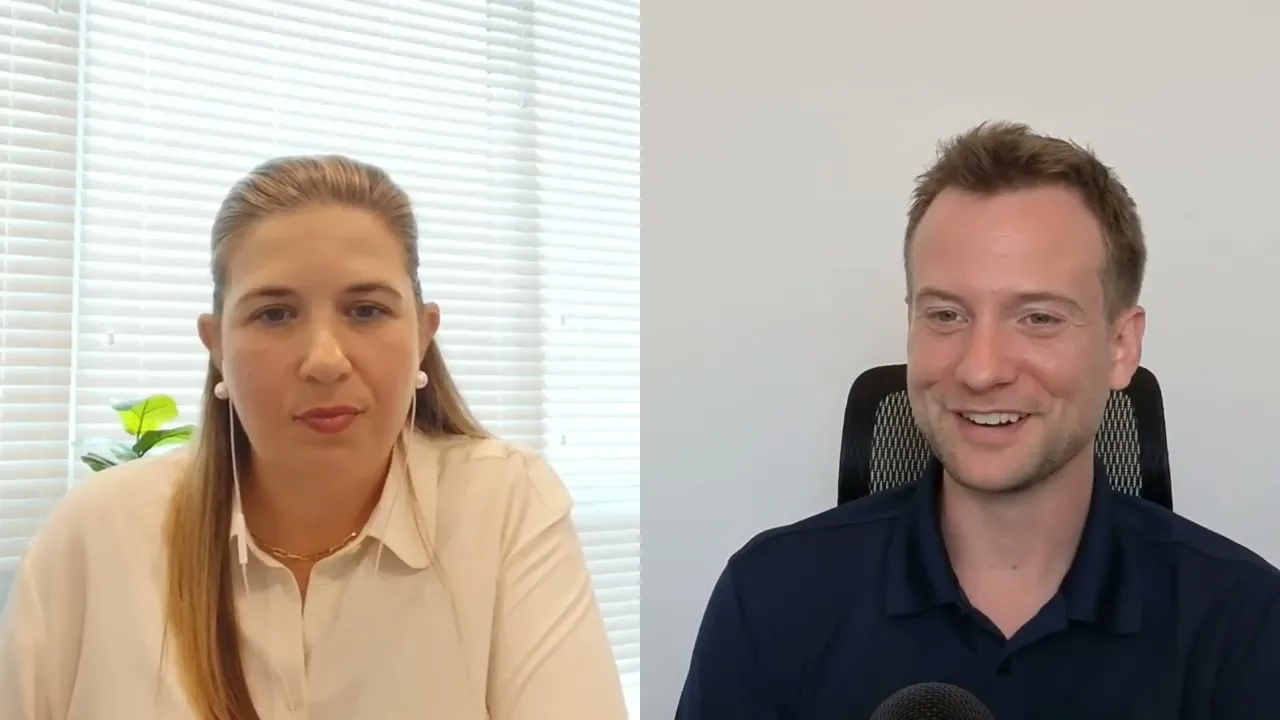
Jenn Muina runs the Florida division of Gastro Health, a national specialty group with more than 150 locations and over 400 physicians, and has coordinated the integration of multiple acquired practices into one operation. She explains why the group chose deep integration over the easier path, what a single EHR instance unlocks in clinical data, and how to lead a practice through change without doing it to them.
LATEST · E-- · —
0:00 / 0:00
Seen One GI Practice, You've Seen One GI Practice
Acquisition Is the Easy Part. Integration Isn't.
Top takeaways
1. Decide early how deeply you intend to integrate
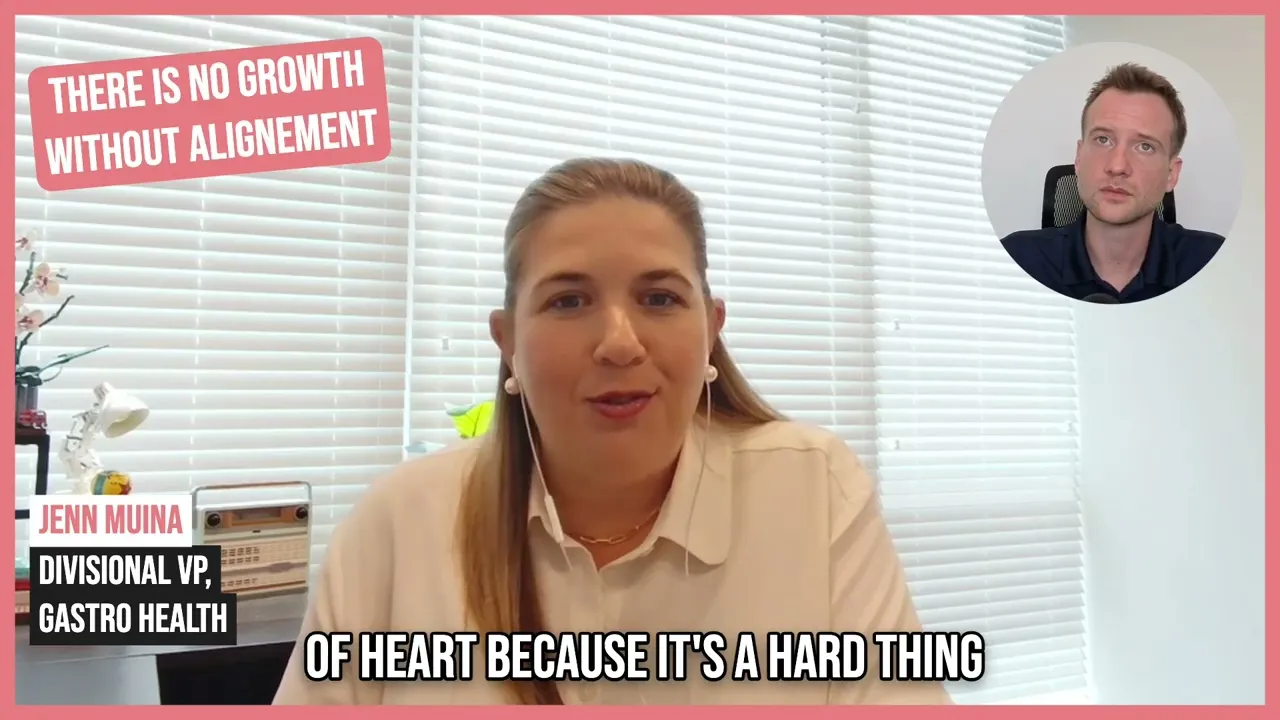
Jenn frames this as the fork that has to be taken consciously and near the start of any growth strategy: how deeply do you actually want to integrate acquired practices, or not?
Gastro Health took what she calls the road less traveled and did the deep integration work up front. She's candid that it isn't for the faint of heart. But the argument for paying that cost early is compounding: while you're partnering with new groups and still running the steady-state business, you're building a technology landscape that makes every subsequent integration go more smoothly.
The precondition was organizational, not technical. Early on they built a cross-functional team of subject matter experts who own their own lanes but work well together, and aligned as a team on what the long-term vision looked like before growing into it.
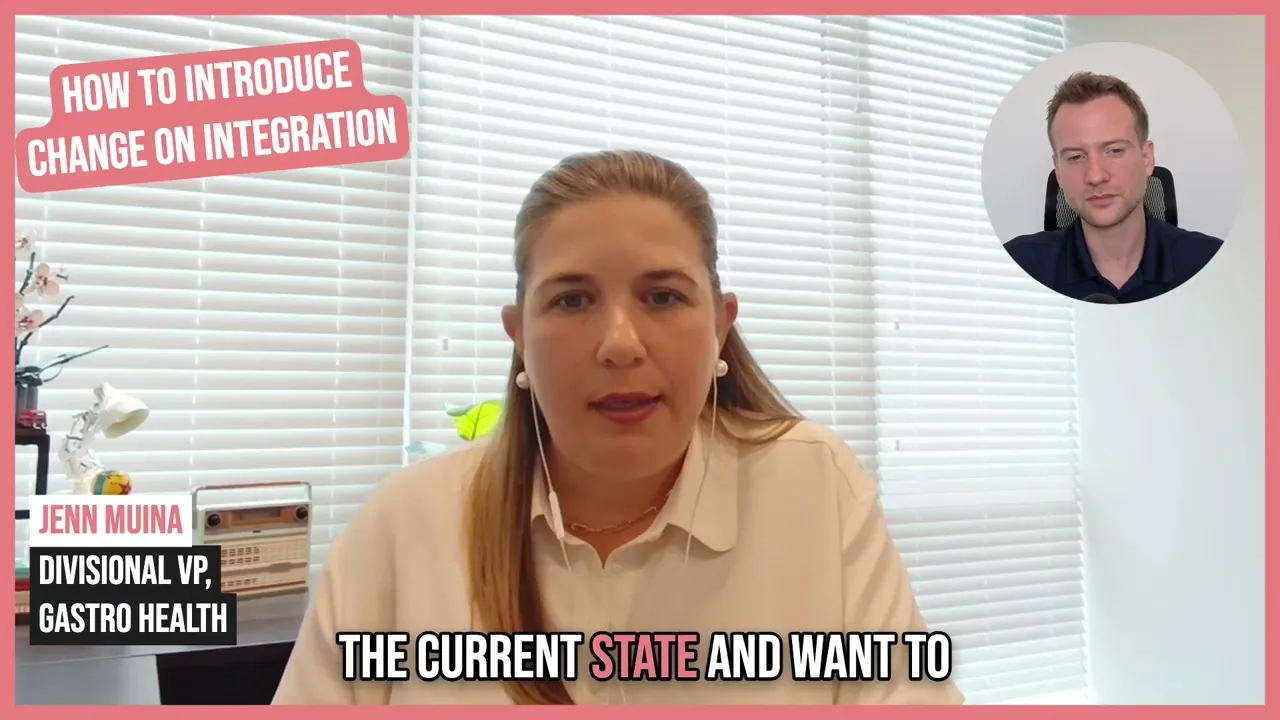
2. "Once you've seen one GI practice, you've seen one GI practice"
Her running joke from her integration days, and the reason the first clip carries it as a title. Across seven divisions in different states, no two practices are identical. Each has its nuances, and even in an enterprise organization, healthcare is local.
The operational consequence is a sequencing rule. Before you can introduce change — before you can even open the conversation about what will change — you have to genuinely understand the group you're partnering with. Go in and respect the current state. Want to understand why they do what they do and how they do it. That foundational understanding is what tells you what actually needs to change.
3. Everyone on the team has to act as a change agent
You're helping people navigate change, and people adapt at different rates and in different ways. Jenn's standard for the cross-functional team is that all of them show up with that mindset, which in practice means a great deal of communication: anticipating what people will have to endure, working to lessen it, and explaining every step.
The distinction she draws is the whole point. Change should feel like a journey the practice is embarking on with you, not something thrown at them or done to them. When they've been part of the conversation and part of the plan, implementation isn't a surprise.
And the understanding has to come from the floor: the people checking patients in at the front desk, answering phones, triaging and scheduling procedures. They're the ones doing the work that serves the patient, so how they do it determines how the practice can fold into your systems.
She won't oversell the result, either. Rather than call it seamless, she notes you're always going to break a little bit of glass navigating change.
4. Never assume your way is the right way
A corollary that's easy to state and hard to practice: you can't enter a partnership believing that how you've always done things is correct and no other approach exists.
Jenn says every partnership has taught them something — sometimes a lesson that fortified their own integration process, sometimes a genuinely better way of working that they honored when the group joined and then adopted more broadly. Her framing is that you have to keep iterating and keep looking for ways to improve the process, or you go stale and never reach the operational excellence you're chasing.
5. What one EHR instance actually buys you: closing care gaps
This is the payoff for the harder path. Despite how widespread the organization is, Gastro Health runs on a single instance of its EHR platform — which means clinical data at scale, and insight the group didn't have before.
Working with a partner to leverage that clinical data, they identify gaps in care and then operationalize closing them. Her example is specific to the specialty: recalls are common and routine in gastroenterology, and the data surfaces cases where a recall was missed for whatever reason. From there they can capture those patients and bring them back in.
Without the deep integration, she's clear, none of that would have been possible. And she describes it as the tip of the iceberg — they're early in that partnership and still finding what else it can do.
6. Pilot first, and never implement for the sake of implementing
With a provider and patient base that large, Jenn's team are strong believers in the pilot. The rule underneath it: don't change, grow or implement just for the sake of changing, growing or improving — do it mindfully, and only where it makes sense.
So a new technology or process starts at one practice identified as likely to benefit. That pilot pressure-tests the product, generates learning, and gets tweaked along the way, so that by the time it scales everyone receives the perfected version rather than the first draft.
The same skepticism shows up in how she talks about access problems — call answer rates, referral conversion rates, the constant tension between demand and team bandwidth. Technology should meet that demand in a way that improves the process rather than burdening it, and should complement what the team on the ground is already doing.
7. Standardize enough to be manageable, localize enough to be right
On an integrated platform, some things have to stay standardized or the network becomes impossible to manage. But because healthcare is local, practices and regions need room for their own nuances. Walking that line takes two inputs running in parallel:
Anecdotal — open lines of communication with practice managers who are there day in and day out, and dialogue with providers who see patients every day and have their own lens.
Data — pulled at the leadership level and paired against what's being heard on the ground.
Then cross-functional subject matter experts design the response. If providers in one region want marketing targeted there, the plan combines the technology, the data and the marketing team — and it will look different from the plan in another region, because each region contends with different factors.
8. On AI: complement the team, don't replace it
Gastro Health has been putting real time into a strategy for deploying AI, held to the same standard as anything else they implement: do it mindfully, and prioritize where it drives the biggest impact.
Jenn's own view from inside the project is that AI isn't here to replace people. It's a tool to complement what's there, lessening the burden on staff so their capacity opens up and they can do the work of serving patients well.
Their first priority is existing workflows that are high value and historically very manual — either pushing more throughput so patients get what they need faster, or increasing provider capacity to see patients, review results and call people back without adding to physician burnout. Net-new, AI-native workflows come second, as the industry surfaces things nobody would have thought possible. She expects any organization ends up with a hybrid of the two eventually.
Questions this episode answers
How deeply should a group integrate the practices it acquires?
It's a decision to make deliberately and early. Gastro Health chose deep integration up front — what Jenn Muina calls the road less traveled, and not for the faint of heart. The payoff compounds: while you're partnering with new groups and running the existing business, you're building a technology landscape that makes each subsequent integration easier. The precondition was organizational, a cross-functional team of subject matter experts aligned on the long-term vision before growth started.
How do you introduce change to a newly acquired practice?
Understand the current state before proposing anything. Jenn Muina's rule is that you can't introduce change — or even open the conversation about change — until you understand why a practice does what it does, and that means talking to the front desk, the phones, and the people triaging and scheduling procedures. Everyone on the integration team has to act as a change agent, communicating enough that the practice feels part of the plan rather than having change done to them.
What does running every practice on one EHR instance make possible?
Clinical data at scale, and the ability to act on it. Gastro Health runs its whole footprint on a single EHR instance, which lets the group identify gaps in care and operationalize closing them. Jenn Muina's example is specific to gastroenterology: recalls are routine, the data surfaces the ones that were missed, and the practice can then bring those patients back in. None of it would have been possible without the deep integration work done up front.
Where should a specialty group apply AI first?
To existing workflows that are high value and historically very manual, per Jenn Muina — either increasing throughput so patients get what they need faster, or freeing provider capacity to see patients, review results and return calls without adding to burnout. Her view is that AI complements staff rather than replacing them, opening capacity rather than removing people. Net-new, AI-native workflows come second, as the industry surfaces things nobody had imagined.
Scale referral operations to drive growth and efficiency
Full transcript
Transcript
[00:00:00] And specialty healthcare growth is not optional, but scaling with operational excellence. That's the hard part. I'm Joseph Zboch. This is Scaling Specialty Growth.
[00:00:08] Joe: Thanks for listening. Today's guest is Jenn Muina, divisional VP at Gastro Health, a national specialty firm with over 150 locations and more than 400 physicians. Gastro Health was an early mover in PE-backed GI consolidation. Jenn runs the Florida division, where she's coordinated the integration of multiple acquired practices into one cohesive operation.
Jenn, welcome.
[00:00:31] Jenn: Thank you for having me.
[00:00:33] Joe: I wanted to ask about how you think about, especially at Gastro Health with the PE-backed motion, acquiring practices, integrating them — that being one of the main growth levers, at least early on in the practice history, and I think it continues to this day. So how do you, as an ops leader, think about balancing aggressive growth goals while maintaining operational excellence? Because you've got to pay attention to not just the patient experience but also that of the practices that have, in a sense, entrusted or been integrated into the Gastro Health brand. How do you think about that?
[00:01:04] Jenn: Yeah. Those are two goals that are not mutually exclusive — they go hand in hand, and I think that each merits a space in the way that you run the operation. And I think first and foremost for us is never wanting to lose sight of what your goal is, and what the mission is. And ultimately at the end of the day, what it comes down to is the patient.
So it has to become part of the fabric of how you operate as a team, with the patient always in mind. Whether you're making decisions about who and where and how you partner, whether you are trying to execute operational excellence initiatives — that's paramount.
I think part of our success has been that we very early on created a cross-functional team of subject matter experts that, in their own right, own their lanes, but work very well together. And it's important, I think, when you are setting out for growth, you have to align as a team on what that vision looks like for the long term.
And you have to probably make a decision very early on in that process how deeply you want to integrate, or not. I think that that's something that differentiates us in the industry, where we opted to go the road less traveled and do a lot of that deep integration on the front end. And it's certainly not for the faint of heart, because it's a hard thing to do. But I think that at the end of the day, it helped us with our growth — because when you build that integration, then as you're partnering with groups and also trying to maintain your current state, steady state business, you're building a technology landscape for your organization that allows for that integration more seamlessly.
[00:02:51] Joe: Yeah, that's interesting. So it sounds like you've put together these teams and you guys are on the same side of the table, and on the other side is the patient — how do we serve that patient, and what does it look like to really bring this practice into the fold? Can you dig in a little bit in terms of what that integration actually looks like, what you're paying attention to, what you've seen success with? You said the road less traveled. What can you tell us about that road that you've built yourself?
[00:03:23] Jenn: Well, first and foremost, I didn't build it myself. We built it with a lot of teammates that put in the elbow grease.
So I would say when we started to grow, we took a pause and as a team said, "What does that integration plan look like? If we don't have one, what do we need to build to make that possible?"
So as you know, we're in seven different divisions at this point, in different states. And I have a running joke when I was running integration — I always said, "Once you've seen one GI practice, you've seen one GI practice." Because the fact of the matter is that there's no two that are identical or the same. They each have their nuances, and healthcare, even though we are an enterprise organization, healthcare is very local at the end of the day.
So I think when you're looking to partner with groups, you have to really understand the group that you're partnering with before you can even start to introduce change, or have the conversation around what will change. So you have to go in and respect the current state and want to understand it — why they do what they do, how they do what they do. And I think that having that foundational understanding helps inform the plan on what you need to change moving forward to integrate them into your organization and your landscape.
[00:04:43] Joe: Yeah. Obviously you guys have seen a lot of success with this model. When you roll out some of this integration plan after you've understood the current state, what are some of the things that you're starting with? Do you subscribe to this idea of quick wins, to continue building that trust with the practice? Or what does that approach look like?
[00:05:05] Jenn: So I think the entire cross-functional team that's executing this integration all has to come at that with the same mindset of being a change agent. Because you are helping people navigate change, and everyone adapts to change at different rates and in different ways.
And so it's a lot of communication — anticipating what the impact of some of the things that they're going to have to endure when they're going through this change, helping to lessen the impact for them, and helping them understand every step of the way. That way they feel like they are part of the process of that change, rather than throwing the change at them or doing something to them. Rather, they're embarking on this journey with you of change, and being part of the conversation and part of the plan — so that way when we are implementing the change, they're expecting it. It's not something that we're just bringing on them, or that's coming out of nowhere.
So really first and foremost, we go in and try to thoroughly understand the boots on the ground operation. And we're talking to folks that are sitting at the front desk checking in patients, the ones who are picking up the phones and answering phone calls, the ones who are triaging and scheduling procedures. Because ultimately, they're the ones that are doing all the hard work to service the patient. So understanding how they do what they do helps you understand — okay, as you're going to join our organization and you're going to fold into our systems landscape, our operations, how do we do that in a seamless way?
Let me not say seamless, because it's never seamless. You're always gonna break a little bit of glass when you're navigating change. But ultimately, it's honoring and appreciating what they're doing well, and finding ways to perpetuate that, and sometimes learn from it. You can never just go into a partnership and think that the way you've been doing things forever is the right way and that there's no other way of doing it.
So with every partnership that we've had, we've learned something through it — whether it's a learning that helped fortify our process to be better at integrating, or learning about better ways of doing things and helping honor that when they join, and also maybe adopting it because we think, "Look, they're doing something well, and how do we apply that here?"
So you always have to be iterating, and you always have to be looking for opportunities to improve your process. Because if you don't, then you're just gonna remain stale and never achieve that operational excellence that you're trying to.
[00:07:37] Joe: Yeah. So imagine you're introducing change, you're also introducing back office and some front office change. Can you tell me about maybe a recent project? I know integration of practices is a primary growth driver for Gastro Health, of course. But have you and your team rolled out anything in terms of access, patient acquisition, or other plays or ideas to help grow the brand and grow patient volume?
[00:08:05] Jenn: Yeah. So actually, I think something that we've accomplished and I'm very proud of — as I mentioned earlier, doing the deep integration is the road less traveled, and it's a little bit harder. But when you're able to do that, what we've accomplished is, as widespread as we are, we're all in one instance of the EHR platform that we're on.
And so with that, you're able to take that and achieve clinical excellence, and maybe bridge gaps in care where maybe you didn't have that insight before — you're able to tap into data that's very powerful. And we've been able to partner with a partner who, in essence, is able to help us leverage our clinical data and identify where maybe we have gaps in care, that then we're able to take that data and act upon it, operationalize it, and then close in on that gap.
So a perfect example is, we as gastroenterology, in our specialty, recalls is something that is very common and routine. And so we were able to identify through our data where, for whatever reason, if a recall had been missed or whatnot, and that gap existed for a patient, we were able to ascertain how to close in on that gap and capture those patients and bring them back for their recalls.
And so otherwise, if we hadn't done the deep integration that we did, we would not have been able to accomplish things like that. And that's just the tip of the iceberg. We're just dipping our toes and starting to grow in that partnership and see what else we can achieve through those clinical initiatives.
[00:09:40] Joe: Yeah. The data piece is really interesting. I can't imagine just the benefit of being on one instance of the EHR. So do you have a model where — you said seven different divisions — when you think about rolling out, do you have a portfolio-based approach, where maybe in this market we're testing something before we roll it out to the broader? Do you have innovation beds, or what does it look like to be constantly evolving and iterating and then rolling out any of those initiatives? How does that look?
[00:10:15] Jenn: Yeah. So our team, we're strong believers in the pilot, because we are an integrated system, and when you're implementing technology, it's a large provider base and patient base. So you don't wanna ever change or grow or implement just for the sake of changing, implementing, or improving. You wanna do it in a mindful way, and where it makes sense.
And so when we identify whether it's technology, a new process, or whatever type of integration it is, we always want to first pilot somewhere where we identify a practice that would benefit from it. And in that pilot, you're testing, you're pressure testing the product, you are learning, you are iterating on it, and you're tweaking it along the way so that you can perfect it — so that when you go to scale it, everyone's getting the best benefit out of that product or that solution.
[00:11:17] Joe: Sorry, I was just thinking — what are some of the challenges right now in the GI environment that are at the forefront of your mind that you're working through? Is it really patient access and streamlining that patient experience? I know obviously GI is very procedurally driven. Where are you looking to optimize and continue to innovate on the patient front — going back to the beginning of the conversation, that's the lens through which we view all things.
[00:11:45] Jenn: Yeah. I don't think the challenges that we experience here from a patient access perspective, or things of that nature, are relegated to GI. I think you probably see it permeate to a lot of other specialties, where if you look at call answer rates, if you look at referral conversion rates — in essence, at the end of the day, your goal is a patient needs care. You want them to get that care, and you want them to get it in a timely manner. And so you wanna build processes or implement technology that are going to facilitate that, so that they have the very best healthcare experience that they possibly can with your providers and your organization.
And you're constantly having to navigate the challenge of the influx and demand of those things and the bandwidth of the teams that you have that are receiving — whether it's phone calls, faxes, referrals — and how do you navigate that and implement technology that helps them meet that demand, but in a way where you are improving the process rather than burdening it.
'Cause it goes back to — you don't wanna just implement technology solutions for the sake of implementing technology solutions. You want them to be the right technology solutions, and you want them to be solutions that are going to help complement what your team on the ground is doing.
[00:13:02] Joe: Yeah. So often, it feels like here's a technology solution in search of a problem. We need to start with that problem.
That's interesting. So are you directly overseeing, or working with your team where you have the coordinators on the floor that are working to meet patients where they are? How do you surface either gaps in process or opportunities to make that workflow more streamlined? Are you looking at operational insights or reporting inside of the EHR? How do the insights from across all these different locations — which have come from the integration, and so they have their own different flavors of doing things — how are you surfacing all of these thoughts and insights to create a divisional level point of view on the opportunity, to then go and address it? Because that problem can have different flavors in different practices and in different markets.
[00:14:08] Jenn: Yeah. So you have to walk a balance, especially when you have a platform like ours that is very integrated, where to a certain extent you have to maintain certain things in a standardized fashion — because if not, then it's simply difficult to manage that system or that network. But you also want to give practices, again, because healthcare is very local, you have to appreciate and allow for certain nuances within a practice or a region.
So you have to have, first, open lines of communication. You have to always be getting feedback, whether it's anecdotal or through data, with the practice that's boots on the ground. So your practice managers who are there day in and day out managing their staff, having touch points with them, and also having a dialogue with your providers — because they're the ones interacting with the patients every day, so they have a lens as well.
But then we also have data that we're able to pull up at the leadership level, where we help use that data to pair with what we're receiving anecdotally at the practice level, and pairing those things together. And then with our cross-functional teams and the subject matter experts in their own right, leveraging those teammates to help devise solutions.
So if we have a pocket where providers are wanting to target marketing in a region, we're gonna leverage the technology we have, the data we have, and also our marketing team, and come up with a plan for how we're going to attack marketing in that region. And that might look different in that region than it does in another region, because every region is contending with different factors, I think.
[00:15:46] Joe: I think that's a theme that I've heard from you throughout the conversation — just creating and maintaining those open lines of communication, so that you're really empowering the practices to get the most out of the technology stack and the data and the expertise that you have at the Gastro Health level. But being able to iterate and deploy things at the individual market level, and entrusting those teams to be able to get the most out of the tools that they have, paired well with their local knowledge — healthcare is local — their knowledge of their market and their patient population.
2026, lots has been going on, a lot of innovation lately. What are you guys working on at the Gastro Health level that you're excited about?
[00:16:25] Jenn: So we've been putting a lot of time and energy into trying to strategize and execute on a vision for how we deploy AI — because AI is everywhere, and it's permeating a lot of different layers in healthcare. And like everything else that we implement, we want to make sure that whatever we are implementing, we're doing it in a mindful way, and prioritizing where we think we're gonna drive the biggest impact.
And I think, at least as I've been engaging in the project, my sentiments around it are AI is not here to replace people. I see it as a tool to help complement what we have. And if anything, it helps lessen the burden on your staff, so that then you're able to open their capacity and make it possible for them to thrive and succeed in what they're trying to service for the patient.
So we look at it as: where do we have pockets where, if we were to leverage AI, we would really be able to affect really material change and impact to workflow — that makes the practice, the staff, the physicians more efficient, and ultimately is the means to the end, which is the goal of the patient having a good experience.
[00:17:43] Joe: You're spot on. AI is everywhere. It's almost unavoidable — it is unavoidable. There's maybe two ways to think about it, or at least that I'm chewing through right now. There's one where I have this workflow or this process in place — how can I use AI to accelerate it, to where my team members aren't spending so much time doing either low value work, or the kind of work that leads to burnout and high turnover. So, improving an existing workflow.
And there's also another aspect of it that I'm curious about, being on a single EHR instance and having access to data that maybe some other groups that have grown a similar way don't — which is net new types of workflows that are more purely AI native. Do you have a framework in terms of identifying opportunities for AI? Or do you have thoughts on improving a workflow that exists and accelerating it once it's been validated and proven, versus a net new workflow that is only possible because of AI? Do you have thoughts on that, or is that a part of your approach?
[00:18:52] Jenn: So I think in any organization, it's going to be a hybrid of those two things eventually. I think what we decided as a team to focus on first was looking at the workflows in a practice. What are the high value-added things where, if we were to put AI in the foundation of that workflow, it would then either make that workflow — that maybe was historically extremely manual — more efficient, so we're able to get more throughput in that process, and then patients are getting what they need faster.
Or help increase the provider's capacity so that they're able to see their patients, review their results, call patients back, and do all those things, and not contribute to physician burnout — and make it possible that their workflow is efficient. And so I think that's the primary target priority.
And then as things start to emerge in the industry, and you start to learn about what's out there and you identify new things that are net new value adds, where you never thought that was something that could exist — and then you get introduced to a new product and you say, "Wow, I never would've dreamed that was a possibility, but here we are, and here's something that we can explore and maybe add a new efficiency that we never had before."
[00:20:13] Joe: Yeah. In my experience there's AI as it relates to work, and there's AI almost in your personal life. And one of the things that I've subscribed to is I call it an excuse case — it's like, I wonder if AI can do this aspect of something and make it more efficient. 'Cause I think you're right in terms of the type of work that is necessary but causes burnout being perfect for AI, to offload that and replace that manual work with more meaningful work, whether it's the physician side or the staff side.
I really like that perspective that you guys have. What's the best way for other operators to get in touch with you? Are you on LinkedIn?
[00:20:52] Jenn: I am.
[00:20:53] Joe: Okay. And it's Jenn Muina, right?
[00:20:56] Jenn: Yes, sir.
[00:20:59] Joe: With your experience on the operational front, and integrating a bunch of different practices, and the lessons learned there, I think you have a unique wealth of experience, and I really appreciate you sharing some of it with us today.
[00:21:10] Jenn: No, thank you. I appreciate you having me.
[00:21:12] Joe: Thanks, Jenn.
[00:21:13] Hey, it's Joe. Thanks for listening. If you like what you hear, share with the peer, and if you're looking to scale referral operations to drive growth and efficiency, visit hatchcare.com.