
All Episodes
EPISODE 6
·
·
25:11
The patient experience is a process problem
Matthew Slater
·
Administrative Director,
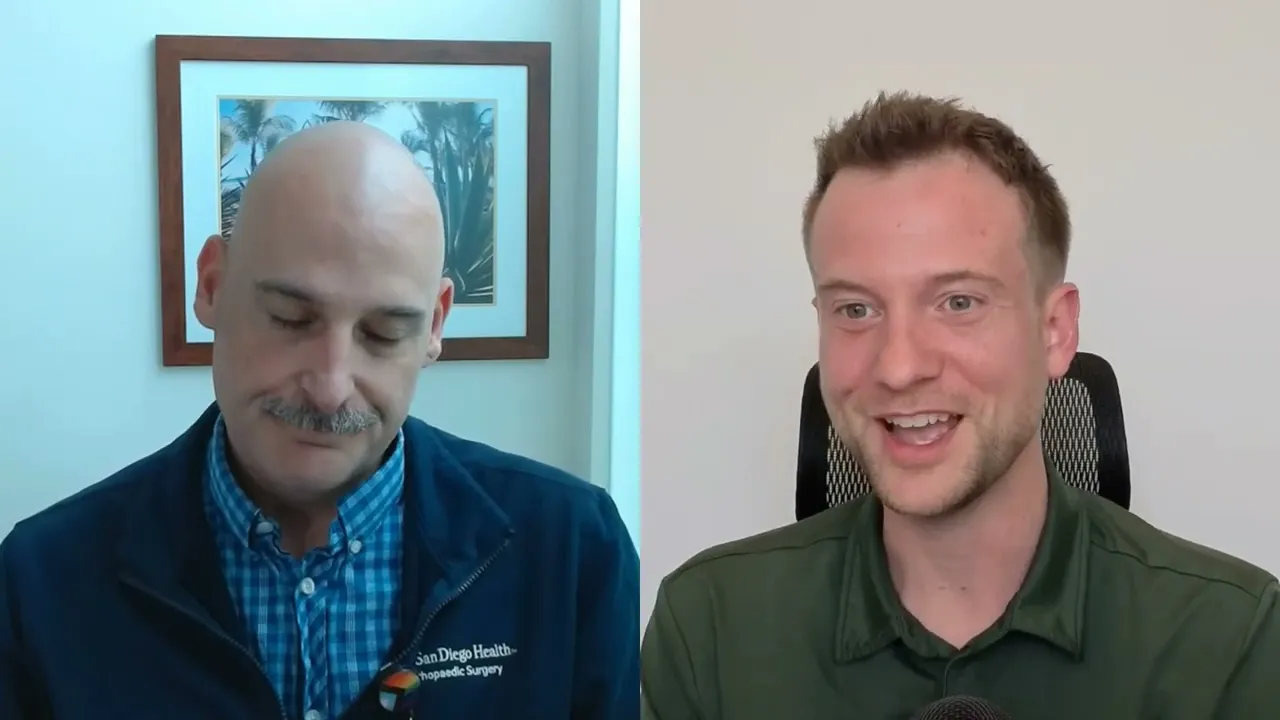
Matthew Slater oversees orthopedic operations at UC San Diego Health, a nationally ranked program in a market with multiple competing health systems and hundreds of orthopedic surgeons. He argues that most patient experience failures are actually process failures, walks through the single post-visit text message that moved his scores, and explains why a building opening in 2029 is being designed for 2034.
LATEST · E-- · —
0:00 / 0:00
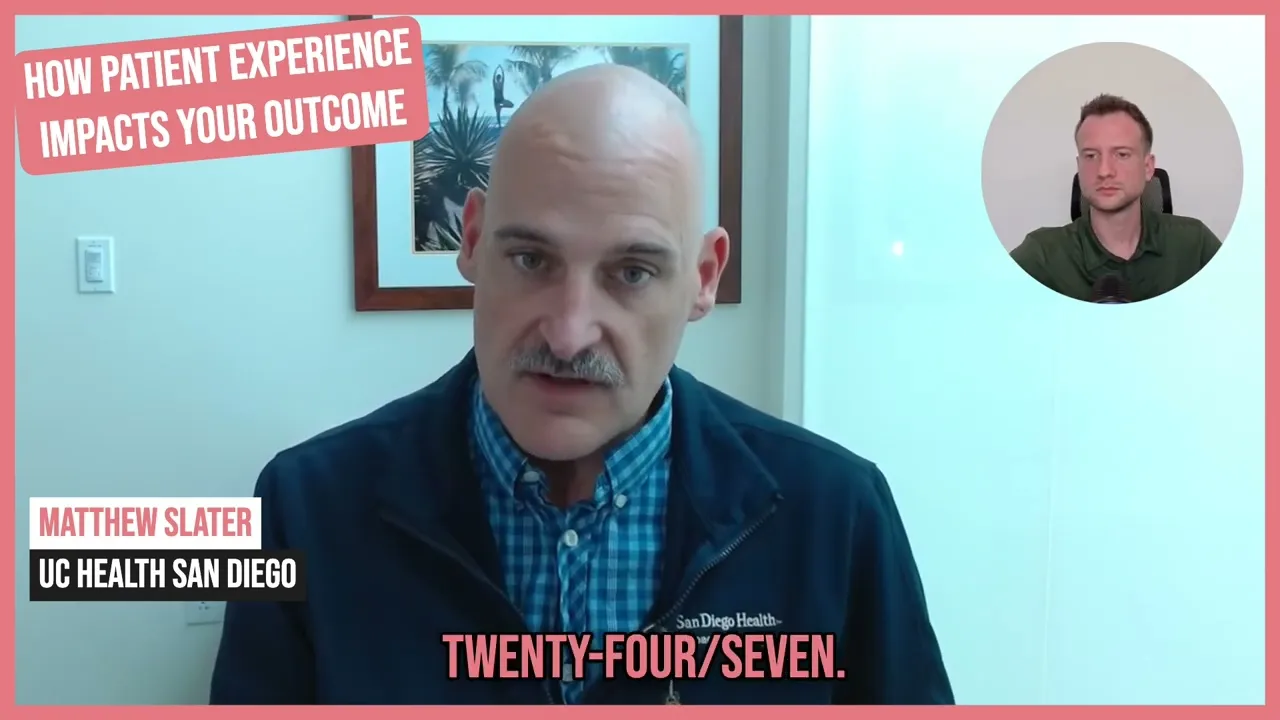
One Text After Every Visit Moved Our Experience Scores
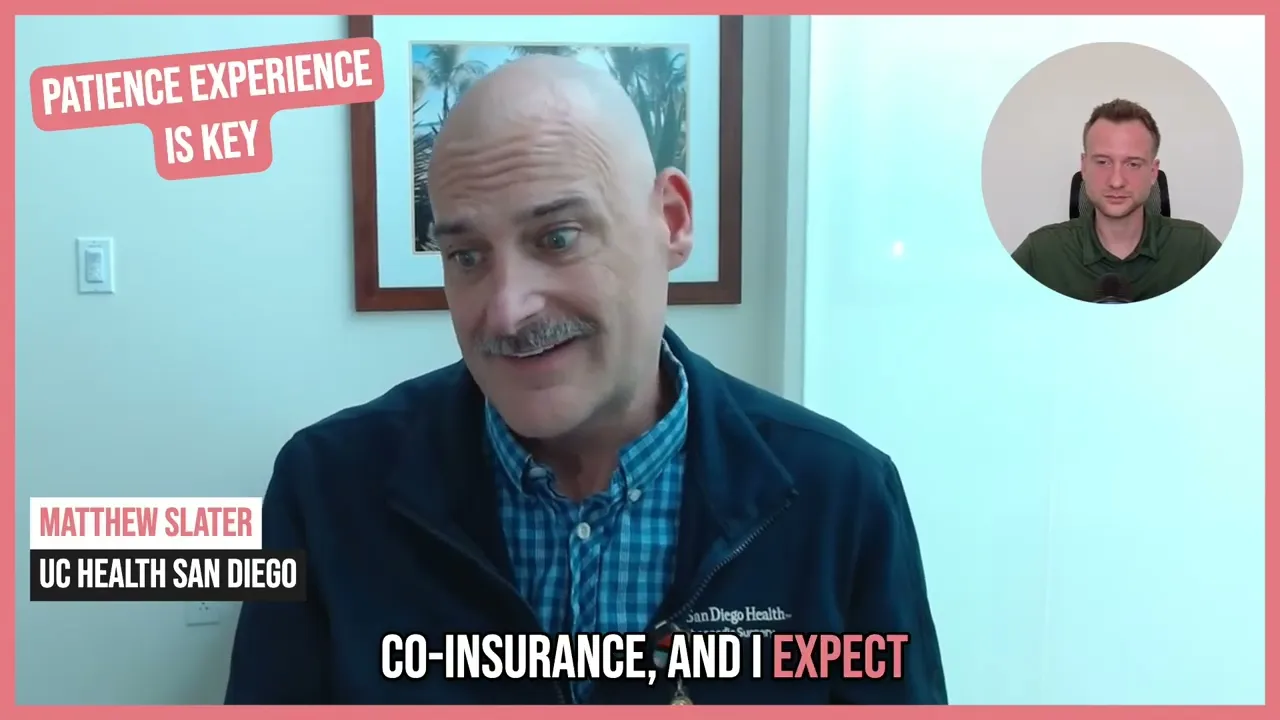
Nationally Ranked and Still Losing Patients at the Door
Top takeaways
1. A national ranking doesn't survive a hard front door
Matthew operates in a market with multiple competing health systems and hundreds of orthopedic surgeons, which sharpens the point considerably. You can be nationally ranked, with the best tools and imaging equipment available — and if patients don't feel welcome walking in, if getting an appointment isn't easy, if you've built unnecessary barriers to care, they go elsewhere.
His framing to his own teams is careful. Healthcare isn't the hospitality industry; nobody is welcoming guests to a beach hotel and fetching extra towels. But patient expectations have risen to that level, because patients are paying real money — high co-pays, co-insurance, thousands out of pocket — and they expect expert physicians and to be well looked after while they're there.
He reaches for Maslow's hierarchy to describe the consequence: you can't build something impressive on a shaky base. Get patients in the door, make the experience one they'd repeat and tell friends about, and growth follows from there.
2. Read the bad reviews — they're almost never about the care
Matthew checks his patient experience comments every single week, and his observation matches what most operators quietly know: negative reviews are usually a process problem. The parking situation. The way the building sits back from the parking area. A message that took too long to get answered.
He treats all of those as fair — things he'd notice as an orthopedic patient himself. So the response isn't defensive. For each one, the team asks where they could have done better, and specifically where expectations could have been set correctly up front.
3. The post-visit text that moved the scores
This is the smallest, most copyable intervention in the episode, and it's the first clip's title. After every visit, patients get a text: thank you for choosing us and trusting us with your care; your MyChart portal is available twenty-four seven; if you have questions after your visit, send a message and expect a three-business-day turnaround; if it's urgent or emergent, here's the number to call.
Two things are happening at once. Expectations get set explicitly — including the honest turnaround time rather than an implied instant one — and the patient leaves knowing exactly how to reach someone.
Matthew reports a big jump in their experience scores from it, concentrated in exactly the category you'd predict: whether the patient knew what to do after their appointment.
4. Staff experience is the foundation, and hiring is where it starts
His department went from high turnover when he arrived to significantly less, and most departures now are people promoting within his area or elsewhere in the organization — which he counts as the outcome you want. What changed was listening to team members, bringing them into problem-solving, supporting them, and helping them grow in position. His logic is direct: if they don't feel good, they'll have a hard time delivering a good experience to anyone else.
The hiring philosophy came from a peer at another UC institute and is worth stating plainly. Every candidate does a group interview with people who would be their peers. Each interviewer scores the candidate one to ten. Only nines and tens get hired, and it has to be unanimous — one eight and the candidate is out. He says you can feel the difference walking into her space, and they've adopted it.
5. Growth generates downstream work that somebody has to absorb
A point that gets skipped in most growth plans: hire one, two, three more surgeons and every one of them creates additional work downstream — paperwork, forms, all the administrative exhaust that comes with a surgeon. You need the team to handle it.
His warning is against the default assumption that an existing person will just pick up the extra, because that person may already be overloaded. What prevents it is open communication — asking how are you doing and actually meaning it, in a way that lets someone answer honestly that they aren't doing well, and why.
Skip that, and the growth you created arrives with a worse experience attached.
6. Experience now has dollars and outcomes attached to it
Matthew's argument for why this isn't soft anymore has two parts.
Financially, payers and certification bodies increasingly look at experience — including how an organization responds to complaints and issues — and there are real dollars linked to experience scores.
Clinically, experience affects outcomes. His example: a patient who comes in for surgery and leaves knowing exactly who to contact will contact that person when something goes wrong — rather than ending up in the emergency room, or as a readmission, costing the health system more.
7. Recruit against access gaps, not headcount
UC San Diego doesn't add providers in general. They look at where the access issues actually are — hand, foot and ankle, PM&R, joints — and build recruitment around those specific gaps.
The demand side is unusually strong for them, and Matthew traces part of that to the pandemic, when UC San Diego ran the Petco Park vaccination superstation. His read is that the community watched the system step up, and the goodwill persists.
Where the market is going shapes the plan. Orthopedic care is a large and growing share of healthcare costs, and the site of care keeps shifting: he notes that if you'd said ten years ago every joint would be outpatient, people would have laughed — and now he estimates nearly 90% of their joints go home the same day, or at least within 23 hours.
8. Building a 2029 facility for 2034
The project he's most excited about is a four-story musculoskeletal and neuro-focused building slated to open in 2029: advanced imaging, urgent care, 23-hour stays, operating rooms, clinic space, physical therapy and rehab.
The vision is a genuine one-stop shop — a patient walks into urgent care with a fracture, is sent up to the surgeon on the fourth floor, and if it needs operating on that day, goes down to the third-floor ORs, has surgery, recovers, and goes home. He's careful to caveat that operationally they aren't there yet, and that it will take real coordination between many groups.
The planning horizon is the part worth stealing. His physician recruitment plan runs to 2034. When IS asked whether he wanted workstations on wheels or wall-mounted computers, his answer was neither — the building should be designed for what technology looks like in 2034, not for what's available now. Same logic drove the number of outpatient ORs, sized against procedures coming off the MSK inpatient-only list, including spine cases that once meant a week in hospital.
9. His advice: you don't need more data
Matthew came to operations from flight nursing, and the talk he gave at AAOE draws the lesson from that cabin: twelve feet long, five feet wide, four and a half feet tall, at 42,000 feet, with a patient on a gurney, one other nurse, a pilot, a co-pilot, no EMR and a pocket drug book.
What that taught him is that leaders have to stop being afraid to decide. His line from the talk: you don't need more data. You need to make a decision, find out whether it was right, and pivot if it wasn't.
And the cost of not deciding is real, because indecision is itself a decision — your team is watching, and what they see is someone who can't make up their mind. Decide, communicate, take action, then assess whether to pivot. Getting it wrong is survivable. Sitting in analysis paralysis does no favors to you or anyone on your team.
Questions this episode answers
Why are most negative patient reviews about process rather than care?
Because the friction patients remember happens outside the exam room. Matthew Slater reads his patient experience comments weekly, and what surfaces is parking, a building set back from the lot, a message that took too long to answer — things he considers fair complaints he'd have as a patient himself. His team's response to each one is to ask where expectations could have been set correctly up front, rather than treating it as a service failure.
What should a post-visit message to patients actually say?
UC San Diego Health texts every patient after their visit with four things: thanks for trusting us with your care, the portal is available around the clock, send a message with questions and expect a three-business-day turnaround, and here's the number if it's urgent. The honest turnaround time is the part that does the work. Matthew Slater reports a significant jump in experience scores concentrated in the category measuring whether patients knew what to do after their appointment.
How do you reduce turnover in coordinator and access roles?
Start at hiring. Matthew Slater adopted a philosophy from a peer at another UC institute: every candidate interviews with a panel of future peers, each panelist scores them one to ten, and only unanimous nines and tens get hired — a single eight and the candidate is out. Alongside that, listening to team members, bringing them into problem-solving, and helping them grow took his department from high turnover to mostly losing people to internal promotions.
Does patient experience actually affect outcomes and revenue?
Matthew Slater argues both. Financially, payers and certification bodies increasingly evaluate experience, including how an organization responds to complaints, and there are dollars attached to those scores. Clinically, a patient who leaves surgery knowing exactly who to contact will call that person when something goes wrong — instead of turning up in the emergency room or becoming a readmission, which costs the health system more.
Scale referral operations to drive growth and efficiency
Full transcript
Transcript
[00:00:00] And specialty healthcare growth is not optional, but scaling with operational excellence. That's the hard part. I'm Joseph Zboch. This is Scaling Specialty Growth.
[00:00:19] Joe: … health system in San Diego ranked nationally for orthopedic care, and home to the first spine program in California to earn the Joint Commission's Advanced Certification in Spine Surgery.
He believes operational excellence directly shapes a patient's experience from first call to last post-op check-in, which is why I'm excited to have him on the show. We're digging in deep into his work to scale specialty growth without losing what makes the care great. Matthew, welcome.
[00:00:48] Matthew: Awesome. Thanks, Joe. Happy to be here.
[00:00:50] Joe: I'm excited to get going. So the first question I have is really just, how do you think about hitting organizational growth goals while maintaining operational excellence? And in that, I do wanna break like a cardinal rule in podcasting it feels like, because you wrote something pretty recently that I thought was really great.
You wrote, "Sometimes growth doesn't come from climbing higher or pushing harder. Sometimes it comes from seeing differently," which is pretty cool. So I'm curious how that perspective shapes how you think about operational excellence and the balance of hitting goals — and I know people is a really important factor to the work that you do.
[00:01:30] Matthew: Yeah, absolutely. It's funny you said we'll start with a question — I feel like that could be an entire show, or maybe a couple series. That's a pretty big question there. So we'll try to break it down into smaller bites.
Thank you for commenting on what I mentioned and what I posted, as well as the patient and people aspect of it. I don't think that in healthcare we sometimes recognize enough of how challenging things are for our people, and how important that patient experience is.
There's certainly different areas of the country where maybe there's a mom-and-pop type physician's office where it's one doc, two docs, a receptionist and a medical assistant. And maybe their growth plan obviously would look very different than, say, somewhere like where I am — in that we have multiple competing health systems in San Diego. We have hundreds of orthopedic surgeons. There's a lot of competition. And so how do we grow strategically where we are?
And I think that goes back to what we're talking about. How do you create an experience for patients that they wanna come and they want to experience what you have to offer? You can be the best of, nationally ranked, and you can have the funnest tools and toys and imaging equipment and all the things — but if the patients don't walk in and immediately feel welcome, if it's not an easy way to access an appointment, if you're making unnecessary barriers to getting that care, then those patients are gonna go elsewhere.
I always relate to my teams when I'm talking about experience, and I say, "We're unfortunately not in the hospitality industry at first sight." We're not sitting there on this beautiful beach at this great hotel where we get to welcome people on this beautiful vacation and, "How can we make your stay better?" "Oh, I want an extra towel." That's not how we get to roll.
But our patients' experiences — or expectations — are getting to that level. They're getting to the level of, when I come, I'm paying thousands and thousands of dollars out of my pocket. My insurance is paying all this money. I've got this high co-pay, this co-insurance, and I expect really good treatment. I expect not only expert doctors, but I expect that people are gonna take really good care of me while I'm there.
And so that's where, to me, you can't lose touch of that experience. You can't lose touch of your vision, and you can't lose touch of what the grounding factor is. You look at it like Maslow's pyramid, the hierarchy of needs. You can't build this incredible building or this incredible thing on a base that's shaky or doesn't really have what you need.
So you really have to focus on: how do I get those patients in the door? How do I make sure that their experience is that they want to come back and they want to tell their friends about us? And then how do I continue to grow that? There's a whole lot of factors that we can talk about as we dig into this. But I think those are that foundational factor that is part of my perspective on how we approach things from the patient's lens, in order to create that somewhat organic growth. Because if you build it, they will come — if you build that experience, if you build that high touch, high feel, almost boutiquey feel when you come to a doctor's office, you're gonna wanna come back. And so how do we start with that and then grow from there?
[00:04:58] Joe: Yeah, quite a few things to unpack there. I think it's fair to say that patient experience historically has felt a little bit fuzzy. But there's some very specific ways that it surfaces that, whether you're a provider or you're in leadership, you notice. And one of them is just in Google reviews — when there's a low Google review, a lot of times it's not about the quality of the care per se, but rather the operational experience.
And so this leads me to my question. Clearly you've spent a lot of time internalizing how to best frame the value of experience for an organization. So how is that message different from what you mentioned to the folks on your team — "Hey, we're not necessarily hospitality, but our patients are making a real investment, so let's do our best here" — and then on the other end, the leadership side of things, that to paint with a broad brush, perhaps unfairly, are gonna say, "Yeah, so what are the numbers? How does this drive growth?" Or, "Hey, we just opened up this new facility. What do you mean experience? Let's just get people in the front door regardless, no matter what." How do you frame the message of experience based on the audience you're talking to?
[00:06:15] Matthew: So I think there has to be alignment between both. And I say too that for our teams, patient experience is important, but my team members' experience is also important. We've gone from a high turnover in my department when I first came to significantly less now. And part of that is because we have tried really hard to listen to our team members, to allow them to be part of the problem-solving, to make sure that we're supporting them, and then to also help them grow in position.
So most of the turnover I've had recently has been team members promoting within my area or in the organization, which is great. That's what we wanna see. So we're working to make sure that their experience is good because, again, that's our foundation. If they don't feel good, they're gonna have a hard time turning around and delivering that experience to others. So there has to be that connection.
There also has to be the connection between — if I'm sitting in the executive team meeting with my COO, CEO, whoever, finance, whatever it may be — yeah, they're gonna talk numbers, and that's fine. I don't expect anything different. That's what we should be looking at. But what's going to matter is that we have to look at how do we attract those patients that we want to have in the doors, that are important to us, that help with our bottom line, that help with our numbers, all those things. And that includes by leveraging having an exceptional experience.
You're right — I couldn't say it better — that oftentimes when we get these negative reviews, and I check my patient experience comments every single week, when we get those, it's often a process problem. People don't like the parking situation. They don't like the way the building is set back from the parking area. These are all fair things. It's things that I would consider as an ortho patient too. And maybe it took too long to get a message back.
So anytime we get those, we look through: where could we have done better? How could we have made sure we set expectations the right way up front? As you come in as a patient, here's what you can expect after your visit.
And so one of the things we implemented recently is, after every visit, we send a text message to the patients and say, "Thank you for choosing us and trusting us with your care. Just so you know, your MyChart portal is available twenty-four seven. If you have any questions after your visit, you can send us a message. Please expect a three-business-day turnaround time." So we're immediately establishing what those expectations are. If it's emergent or urgent, here's the phone number to call.
And so as I walk out of the building, I get that at the end of my day. As a patient, I'm able to say, "Okay, these guys care that I came there, and now I know how to get somebody if I need them." And it's been really helpful. We've actually seen a big jump in our experience scores, specifically in the category of patient knew what to do after their appointment.
And so when patients are in a market like ours, they're going to sometimes go choose different doctors. They're gonna doctor shop a little bit. They're gonna go to another group and see how they are. They're gonna come here. So when I talk to my executive team, it really is: we have to continue focusing on that experience.
And what I'm very fortunate about is our executive team here is heavily focused on experience. This is something super important to them. It's also becoming more and more important in the national standards — different payers are looking at it, different organizations that do certification bodies are looking at it. How do we respond to complaints? How do we respond to issues?
And so it's become like there is a — like you said, previously kind of fuzzy, but now it's not so much. There are actual dollars linked to patient experience scores, and how do we capture those?
And then additionally, I think there's always been this, well, patient experience is saying please and thank you. But it's not just that. There's actually data behind the fact that your experience as a patient directly impacts your outcome. If I know as a patient that I come in for surgery, I have my surgery, afterwards I know exactly who to contact — and if there's a problem, I contact that person, and I don't end up back in the emergency room. I don't end up as a readmission. I don't end up costing the health system more.
And so the way that you translate that, back to your question, is I'm working with my team to make sure they're supported, first of all. I'm then making sure the executive team understands where our experience is, where our opportunities are, and how do we get better at those. And then we're continuously trying to be ahead of the curve on that.
[00:10:53] Joe: Yeah. It can be easy to forget that being a patient is pretty difficult. As the patient, you are the one constant across workflows, across departments, across providers. And obviously as a consumer of healthcare, I've been in between providers and in between employer benefits and in between payers, and it can be a lot of work, especially with complex and complicated care.
On the academic medical center side of things, a lot of times a growth lever and a quality lever are very similar. And I imagine the types of cases that y'all can get might be on the more complex side of things. And so there's this idea that I would imagine you're having to remind your team that, hey, our every day is hopefully this patient's once in a lifetime. And so we don't want to assume that they know how MyChart works. I really like that you have that follow-up text.
And I wanna talk on one thing that you said earlier. We talk a lot about the patient experience — you obviously care about the staff experience. A lot of times, especially with coordinator roles or access roles, that can be high turnover, and you've been able to really make that a lot less. So there's this idea that, while the next question is gonna be about growth initiatives perhaps, growing people seems to matter to you just as much as what you're doing externally in the organization to drive more foot traffic and digital traffic to your front door.
[00:12:32] Matthew: Yeah, absolutely. And part of that is, we can't grow volumes without people. I've gotta have the right people in the roles.
A peer of mine at another UC institute, when I went on a tour there, shared with me her hiring philosophy — and that's, everybody has a group interview with some of the peers they would have. And then all of those people in those interviews give a rating to that person, on a number scale of one to 10, based on their interview. And they only hire nines and tens, and everybody in the panel has to say that's a nine or a 10. If one person says eight, it's out.
And you can see and feel that when you go to her space. It is just incredible. We've adopted that, and I think we've had an incredible outcome from that, where we are really searching for the best of the best. And that helps us with turnover, and making sure that we're hiring the right people, and also making sure that we're matching people to the right job.
So when we have positions open that are coordinator positions, auth positions, forms, whatever they may be, we're really looking at the pool of people that apply. We're fortunate that we get big applicant pools working for the university. But we really look at that and say, "Who's the right person for this role that's gonna deliver the experience we're looking for, and also feel satisfied with the job?" That's been really helpful to us as we look at how do we maintain those people.
But again, if we're talking about growth, I gotta have the right people in the roles to then grow additional volume. And then that means additionally, if I hire one, two, three more surgeons, all of them create additional work downstream. They're creating additional paperwork, they're creating DMV forms, they're creating all of the things that go along with being a surgeon — so I have to have the team to do that. We can't just always say, "Well, Joe's gonna pick up the extra work," because Joe may already be overloaded.
And so I think having that open communication with our teams is really important too. Consistently saying, "How are you doing?" And not like a, "How's it going?" But really meaning it. How are you doing? My team is comfortable enough to tell me, "I'm not doing well, and this is why." We have in-depth conversations about it. It may not even be something at work, it may be outside of work. But we'll talk about it, and then we'll work on a plan to come out of it.
And so again, we talk about growth. We wanna grow. You gotta have the foundation in order to do so, or what's gonna happen is your experience is gonna tank. The growth that you've created is gonna have not as good of a satisfactory experience. And then, as we all know, bad press travels much faster. And in our line of work, bad press isn't the same as good press. There's a famous quote, "any press is good press" — but not in our case. So we don't try to do that.
[00:15:29] Joe: Yeah. So talking about growth initiatives, whether it's the operational infrastructure to support the growth or the hiring of new docs, what's something that you worked on recently that you're proud of, in terms of the work that the team did or the impact it's had on staff or on patients?
[00:15:45] Matthew: There's a lot of things. One of the things that I feel like we've done really well is strategically recruiting into positions that we need for providers, in terms of where our gaps are in terms of access. So we don't just say, "Hey, let's bring on a bunch of new providers." We look at where are our access issues. Is that hand, foot, and ankle, PM&R, joints, whatever — and then we really build our initiatives around that.
Orthopedic care is a huge percentage of healthcare costs, and it's only expected to grow more and more. And so how do we make sure that we're positioning ourselves to accept the type of patients we're gonna need?
If you had said 10 years ago, "Every joint you guys do is gonna be outpatient," everyone would laugh at you. But that's not the case anymore. Now it's almost 90% of our joints go home same day, or within 23 hours at least. And it's about making sure we have the right people and that right setup in order to execute that, and then how do we market to that. This is what we're trying to do to scale that growth.
[00:16:59] Joe: Yeah. I'm curious, what does that look like from a digital front door, from a marketing perspective, from getting the word out there? Once you've done the data work to identify the access gaps, and you've done this strategic hiring process to fill those gaps, is it the case that the demand is just there and now you're able to more confidently route to those folks? Or what does that look like?
[00:17:23] Matthew: I think the demand is certainly there. We have a huge demand. People want to come see us because we're the academic institute in the town. UC San Diego, I think, really turned the corner during COVID when we set up the Petco vaccination superstation. It was the first one in the country, where we were giving out so many vaccines. We were making sure that people had what they needed to be cared for. And I think the community saw us step up in that regard and was like, "Wow, these guys really are out there for us." So now we have a ton of people that wanna come see us, which is great. But again, making sure that we're set up for what the future is, is so important.
And so when we bring these providers on, I work with our business development team — I have a phenomenal partner there — and we will look at what's the right way to market this. Is it going to provider groups? Is it sending out info? Is it doing a news brief? Whatever it may be about what they have to offer. Especially for anything that we're bringing on that may be new or different than what we've had before. We wanna make sure and get that out there.
So we definitely work on advertising. We've got a new provider — the providers themselves will go out and do lunch and learn kind of things with people, and go to other provider meetings and stuff. And we try to do that the right way. And I think that we're getting more advanced in some of our marketing techniques, where we're gonna look at different ways to do things based on AI or whatever it may be, to help us really dig into what's the right way to grow, and to grow in the directions that we want to grow.
[00:19:05] Joe: Yeah. What are you working on next that you're excited about? I'm sure you've got a lot of things on the plate.
[00:19:11] Matthew: I do. So I'm glad you asked, 'cause I'm very excited. We are working on opening a four-story, beautiful, musculoskeletal neuro-focused building. We're slated to open in '29. It's going to be incredible. We're very, very excited. We have advanced imaging, urgent care, 23-hour stays, operating rooms, clinic space, physical therapy, rehab — I mean, just so many awesome things, where it's gonna be a one-stop shop for our patients.
So they could literally presumably come into the urgent care 'cause they had a fracture, and we say, "Okay, your fracture is significant enough. I need you to go see the surgeon upstairs today." They take the elevator up to the fourth floor, they see the doctor, and the doctor says, "I really need to operate on that today." And they go down to the third floor where the operating rooms are and get checked in and make sure they meet the anesthesia requirements, and then they have surgery that same day, and then they stay for however many hours they might need after to recover, and then they go home. And so the fact that we can do that is pretty insane.
Operationally we're not there yet, so let me caveat that. It's gonna take some coordination between a lot of groups. But the fact that we're—
[00:20:27] Joe: It's like a whole MSK health system in only four stories.
[00:20:30] Matthew: Yeah, literally. It's gonna be incredible. So we're very excited for that. And obviously that's a project we've been working on for a few years now.
But when you're talking about growth — I put a growth plan out for my physician recruits out to 2034, so that I can really look at what am I looking at, what is the market doing. And it's funny, I was talking to one of our directors in IS earlier about the building, and we were talking about what kind of computers we want. Do we want workstations on wheels? Do we want wall-mounted? And I'm like, "I don't want any of those." I think I need us to be building this building for 2034 and what our technology may look like then. And I know no one can predict that, because technology changes so fast, it's unbelievable.
But that's how we've looked at this whole building. We build it with so many outpatient ORs because of all the things coming off the MSK inpatient-only list. So we're building out to meet what the future of MSK care is going to be, because it's not always gonna be inpatient. There's a lot of spine things that are going outpatient that used to be in the hospital for a week. Even like we talked about — joints were in the hospital for five days. That's no longer the case.
So how are we gonna make sure that what we're building is meeting the needs of the future, and not today or even what we anticipate in '29? But that's when the building opens. And so we expect this building to have a life of however many years. We need to be planning for that. So I'm very excited for that. That's what's on our horizon.
[00:22:02] Joe: I love that. One final question, for your peers that are in the operational space — maybe just a piece of advice to help them take it to the next level, that you hold kind of close and that you remind yourself of.
[00:22:16] Matthew: That's a good one. I just gave a talk at AAOE on my history as a flight nurse. When you're a flight nurse, you're working in a space that is 12 feet long, five feet wide, and four and a half feet tall. You can't tell 'cause I'm sitting, but I'm 6'1", so I'm already cramped in that space. Then you have a patient laying on a gurney. You have whatever equipment you need to keep that person alive, and you have one other nurse, a pilot, and a co-pilot.
And so what I talked about in that is that as leaders, we have to stop being so fearful of making decisions. We get into this thing where it's just absolutely analysis paralysis, death by data, whatever you wanna call it. One of the key lines in the talk was, "You don't need more data." You really don't. You have to be able to make a decision and realize — was it the right decision or not? I don't know. And then you pivot if it's not, and you make another decision.
Your teams look at you and expect you to be that leader, and the lack of a decision, or an indecision, is a decision in itself — because people look at you and say, "Wow, they can't even make up their mind," or whatever it may be. They see you dragging or stalling. So it's really: decide, communicate, and then take action. Do I need to pivot or not?
And I learned that 'cause people will tell me, "Wow, you come to decisions really quickly." And it's because I had to. As a nurse, when I'm 42,000 feet in the air in a flying tin can, and I'm trying to keep somebody alive, my job was really to be able to make decisions, use my brain, and move. I didn't have everything you have on the ground. I didn't have an Epic. I didn't have an EMR. I had nothing, besides a little pocket drug book.
And so I think part of that is really ingrained in me. You're very unlikely gonna make the wrong choice, and if you do, it's also okay. It's okay, and you make a pivot, and you figure out, "Well, how do I fix it?" And so that's what my time goes back to. And I think if I can leave everybody with that — don't be afraid to make the choice and go after it. Because you're gonna get stuck in your analysis paralysis, and it does not do you any favors, or anyone on your team favors, to sit in that state. You just need to make the choice and move with it.
[00:24:51] Joe: Matthew, thank you so much for being on the show.
[00:24:54] Matthew: Yeah, it's my pleasure. Thanks for having me.
[00:24:56] Hey, it's Joe. Thanks for listening. If you like what you hear, share with the peer, and if you're looking to scale referral operations to drive growth and efficiency, visit hatchcare.com.