
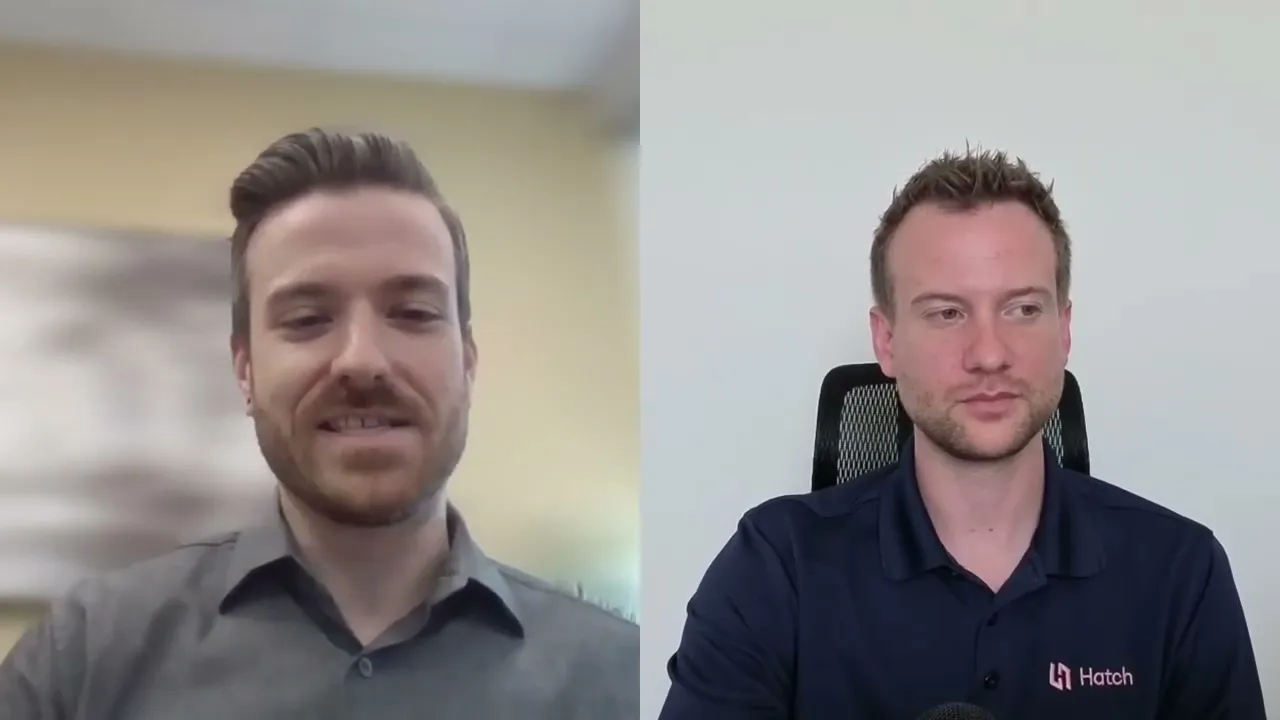
Ross Rigdon started as an EMT and now runs operations at Raleigh Orthopaedic — 19 locations, 28 board-certified surgeons and 27-plus APPs, in one of the fastest-growing counties in the country. He explains the technology he's building to catch payer rule changes and volume dips before they become emergencies, and why his goal isn't cutting staff but growing the organization without hiring.
LATEST · E-- · —
0:00 / 0:00
You Don't Hand Someone a Guitar and Say "Play"
From EMT to COO: There's No Job Beneath You
Top takeaways
1. The payers will change the rules on you with almost no notice
Ross's framing for the job is that every practice fights broadly the same fight — operational efficiency, staffing, and now a steady stream of pressure from the government and insurance side. What's distinctive is the speed: insurers commonly impose a new rule in a very short window, so you adapt or you fall behind.
His current example is the UnitedHealthcare requirement for separate and distinct documentation of imaging interpretation. It was floated once, the industry pushed back, it was delayed — and then it came back and was implemented. Which left everyone scrambling to produce additional documentation without adding to the workload.
And that's the real bind. The single biggest complaint from any provider — physician, PA, NP, PT — is documentation. Now they're required to do more of it. The operational question is how to stay compliant without adding to the day of the people already most frustrated by it.
2. "Fight fire with fire" means the information is available — go hunt it
Ross's answer to reacting fast is technology, and his insight about payers is the sharp one: they do make this information available, they just make it very difficult to find.
So the practice uses AI and other tooling to hunt for it and flag changes as soon as they happen. That converts a scramble into a head start — they can begin building the response immediately rather than discovering the rule when it's already binding. It's how you end up reactive and proactive at the same time.
3. The command center he's building
Working with their managed IT vendor, Ross is building dashboards over the practice's own data, with an AI layer that lets him ask questions in natural language rather than commissioning reports. What he wants to ask it:
Comparisons — this employee's productivity versus that one, or every physician within a subspecialty against each other.
Capacity signals — average wait time by location, and how fast to scale MRI or X-ray units into a specific site based on volume.
Baselines with alerts — establish the standard, then get notified immediately when performance dips below it.
Projections — on a Monday, whether appointment volume is tracking against the same week last year, and what has to happen by Friday to hit the number.
Diagnosis when it dips — is it three fewer doctors working that day, or something systemic like the scheduling software or the phones stopping patients from getting through?
Worth noting the honesty in his own caveat: you don't strictly need AI for most of this. What AI adds is natural language — making the data easier to access and query, so the answers become common knowledge rather than a specialist's report.
4. You don't hand somebody a guitar and say "play"
Asked how he handles projects that don't go to plan, Ross gives the principle that gives the first clip its title, and it applies identically to training a person and training a model.
Start with something small, consistent and easily defined — a narrow subset of data — and build from there. You don't hand someone a guitar and tell them to play because they've heard the song. You start with a few chords, some gentle drumming, and build.
His diagnosis of where projects fail: starting too big too fast, because then the model, the system or the process doesn't know where to look or where to start.
He also has a good answer to the interview cliché about strengths and weaknesses — he calls it a trick question, because you want those weaknesses. How you respond to them is what turns them into strengths.
5. The goal isn't fewer people. It's growing without hiring more.
This is the argument the episode is named for, and Ross is blunt about the vendor pitch he doesn't buy: the promise that a technology will reduce staff by 30, 50, 60, 70 percent. He calls it unrealistic.
What he actually wants is to keep expanding the organization with the staff he already has. Compensation and benefits is the largest line on the P&L, so the objective is stopping that number from climbing — without piling stress onto the people doing the work.
The mechanism is attrition rather than reduction. When someone leaves, ask whether technology can cover the gap instead of backfilling. And then — this is the part most efficiency arguments leave out — pay the people who remain more, potentially above market average. What you get back is consistency, retention, and subject matter experts who do something specific extremely well.
6. What makes Raleigh different, and why retention still decides it
Wake County is growing fast — Ross cites an average of 52 net new people moving to Raleigh every single day. Those people arrive with healthcare needs, and orthopedics is episodic but recurring: people get hurt more than once, and they have family members who get hurt too.
He wants patients to be the practice's greatest marketing source. Make it easy for them, and they come back and bring their families.
But he doesn't mistake in-migration for a strategy. He describes it as assisted growth that many markets don't have — and notes you still have to keep people once they're in the door. The same applies internally: build a culture people want to be part of, because if you're constantly chasing replacements you're treading water. Efficiency creates capacity, capacity allows smarter growth, and a good culture keeps the loop turning.
Bonus: from EMT to COO, and the bag of tricks
Ross came up through EMS and DME before running operations, and his advice to anyone earlier on that path is the second clip's title: there is no job beneath you. Every department is part of a greater ecosystem, and to be successful across all of it you have to know all of it.
The payoff he describes is credibility. When his staff bring him a question, they know the answer comes from experience — he sat in the seat they're sitting in and asked the same questions.
The advice he was given, and passes on: develop your bag of tricks, so that when a situation arises you can reach in and know how to respond. There will always be things you don't know how to handle, but something in that bag will help you work it out. In the fewest words possible — be a sponge.
Questions this episode answers
How do you stay ahead of payer rule changes?
Go looking for them. Ross Rigdon's observation is that payers do publish this information — they just make it very hard to find — so Raleigh Orthopaedic uses AI and other tooling to hunt for changes and flag them the moment they appear. That turns a scramble into a head start. His example is the UnitedHealthcare requirement for separate documentation of imaging interpretation, which was floated, delayed after industry pushback, then implemented, leaving practices to add documentation without adding to physician burden.
Can a practice grow without hiring more staff?
That's the goal Ross Rigdon sets, and he's explicit that it isn't the same as cutting staff — he calls vendor promises of 30 to 70% headcount reduction unrealistic. Compensation and benefits is the largest line on the P&L, so the aim is keeping that from climbing while the organization expands. The mechanism is attrition: when someone leaves, ask whether technology can cover the gap rather than backfilling, then pay the people who stay more, potentially above market, for consistency and depth.
Why do data and automation projects fail in a practice?
Starting too big too fast, per Ross Rigdon — because then the model, the system or the process doesn't know where to look or where to start. His rule is to begin with a small, consistent, easily defined subset of data and build from there, and he applies it identically to training people and training software: you don't hand someone a guitar and tell them to play because they've heard the song. You start with a few chords.
Scale referral operations to drive growth and efficiency
Full transcript
Transcript
[00:00:00] And specialty healthcare growth is not optional, but scaling with operational excellence. That's the hard part. I'm Joe Zboch. This is Scaling Specialty Growth.
[00:00:09] Joe: Today's guest is Ross Rigdon, COO at Raleigh Orthopaedic. Raleigh Orthopaedic, of course, is located in Raleigh, North Carolina — 19 locations, 28 board-certified surgeons and an additional 27-plus APPs, in a wide network of physical therapists, urgent care clinics, and I think two surgery centers.
Ross's path to COO is exceptional — started as an EMT, and in medical prescribing, DME and more, before, well, now running the whole show. He believes that experience trumps education, which is why I'm really excited to dig into his views, and what he's done specifically to scale specialty growth. Ross, welcome.
[00:00:50] Ross: Well, thank you for having me. Excited to be here and looking forward to our conversation.
[00:00:54] Joe: Yes, sir. I wanna dive into how you think about supporting organizational growth goals — oftentimes that are aggressive, especially in competitive markets — while maintaining that operational excellence. What are some of the frameworks or mental models that you apply to your work in general, before we get into any specific project?
[00:01:13] Ross: Sure. I think every region is gonna be different, every practice is gonna deal with different issues, different personalities, things of that nature. But I think by and large, we all kind of fight the same fight. We're all working on operational growth efficiency. We have to deal with the same organizational issues with staffing, and now we're seeing a lot in the government space and insurance space of just common challenges.
So you always have to be diligent, always have to be on your toes and kind of ready to react to any situation that comes up. Insurances in particular, they're very common to put a new rule on you in a very short period of time. So you always have to adapt and really fight fire with fire as quickly as you possibly can — because there's a lot that we have coming from them that we don't really have control over, at least not initially.
[00:02:12] Joe: Fight fire with fire — because you said, especially initially, the government and insurance kind of popping up right now. What's going on there?
[00:02:20] Ross: Yeah. So if they make a rule — I think most commonly recently, you have the UnitedHealthcare rule where they're requiring a separate and distinct documentation for imaging interpretation. They tried this once, the entities as a whole kind of fought back, they delayed it, but ultimately they kind of put it back into play and implemented it at this time.
So everybody was really scrambling to figure out how to create this additional documentation without increasing the workflow, or adding an undue pressure. One of the biggest complaints you see out of physicians or any provider — whether it be PT, PA, NP, anything — their biggest complaint is the documentation aspect of it. And now they're required to do more. How can we implement a process to not add to their day to day, not add to their biggest frustration, but still remain compliant with the insurance companies?
[00:03:22] Joe: I feel like you're having to play a little bit of good cop, bad cop, where it's like, hey, nobody like got some news here. And I wanna come back to the fight fire with fire too — but how do you, what's your approach to balancing some of the reactive aspects of the job as well as some of the proactive measures, and kind of tying it into a bow that allows you guys to move forward?
[00:03:46] Ross: Yeah, so we can get really into technology. I think that's where a lot of my focus is lately, and that's how we're fighting fire with fire. You can be reactive and proactive at the same time using the right technology.
So I think that's a big part of what helps me be successful — being very data focused, being very technologically focused — so that we're able to look at a series of problems and figure out how to respond in a simplified manner, without increasing the lift on the individuals in the group, whether it's entry level staff all the way up to the physicians.
[00:04:29] Joe: Yeah. When it comes to applying some of this — in the research leading up to this episode, you've been busy for sure, across several fronts on the technology level. Walk me through one of these projects where you really had to... You didn't say the best defense is a good offense, but that fight fire with fire. It's like, okay, all right, here we go, we got some more documentation, we have issues here on the administrative side, maybe we're dealing with physician burnout, which we've spoken about before. What's a recent project where you were able to be reactive and proactive through perhaps a technology play? What would that look like?
[00:05:08] Ross: Yeah. So one of the things that we're working on now — I'm working on building something out with our managed IT vendor — is really working on building a lot of dashboards and information so that we can query the available data to look at something in a specific moment.
How can I compare this employee to this employee for productivity? How can I compare all of the physicians within a specific subspecialty on what's the average wait time at this location? How fast do we need to scale adding MRI units or X-ray units into a specific location based on volumes?
And one of the projects that we're looking at is building really an AI model that is ingesting that information and allows us to, in natural language, ask those questions. So show me the data for this employee versus that employee. Show me the data for this physician versus that physician. And we can look at it here and now, but we can also query it and create a baseline — kind of what the standard is — so that if we get to a place where we're dipping below that baseline, I'm getting notified immediately.
Or we can look at projections. Something simple as appointment volumes right at the beginning of the week on a Monday: how can I look at whether we're projecting to match that same volume from the same week in the previous year, starting on Monday versus on Wednesday? We need to hit X number of appointments by Friday to hit this goal.
And then obviously the inverse as well. If there is a dip, give me the information as to why. Do we have three less doctors working that day? Or is it something bigger, more systemic that we need to really investigate? Is there an issue with our scheduling software? Is something wrong with our phones where patients can't get in? Any kind of thing that we can then react to, having that advanced knowledge.
And I think the main goal in fighting that fire with fire, and bringing this full circle with the insurance piece, is having that knowledge upfront. They make this information available for you, but they make it very difficult to find. So we use AI and other forms of technology to hunt for that information, to let us know as soon as something changes — and immediately we can begin to work on building it out, without having to be reactive in those situations.
[00:07:54] Joe: Yeah, this is an ambitious project. Data, of course, extreme importance — been the era of big data, and now AI of course brings a new flavor to what can be done. Where are you in this process? And if a peer listening to this is like, that's what I want, I kind of want this real-time data command center that's gonna allow me to make operational decisions for this week — as well as, I would argue, you're gonna use that to scope out projects in the future. Say, hey, look at these trends of data over these last several months, we do need to invest in this MRI machine in this particular locale, things like that.
So at the very foundational level, is AI making it easier to extract those data sources in the first place? And what are those data sources that are combing into this centralized hub, so to speak?
[00:08:55] Ross: Yeah, so I would even kind of argue that you don't necessarily need AI to present this information. I think where AI is really useful is making it more natural language — so that I can type in a chat message to a bot and have these questions answered for me. Or automating certain reports or responses to me at a specific time if we hit below a certain threshold. You don't necessarily need AI for that, but it makes it a little bit more common language, a little more common knowledge, easier to access, easier to query.
[00:09:30] Joe: Yeah. In recent episodes, some guests have brought up that it's almost guaranteed not to go perfect for any project that you're working on. Is there anything recently where you had to pivot or rethink? Do you have an example of coming back to the table? Big part of the job is managing the expectations and experience of whether it's the physician board as well as the frontline staff — there's been a lot of change recently, especially with AI, and so bringing the meaning into the work. A bit of a ramble type question, but when things don't go your way, what's your approach? How do you right the ship?
[00:10:12] Ross: Yeah. I think you'd be foolish to think that everything's gonna go right all the time. One of my favorite but least favorite questions to get asked — getting interviewed early on — is what's your greatest strength and what's your greatest weakness? And I think it's kind of a trick question, because you want to have those weaknesses, because how you respond to those and how you react to those can then turn them into some of your greatest strengths.
So I don't necessarily have a specific example right now, but I think you look at something that's small and attainable. You look at a very small subset of data or information, something that's consistent and easily defined. And then you build from there.
I think where you find mistakes and where you find issues is if you start too big too fast, because then the model or the system or the process doesn't really know where to look or where to start. When you talk about technology as well as people, you don't just throw all of your information at them at one time. When you're training a person, or training a model of something, you wanna start with something small and you wanna build from it. You don't just hand somebody a guitar and say, okay, now play, because you've heard this song. You start with a few chords, you start with just gentle drumming, that type of thing, and you build from that.
So there's countless examples where something has failed or gone wrong — or not necessarily gone wrong, but not gone as to plan as quickly as you want. Those systems may have started off rough, but we adapt, we respond, and now they're great.
[00:12:03] Joe: Yeah, for sure. You've talked about training the model and AI — is there anything kind of unexpectedly delightful that you've come across, or that you've uncovered as an opportunity that you've now been able to implement, that maybe even four years ago wasn't something that you would've dreamed of?
[00:12:22] Ross: Yeah, I think the access to information is probably the coolest part of it. There's so many things that we spend hours in a day pulling data and information together. It's not that the data isn't available, hasn't always been available — but how quickly we can pull that information into the system and have it reproduce pretty rapidly, so that something that may have taken hours before, I kind of have it on automation where I get it almost instantaneously now.
[00:12:58] Joe: Are you able to either retrain or redeploy some of the frontline staff because of some of this automation? I know a lot of the manual tasks and the work itself — how are you able to make it more meaningful perhaps?
[00:13:13] Ross: Yeah, I think where a lot of these technologies and a lot of the vendors try and grab people is they tell you how you're gonna reduce staff by 30, 50, 60, 70%. It's unrealistic.
I argue that I don't necessarily want to reduce staff, but I want to be able to continue to grow with the staff that I have. I wanna be able to expand my organization without having to hire new people. Compensation and benefits is always the greatest line on a profit and loss statement. How can we reduce that number from growing up, without adding undue stress to those people that are working?
If you have attrition, if you have people leave, do you need to replace them with some of the technologies? Maybe not. And then you can pay the ones that you do have on staff more and better, and maybe pay them above market average, so that you're getting a good consistent employee that's not gonna go anywhere and you're getting that same consistent result from them. You can have subject matter experts that really focus on something specific really well.
[00:14:27] Joe: Tell me a little bit about the Raleigh market specifically that is perhaps unique, that you're building out plans and projects and initiatives to address.
[00:14:39] Ross: Yeah, so Raleigh is a very fast-growing area. Wake County, which is where Raleigh is — most recent data, the average of 52 net new people moving to Raleigh every single day. So it's a very fast-growing area. Those people have healthcare requirements, so we want to be able to continue to grow and scale and support all those people as they come in.
So as they come into the area, we give them a very reliable organization to be treated at, not only once, but hopefully for the span of their life. Obviously with orthopedics it's often very episodic — but people get hurt more than once, more than often. And those people have family members that get hurt. We want our patients to be our greatest word of mouth, our greatest marketing source.
[00:15:37] Ross: If they have a great experience, if we make it easy for them, chances are they're going to come back and they're gonna have their family come as well.
[00:15:46] Joe: A lot of practices have been looking at what I would call either more strategic partnerships or more almost B2B on either the workers' comp front, the employer front, payers. Are you exploring anything there? Because it requires a little bit of a different mindset than pure patient marketing, patient experience and engagement. I was just curious on that front.
[00:16:11] Ross: Yeah. So we explore some of those things. Obviously there's a number of things that I can't share and disclose. But yeah, I think we're always looking to see what's on the horizon. We are only but so large — we're not small by any stretch of the imagination, but we're not large by any stretch of the imagination. So how you can partner with other folks and gain that knowledge and information from them is a very smart thing to do.
I think that's why orthopedics is a very relationship-driven specialty. So how you interact with these people is how you can maintain your success, and not necessarily bring new people into the area.
[00:16:55] Joe: All right. So tell me a little bit about 2026 — what projects are on the docket that have presented themselves as really great opportunities?
[00:17:04] Ross: Yeah. So I kind of talked about it a little bit earlier — the data dashboard, in a very simple term. But just continuing to streamline efficiencies, and continue to build out how we work in an organization, and making sure that we're staying on top of what comes our direction.
And there's always things to improve upon. There's always people that are leaving the organization. So do we replace them, or do we restructure and redesign the thought process and get some new ideas and designs into the group? So there's always something kind of coming our way — to be as vague and specific as I possibly can.
[00:17:43] Joe: You can't give away all the secrets, I get it. I love the relationship between efficiency and growth. It's like, hey, if you can streamline efficiency, that can help with capacity. And what you were saying earlier is, with a similar workflow, we can grow not just more, but smartly, and develop subject matter experts in particular aspects of the business that might need a little bit of help.
So would you agree that it creates this growth loop that feeds and allows you to accelerate and ultimately scale, without sacrificing anything on the patient experience or the referring partner experience side of things?
[00:18:27] Ross: Yeah, I think you kind of said it exactly — you wanna grow smarter, and how you learn from the successes and the failures allows you to do that.
I want to continue to service our patients the best that we possibly can and make their processes easier. I want to continue to make sure that our physicians and our PAs and NPs are happy, and make sure that my staff is happy, and create a great culture and a great environment. And that's how you grow.
If you're constantly chasing replacements, then you're gonna be stuck in place, treading water. So you have to build this environment of a good culture that people want to be a part of. And we're fortunate to be where we are, where there are so many people coming to the area at such a rapid pace that we have a little bit of assisted growth in that regard that a lot of areas don't have. But we have to make sure that we get people in the door, and we also have to make sure that we get people staying inside once they come.
[00:19:37] Joe: Yeah, that word of mouth, the retention that comes through giving them a great experience for sure.
I think anybody that has listened to this can paint a pretty clear picture of Ross's perspective on what it takes to do the job well. But if you were to give advice to someone that's maybe still the EMT or doing the DME — earlier in the career — what piece of advice would you have for them to get to the next level? Whether it's a mindset, or an action or ritual, or something to think about.
[00:20:09] Ross: Yeah. Learn as much as you can. There is no job that is beneath you. Every department is part of a greater ecosystem, and to be successful in all of it, you have to know all of it.
Whenever my staff comes to me and asks me a question, they know that I'm gonna answer it from a place of experience, because I lived it. I sat in the seat that they're sitting in, and I had those questions that they asked. There's no right or wrong question that they can ask.
So develop your — what was told to me is — develop your bag of tricks, so that whenever a situation arises, you can reach into that bag of tricks and pull it out and you know how to respond. There's always gonna be things that you don't know how to respond to, but there's going to be something that comes from that bag of tricks that helps you figure out how to respond to it. So learn as much as you can. I think in the fewest words possible, is just be a sponge.
[00:21:12] Joe: Be a sponge. I think that's a great way to cap it off. Ross, thank you so much for your time.
[00:21:17] Ross: Yeah. Thank you for having me. It's been a pleasure.
[00:21:20] Hey, it's Joe. Thanks for listening. If you like what you hear, share with a peer, and if you're looking to scale referral operations to drive growth and efficiency, visit hatchcare.com.