
All Episodes
EPISODE 4
·
·
21:45
Making specialty growth operations a game
Amy Seehafer
·
Chief Operating Officer,
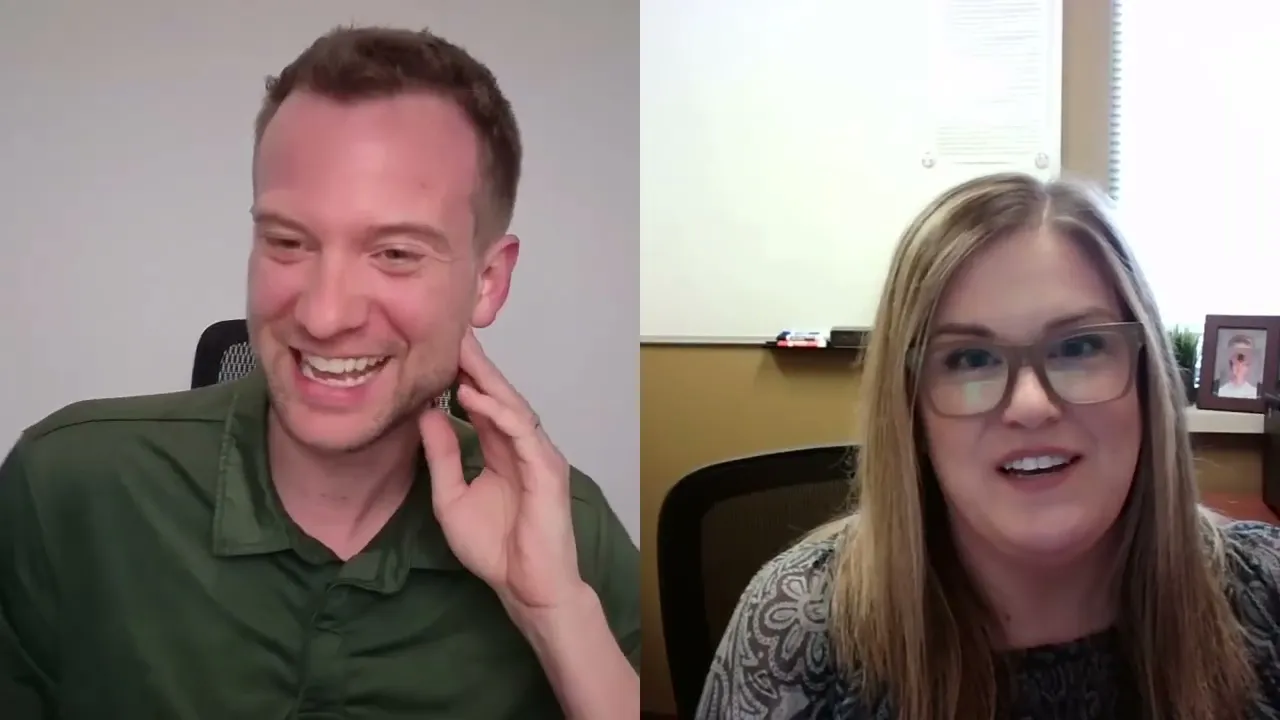
Amy Seehafer came to Orthopedic & Sports Medicine Specialists with 20 years of operations and people leadership and, at the time of recording, about a year and a half in healthcare. She explains why she frames growth as a game the team plays together rather than something being done to them, the shadowing habit she's spreading through the organization, and why you stabilize a new system before you optimize it.
LATEST · E-- · —
0:00 / 0:00
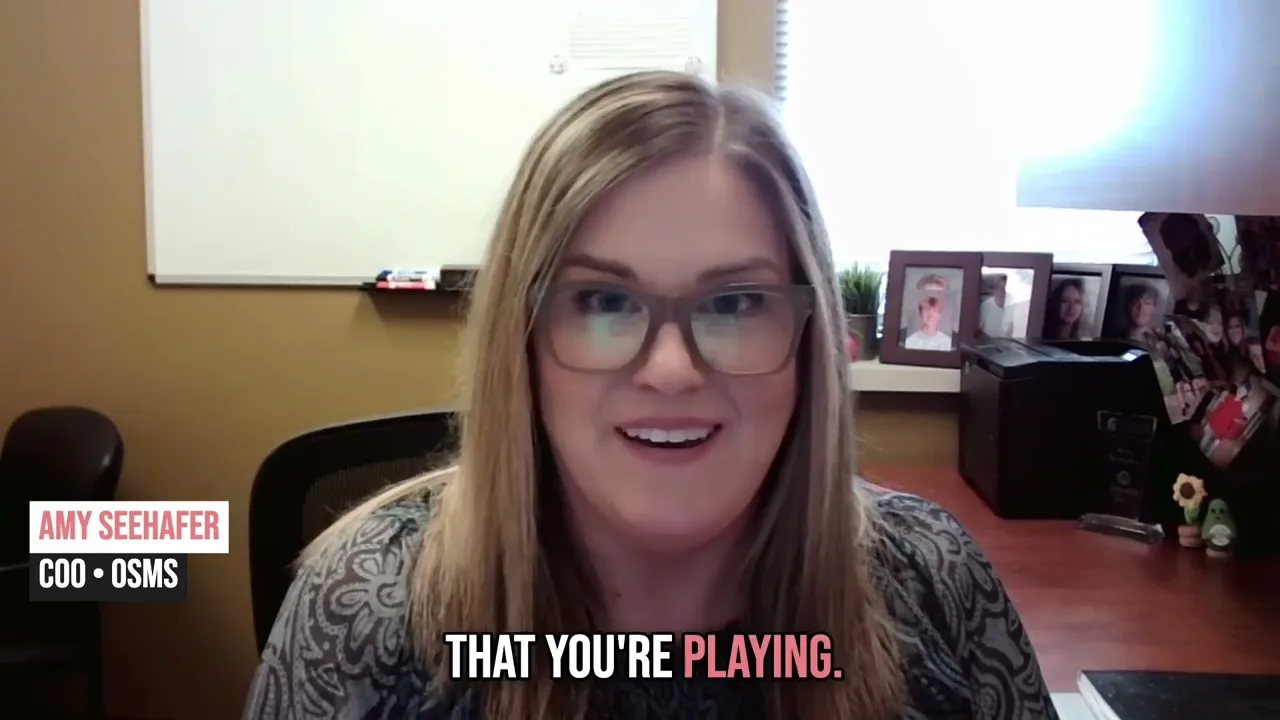
People, Process, Technology — Most Practices Flip It
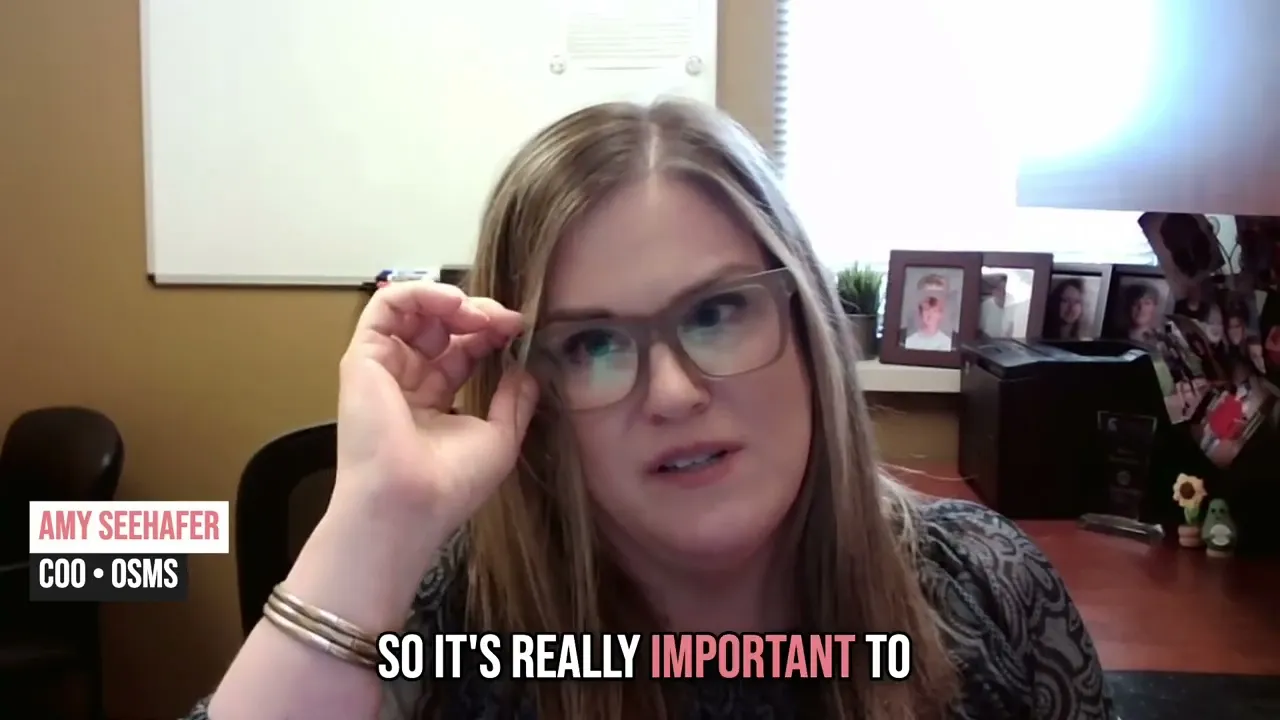
"We've Always Done It That Way" Isn't a Reason
Top takeaways
1. Change is the game you're playing, not something happening to you
This is the reframe the episode is named for, and Amy is clear that installing it is the COO's job. A leader — or anyone reporting to one — who experiences change and growth as something being done to them will struggle. Flip the lens, and it simply becomes the game.
Her analogy is domestic and apt: it's like getting your kids to help clean the house. You don't argue them into it, you change how it feels — doesn't it feel good to take care of our home? The same move works in a practice. This is what we're hired to do, this is why we come to work, and we're not going to get mad at it.
2. The culture is written down — all 28 of them
OSMS runs on company values plus 28 fundamentals, and Amy is refreshingly honest that she can't recite all 28 from memory. The ones she reaches for in a growth context:
Do whatever's needed — whatever it takes for the organization to grow while patients get the same experience or better.
Do the right thing always — which sometimes means staff being inconvenienced, or being open to change.
Walk in our patients' shoes — everyone on the team is also a patient somewhere, so she consistently asks how a decision would feel with the roles reversed.
Keep things fun.
3. People, process, technology — in that order
Her description of the operations job is compact: make sure the right people are doing the right things, that those things are solid processes, and that you're looking for the appropriate technology solution. In that sequence.
It's the same ordering other operators on this show keep landing on independently, and the failure mode it guards against is reaching for technology before the process underneath it is worth automating.
4. Shadow the work — then send your team to shadow it too
When Amy started, she shadowed every physician in clinic and in the surgery centers, and all of the front office staff — reception, phones, the people behind the scenes, nursing. She also had family members become OSMS patients, which gave her the process from the other side.
What she took from that is that it shouldn't stop with her. She now has team members shadowing departments they're internal customers of, specifically to feel the process dynamics from both the internal customer's and the patient's point of view.
Her reasoning is the sharpest argument for the practice: when people have worked in the same industry a long time, they lose the thread a little and forget the patient is what matters most. Shadowing highlights what you've accidentally become numb to. Being newer to healthcare — newer, but curious — is what she counts as her contribution here.
5. Self-scheduling shows you exactly how complicated you are
OSMS partnered a software platform with their EMR to add patient self-scheduling and self-check-in, moving from a world where getting an appointment meant calling and talking to someone.
Amy's line about the process is one every practice attempting this will recognize: putting it into a computer program helps you realize exactly how complicated you are. The work then became a balance between too many rules and not enough — patients need a good experience, but you can't let it go wild west. Getting that right took a lot of conversation.
6. The closet test: stop, start, continue
Amy talks constantly about intentionality, and the metaphor she uses for auditing a process is worth stealing. Most organizations keep things the way you keep things in a closet — unintentionally, because you never took everything out and decided what to put back.
So the practice is to take the process apart, look at it with a set of neutral lenses, and decide for each piece: stop, start, or continue. Just because we do it that way doesn't mean we have to continue doing it that way — the line that gives the second clip its title.
Applied to the self-scheduling rollout, that meant walking every rule with providers, administrators and clinic teams. Some rules stayed. Some didn't.
7. Tell people it's going to feel bad before it does
Amy brings formal organizational change management to OSMS, and most of it comes down to communication, training and setting expectations honestly.
Her toaster metaphor captures why even trivial changes hurt: move a toaster from one side of the kitchen to the other and it genuinely doesn't matter where it is — it will feel wrong for a week, and then you'll just walk to the other side.
So she tells teams in advance: this is impactful for the company and for our patients, and it's going to feel weird. You're going to get mad at it. You're going to resent it. That's all normal, and in a month it will just be a good process.
Then comes the reframe that does the real work — you are part of helping us learn all the things we didn't think of before we went into this. We tried to think of everything, and we didn't. That turns a complaint into an opportunity to fine-tune, and turns staff from people something is being done to into part of the solution. As she puts it, subtle but powerful.
8. Stabilize first. Optimize second. Never in reverse.
A short, hard-won sequencing rule: when you implement a platform, it isn't stable yet. The first goal is stabilizing it. Only once it's stable do you begin optimizing.
Naming that order for the team also explains why the early weeks feel rough without meaning the project is failing.
9. Growth brings cost problems, and the answer is visibility
OSMS is opening a new clinic in the southern part of its region — the first large facilities project Amy has led there, run with the project and change management discipline from her earlier career. Her definition of success is a good one: if patients say that was smooth and employees say that was easy, the planning worked.
Alongside it: alternative revenue streams for rheumatology, pharmacy work, and satellite clinics reaching underserved communities inside their footprint.
And underneath all of it, the cost problem. Growth brings significant cost challenges over time, and it's never quite right — always too little or too much, which she jokes is the reason The Three Bears was written. What helps is clean, consistent data, KPIs and targets, and every member of the team understanding what they're shooting for and how they fit in.
Plus one honest requirement: getting comfortable being uncomfortable. In growth mode you might need 0.2 more FTE, and you can't run overtime forever or keep adding people — so you get creative, while making sure people don't get so upset they quit.
Bonus: her advice for new operations leaders
Spend time learning the business — specifically, learn how the business wins and how it fails. Amy thinks in ecosystems and equations: what are all the inputs and outputs, and which things can you dial up or dial back to produce success or failure? Learn what the maneuvers are to run hot or run cold, and your odds go up considerably.
The second half is translation. At director or COO level the problems are genuinely hard, so reaching a conclusion isn't enough — you then have to break it into digestible pieces for your team and every stakeholder, so they understand why it matters, what needs doing, and what success looks like.
Questions this episode answers
How do you get staff to embrace operational change instead of resenting it?
Tell them in advance that it will feel bad. Amy Seehafer warns teams that any technology change feels messy — you'll get mad at it, you'll resent it, and in a month it will just be a good process. Then she adds the reframe that does the work: you are part of helping us learn all the things we didn't think of. That turns complaints into fine-tuning and makes staff part of the solution rather than people something is being done to.
How do you audit a process that has always been done that way?
Take everything out of the closet. Amy Seehafer's point is that organizations keep processes unintentionally, the same way you keep things in a closet you never emptied. So take the process apart, look at each piece with neutral lenses, and decide: stop, start, or continue. Applied to OSMS's self-scheduling rollout, that meant walking every rule with providers, administrators and clinic teams — some stayed, some didn't.
Should you start optimizing a new system right after you launch it?
No — stabilize first. Amy Seehafer's sequencing rule is that a platform isn't stable the moment you implement it, so the first goal is stabilization and optimization only begins after that. Naming the order for the team also explains why the early weeks feel rough without meaning the project is failing.
Scale referral operations to drive growth and efficiency
Full transcript
Transcript
[00:00:00] And specialty healthcare growth is not optional, but scaling with operational excellence. That's the hard part. I'm Joe Zboch. This is Scaling Specialty Growth.
[00:00:09] Joe: Welcome to another episode of Scaling Specialty Growth. I'm your host, Joe Zboch, and today's guest — I'm really excited about it. Amy Seehafer, COO of Orthopedic and Sports Medicine Specialists. She's an operations and people leader with 20 years experience building teams, systems and cultures across complex multi-site healthcare organizations.
That makes her the perfect fit to share with her peers a few of the scaling challenges and stories specialty operators are facing today. Amy, welcome to the show.
[00:00:39] Amy: Thank you for having me, Joe. I'm excited to be here.
[00:00:43] Joe: I'm excited too. I wanna jump right into it, with just a question about your overall approach. So how do you, as a COO of a growing practice, hit organizational growth goals while maintaining operational excellence? What's your approach?
[00:00:58] Amy: Man, I think it's a whole bunch of things really together. So it all starts with having really strong communication, and making sure that everybody knows what's going on, what their role in all of it is, and what's gonna happen. How do things feel for patients?
I think it's really important for us also to just really stay true to who we are as an organization. We have a very strong culture, and that culture is really comprised of our company values. And then we have these 28 fundamentals. I know 28's a lot, but we—
[00:01:36] Joe: How many of them do you know off the top of your head?
[00:01:38] Amy: How many do I know? I don't know. It's hard to remember 28. But some of the really important ones, like in this context — do whatever's needed. And that really just means that whatever we have to do to make sure that our organization is growing and that our patients are able to still have that same or even better experience, we really need to do whatever is needed.
Another one is do the right thing always. That means sometimes our staff needs to be kind of inconvenienced, or they need to be open to change.
Also walking in our patients' shoes — because we are all patients, as well as we are team members within a medical practice. I consistently remind the team to think about, well, how does that feel if you were the patient in this scenario, if we were to reverse roles?
And at the end of the day, we always try to keep things fun. So that's another one. Because I've only been working in healthcare for about a year and a half — this is my first COO job in healthcare.
[00:02:47] Joe: That brings a whole unique perspective, I'm sure. We'll dig into that a little bit. But obviously you gotta learn a lot, like acronyms. The experience that you bring, that's really interesting.
Okay, so you've covered communication, which is the backbone of that — sounds like you're lucky at OSMS, it's just strong communication. You've got 28 values, keeping things fun, culture. This all goes into the framing of, okay, I'm the one who leads the teams that support the systems, the infrastructure. And it sounds like it starts with people.
[00:03:22] Amy: It really does. And I always say that really my job and my team's job from an operational standpoint is to make sure that we have the right people doing the right things, and those things need to be solid processes, and we need to make sure that we're looking for the appropriate technology solution. So people, process, and technology.
And with all of that, throughout the last 20 to 25 years that I've been working in these areas, the one thing that I have found is that you can't, as a leader — whether it's me or the people who report to me or the people who report to them — you can't see change and growth as something that is happening to you. It just becomes the game that you're playing. It becomes just a part of it.
So if you change that lens and perspective on, oh man, this is so hard, this is so whatever — if you can flip that around, that again becomes that culture piece that I lead as the COO, to try to help people see it as something different.
It's kind of like when you're trying to get your kids to help you clean the house. How can you just make it like, hey, it really feels good to take care of our home, doesn't it? Our home smells really good when it's clean. The same thing happens in healthcare and in our business — we have to just really change those lenses that we have on and say, this is what we're hired to do. This is why we come to work every day, and we're not gonna get mad at it. We're going to embrace it and roll with it.
[00:04:58] Joe: So there's a few things here that it sounds like you have brought to the team. One of them is just that growth mindset. It's really good to have that perspective that it's not something that happens to you — it's a game that we get to play together, and we're choosing our teammates here. And fortunately for all of us, we have these 28 core values that we live by, and we're gonna make this game fun.
So what do you think are some of the ways that has been applied to recent projects that you've been working on, that you've rolled out? And before you answer — I think it's really interesting what you said about, we're all patients. So have you done anything where you've tried to experience the process at OSMS as the end patient, the end user, to get a better, deeper, more emotional understanding of what it feels like to work through your system?
[00:05:52] Amy: Yeah, sure. There's a couple questions there. I'll start with the exposure piece. So I personally, when I started here, I shadowed with every physician in clinic and in the surgery centers. I shadowed with all of the front office staff. I just really wanted everything — from the reception area, answering the phone, the people kind of behind the scenes making everything work, the physicians, the nursing staff, all of that — so that I could understand what that felt like.
I also had a few family members who have become patients of OSMS, and I've been able to go through that process. And I really learned through that process that it's also important for me to encourage my team to do the same thing. So I've got several team members right now actually working in departments, doing some shadowing in departments that they are either internal customers of, or they are internal customers. Just to really understand those process dynamics — to see how does it feel from an internal customer standpoint, how does it feel from a patient standpoint?
Because sometimes, especially when people have worked in the same industry for a really long time, you can kind of lose your way a little bit and forget that it really is, at the end of the day, that patient that matters the most. And going out and doing things in this manner, I think, highlights things that you can accidentally become numb to. That's the value that I've been able to add being the person who is newer to the healthcare space. Newer, but very curious and wanting to learn.
[00:07:29] Joe: Newer and curious. I think the shadowing is a fantastic lesson for other peers to apply. Tell me about what you've learned through that process, either you or your team, that you've applied to improve a process, or bring in a new technology or something like that.
[00:07:47] Amy: Okay. Yeah, in the last year and a half, we've done a lot of things. Some of the things that come to mind are the software platform that we partnered with our EMR to do the patient self-scheduling and self-check-in processes.
That was a big one for us, because we went from a situation where in order to get an appointment here with OSMS, you had to call and talk to somebody. So putting that into place helps you realize exactly how complicated you are — because when you have to put that into a computer program, you're like, oh, wow, okay. We really are complicated.
So really we had to strike a fine balance between having too many rules and not enough rules, because we want patients to have a really good experience, yet we don't want things just going like the wild west. That took a lot of conversation to just kind of get that right.
[00:08:47] Joe: I can imagine. Let's dig into that. I've been in digital health for over 10 years now, most of that being on the patient engagement experience side of things. I know that scheduling is a can of worms. There's a lot of preferences — providers, they want it this way, some of the providers that have been there for a while, and then some that are newer are just like, gimme patients.
So walk me through what some of those conversations have been like. 'Cause you shadowed the front office, you're having conversations and bringing learnings to the boardroom, and communication is the number one thing that you've said is the way to strike that operational excellence balance with the needs of an organization to grow in a competitive market. Tell me about those conversations.
[00:09:31] Amy: Yeah. So those conversations are really just — we look at whatever part of the process we're working on, and we say, just because we do it that way doesn't mean that we have to continue to do it that way.
My leadership style — anybody who's worked with me for a long time will tell you — I talk a lot about intentionality. One thing that's constant in the world is change. Everything's changing around you. Things are changing inside your organization. So it's really important to take a temperature check on whatever the components are to the business to say: is this serving us? Or is this overly rigid? Or is it not rigid enough? Are we creating inefficiencies and friction?
So as we walked through the implementation of this platform — for instance, with the self-scheduling, we had a lot of rules. We walked through all of them. We ended up talking with providers, we talked with administrators internally, and different clinic teams. And some of the things stayed and some of the things didn't stay.
And again, it's not like when you just throw stuff into a closet and you're unintentionally keeping things because you didn't take everything out and then decide what to put back in. That process of intentionality, where you just take it apart and you really look at it with a set of neutral lenses, and then decide whether we're going to stop, start, continue.
[00:10:56] Joe: Stop, start, continue. That's great. And I guess it's really important that one of the 28 is do what's needed — because if you don't have that mindset where we're playing this game together and on the same team, it's not gonna be fun, things that maybe are a little bit dusty, that it's the way that you've always done it.
Outside of scheduling, are there any other projects where maybe it didn't go well initially, and either you or the team had to just do a reset?
[00:11:21] Amy: Yeah, this very project, Joe. This very project was difficult. We had to stay steadfast. We had to stay united.
One of the parts of my past, and what I also bring to OSMS, is around very purposeful organizational change management. And really what I mean by that is just the communication and training — and part of that is just setting expectations for people.
With any technology change, it's going to feel messy. Even if it's a small change, as much as you plan for that change, it's going to feel different. It's like if you take your toaster from one side of your kitchen and you put it on the other side. It really doesn't matter where that thing is, it's just gonna feel different for a little while. But after a week, you're gonna start walking to the other side.
So being able to put on those lenses for the team, to just say: hey, we're doing this, and this is a really impactful move for our company and for our patients. However, it's gonna feel weird. It's gonna feel different. You're gonna get mad at it, you're going to resent it, and that's all normal. After a month or so, this is just gonna be a really good process.
And you're a part of helping us to learn all of the things that we didn't think of before we went into this. We tried our best to think of all the things. But rather than seeing it as a complaint — if you can see it as, hey, here's an opportunity for us to really fine-tune this process.
Because after your implementation, really what you're doing is you're stabilizing a platform. You implement it and it's not yet stable. Your first goal is to stabilize something, and then from there you begin optimizing — but you don't begin optimizing until you've stabilized.
[00:13:04] Joe: Yep. I love that.
[00:13:05] Amy: So just explaining that to the team and letting them know what's coming is really important. It's really cool — everybody gets really excited and has a much better attitude about all of it.
[00:13:16] Joe: It sounds like there's strong communication — you've touched on it a bunch — but the fundamental point of view of the way that you run your shop is, we gotta be on the same side of this. I love what you said about, not just you're gonna get mad at it, but — and I think this is a perspective shift, which I think is a hallmark of what you're bringing to OSMS — you're gonna be a key part of helping us learn what we didn't think of. That's subtle, but that's big.
[00:13:50] Amy: Right? So rather than people feeling like you're doing something to them, they view themselves as a part of a solution for the greater good. You're right, it's a subtlety — but it's really powerful.
[00:14:03] Joe: Love it. What else are you working on these days? Or perhaps what's coming next that you're excited about?
[00:14:11] Amy: Yeah, we're working on a lot of things. We're really excited to be opening a new clinic in the southern part of our region mid-April. So the team has been really working on that. We have a really thorough project plan and a team, and everybody's got their marching orders, and it just makes me incredibly proud to see how well the team is showing up.
So that's new structure for OSMS. We haven't been quite as structured, and the team is doing great and they seem to really like it. I'll keep doing it until somebody tells me to stop.
[00:14:44] Joe: But you haven't been as structured historically, and you're building new structure. What was different this time? I guess what I'm getting at is, what was the decision process?
[00:14:58] Amy: This is, I think, Joe, pretty simple. This is the first large facilities project that I have led for the organization. So given the fact that I come from a long history of project management and formal change management, I just brought the processes that I've learned and that have become a part of my person.
And I told the team that if we do a bunch of planning and we are really intentional about how all of this goes, our goal is to make this project have everybody say, that was easy. Frankly, if people show up and patients say, wow, this was smooth, and our employees are like, wow, that was easy — that's what we're going for. That means that we've done our project management and our change management, and we've thought about all of the things that the patients are going to want, the staff is going to want. And those changes become really smooth. So we're really excited about that one.
We're also working on some alternative revenue streams for rheumatology, and working on pharmacy. We're just continuing to look for other expansion opportunities to serve underserved communities within our footprint. So that's really exciting, having the opportunity to get those satellite clinics out there.
And just really continuing to work with the team to optimize our labor, control overhead expenses, all of those kinds of things — because growth brings significant cost challenges over time, and you just never quite have the right things. It's always too little, too much. I was jokingly saying to the team the other day, that's the reason why the three bears was written. Somebody was reacting to something in their world where it's just never quite right. And that's really the magic of all of this. So just continuing to work with our teams and try to get that closer to balance.
[00:16:51] Joe: Let's dig in on the optimizing labor, and growth brings cost challenges. That's a really interesting thing, 'cause there's gotta be these cycles of diverge and converge as it relates to that. So what has been in your experience maybe a framework, a way of thinking, in terms of: okay, now is the time to optimize, now is the time to cut — because maybe we've established that this thing that we're doing is viable?
[00:17:26] Amy: Right. So I think the most important things that we've really been working on — and we continue to work on this and struggle with it a little bit — is to have really good visibility and good data, consistent data that is clean. Having KPIs and targets. And having every member of the team really understand what they're shooting for, how they fit in — and also getting comfortable being uncomfortable.
Because when you're in a growth mode, you may need a little bit more — say you need 0.2 FTE more, but you can't utilize overtime all the time, and you can't just be bringing in all of these people. So you have to figure out ways to be creative and get more done, all the while not having people get too upset and quit.
So again, it's that mindset shift with the team. And we're not always perfect at this by any means, but the more you can have things like budgets and dashboards, and be actively reviewing those numbers all the time, and making sure that everybody understands what the targets are — and are we over, are we under, what does that mean, what can we do about it, what are those levers? It's been a really big learning curve for me this year, really focused on getting my team up to speed as well.
[00:18:50] Joe: That's amazing.
[00:18:50] Amy: It's a very complex machine.
[00:18:52] Joe: It is. And there you heard it here first, folks — if you want a large project that's very difficult, Amy is your person.
So we have a couple minutes left. I would love to hear — maybe somebody who's a bit earlier on, maybe director level, or wanting to get in the operations side of things. We talked a lot about balancing the growth, the growing pains, being in growth mode, and when it makes sense to do the operational streamlining of things. What's your advice for a new leader really trying to scale themselves?
[00:19:23] Amy: That's a good question. I would say spend a bunch of time learning the business. Learn how the business wins, learn how the business fails.
I talk a lot about ecosystems and equations and things like that, because that's how my brain works. I think we all as operational leaders need to focus on what are all of the inputs, outputs, things that we can dial up, dial back, to make success or failure. You have to learn what it is, how it works, and then what are the maneuvers that you make to run hot or run cold. And if you can figure that out, you have a really high likelihood of succeeding.
[00:20:11] Joe: I love that. This conversation has been a great look inside of your brain and how you're running operations at OSMS. You're a systems thinker — you wanna understand the function of everything, the input and the output. And it sounds like the way that you framed that, and almost humanized it in a sense, is by making it feel like a game, and then getting people bought into playing it together, and making sure that they're heard along the way.
[00:20:40] Amy: Yes. And just breaking these complicated things down into digestible pieces and parts. Because when you get to the point of working at a director level or a COO level, the problems are hard. There's nothing easy about these problems.
So you have to be able to look at things and come to a conclusion as to what's going on — but then not just figure that out. You have to also then figure out how to translate it to your team, your audience, all of the stakeholders who are involved, so that people can understand: why does this matter? What do we need to do? What does success look like?
[00:21:20] Joe: Amy, thank you so much for joining this episode of Scaling Specialty Growth. Hope to have you on in the future at some point.
[00:21:27] Amy: Thanks, Joe. This has been really fun. I appreciate you having me.
[00:21:31] Hey, it's Joe. Thanks for listening. If you like what you hear, share with a peer, and if you're looking to scale referral operations to drive growth and efficiency, visit hatchcare.com.