
All Episodes
EPISODE 3
·
·
22:58
Workers' comp needs more than a referral
Kelli Anderson
·
Chief Operating Officer,
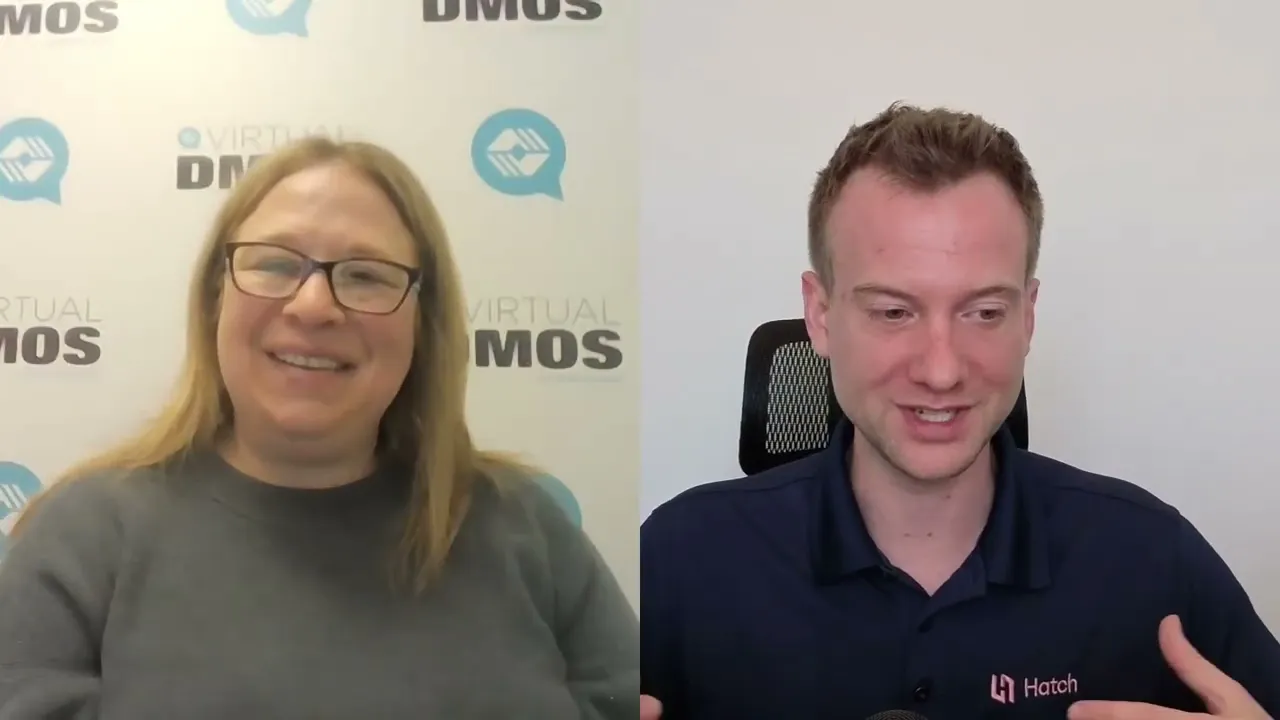
Kelli Anderson is COO at DMOS Orthopaedic Centers in Des Moines — five locations, 30 physicians and 50-plus PAs, PTs and hand therapists. She explains how DMOS decided workers' comp was worth real investment, why the product in that business is answering "what's next," and the quarterly employee forum that generates some of the practice's best ideas.
LATEST · E-- · —
0:00 / 0:00
How to Grow Without Dropping What's Already Running
Our Best Growth Idea Came From the Front Desk
Top takeaways
1. Grow without dropping what's already running
Kelli's framing for the balance is that you have to keep the wheels on the bus turning while you chase the bigger picture. Understand where you've been, where you want to go, and what the end result actually looks like — then get every relevant party involved and pulling toward the same goal.
She's realistic about the path: you'll do good things, and you'll also have back steps and things that don't work out the way you wanted. What matters is buy-in, and keeping people informed about what the growth goal is.
And the part that's easy to forget while a big initiative is running — the staff at each location still have regular operations to maintain. You can't take your eye off that ball.
2. "That's a great idea" is where the operations job starts
Everything comes down to details. Kelli describes the physician leadership at DMOS as consistently on the cutting edge, producing genuinely good ideas — and then someone has to operationalize them. Her line for it: that's a great idea, now let's get into the details of how we're actually going to make it happen.
She doesn't see that as a tension. She describes her role as keeping the temperature of how the organization is running — what the staff's challenges and pressures are — and then taking a new growth goal and segmenting it into a rollout that's actually survivable. What's too fast, what's too slow, what's doable and what isn't.
3. The quarterly focus group, and the idea that came out of it
DMOS runs quarterly employee focus groups, each with a set topic — the one running the day of the interview was on communication. Any employee can attend, questions go out beforehand, and the session is held with the board president and the CEO.
The format is an open forum: how are we doing, where do we need to be better as an organization, and what have you seen elsewhere that DMOS should look into?
The example Kelli gives is the second clip's title. Employees wanted DMOS more visible on social media — and specifically wanted the physicians posting more. Her reasoning for why staff were right: the physicians do a great deal outside the practice, active in their communities and with local schools, and none of that was showing up. It's a genuine growth idea that came from the people closest to patients rather than from leadership.
4. Peer networks are where growth ideas come from
Workers' comp didn't originate inside DMOS. It came out of The OrthoForum — an organization of independently owned orthopedic groups across the US that meet as groups, largely for idea generation.
Kelli's description of the value is the honest one: you hear what other groups are doing and ask how they did it. Work comp had always been there, and they'd wanted to do better at it, but the push came from seeing how peers were succeeding. As she puts it in the AI context later, you're not really trying to recreate the wheel.
5. Workers' comp is a service business, and the service is timing
Her framing is that work comp in Iowa is a service industry — which reorients the whole thing away from the referral and toward what happens after it.
The assessment DMOS ran on itself started with feedback, which tells you where you're doing well and where you aren't. Then the operational core: timing, communication, and moving the injured worker to the next phase in a timely and effective manner. Are we actually doing that? How? And what are the roadblocks to doing it better?
From there the diagnosis sorts into three buckets — is the fix process, staffing, or technology? Kelli notes you look at it, re-look at it, and the plan forms over a couple of passes rather than in one sitting.
6. Somebody is always waiting to ask "what's next?"
This is the sharpest observation in the episode. In any workers' compensation case, the injured worker gets seen and evaluated — and then a case manager, an adjuster or an employer is waiting to find out what happens next. What can we do, what can't we do.
DMOS had been answering that the old-school way: a phone call, an email. The gap they identified was instantaneous communication.
The response is a referral portal, near go-live at the time of recording: document upload, messaging, and a channel to keep referral sources informed about new services DMOS offers. The intent is to put the exchange of information in the referrer's hands rather than making them chase it.
7. When a project goes sideways, sort by time sensitivity
Kelli's default is fix-it mode — get in there, make the decisions, move forward — when the situation is time-sensitive.
When it isn't, she takes a step back and reassesses: that didn't work out the way we thought, do we still believe this is the right direction? If yes, power forward and take the bumps. And occasionally the setback is useful in itself — it surfaces an opportunity nobody saw earlier, and the end result turns out better than the original plan.
Which, as Joe points out in the conversation, is just a miniature version of her larger framework: assess, get feedback, adjust, repeat.
8. Not every project has KPIs up front — a building certainly doesn't
DMOS is opening a sixth location in Norwalk, Iowa, and Kelli is clear that a construction project isn't KPI-driven in the early phase. It's timelines, and everything that can derail them: equipment delays, changes in the soil, a parking lot that has to be laid out differently than planned.
Behind the build, the operational preparation runs in parallel — staffing, outfitting the building, start dates, and the financial commitments that come with opening.
The KPIs arrive once the doors open: revenue, patients coming in, and whether the strategy for driving traffic through a brand-new clinic is working against expectations.
9. How they picked the site
Zip code heat maps showing where patients at existing locations come from. Where the Des Moines metro is growing — new housing projects, up-and-coming communities, where families are moving. Norwalk was chosen on that basis.
Kelli is also candid that data only gets you so far: some of it is land availability, and some of it is luck. Sometimes the data tells you where to expand, and sometimes you follow where the activity already is.
10. Her filter for AI: does it serve the process?
DMOS already uses AI in the call center — handling volume around location questions, appointment confirmations, cancellations and rescheduling — and in its urgent injury clinics. Kelli's framing is that it improves the service level the practice can offer patients calling in.
Her test for anything new is whether it enhances a service they provide or fills a need they can't otherwise fill. If it doesn't fit the product they want to produce, they don't force it.
And there's a patient version of patience here worth noting: sometimes they're interested in a tool but it isn't developed enough to serve the process yet, so they watch how the company develops it and wait. They'll take a chance on some AI, and hold off on the rest until the fit is real.
Questions this episode answers
Why is workers' comp a service business rather than just a referral?
Because the work starts after the visit. In any workers' compensation case, someone — a case manager, an adjuster, an employer — is waiting to hear what happens next with the injured worker. Kelli Anderson's framing is that work comp in Iowa is a service industry, where the product is timing and communication: moving that injured worker to the next phase promptly, and keeping everyone informed while you do it.
How do you surface good growth ideas from frontline staff?
Build a forum for it. DMOS runs quarterly employee focus groups, each on a set topic, open to any employee, with questions circulated beforehand and the board president and CEO in the room. Kelli Anderson's example of what came out of one: staff pushed for more visible social media and specifically wanted the physicians posting, because the doctors are active in their communities and local schools and none of that was showing up.
How do practices choose where to open a new clinic?
Kelli Anderson describes zip code heat maps showing where current patients travel from, layered against where the metro is growing — new housing projects, up-and-coming communities, where families are moving. That's how DMOS selected Norwalk for its sixth location. She's also candid that data only takes you part of the way: land availability and a degree of luck decide the rest.
Scale referral operations to drive growth and efficiency
Full transcript
Transcript
[00:00:00] And specialty healthcare growth is not optional, but scaling with operational excellence. That's the hard part. I'm Joe Zboch. This is Scaling Specialty Growth.
[00:00:09] Joe: Welcome to another episode of Scaling Specialty Growth. I'm your host, Joe Zboch. Today's guest is Kelli Anderson. She's the COO at DMOS Orthopaedic Centers. DMOS is located in Des Moines, which you may have guessed — five locations, 30 physicians, an additional 50 plus PAs, PTs, and hand therapists.
Kelli herself is an operations leader with deep experience across both hospitals and independent practices. Throughout her career, she specialized in coding optimization, clinical documentation, rev cycle, and now of course she's running the whole show at DMOS. She's been there, she's doing that, and I couldn't be more excited to have her on the show. Kelli, welcome.
[00:00:49] Kelli: Thanks, Joe. I'm super excited to be here, and as we talked about earlier, this is my first podcast, so I'm ready to get into it.
[00:00:55] Joe: Well, thank you so much for jumping on the show for the first time ever. I'm really excited. We like to get started really quickly and jump right in to the first question. So Kelli, how do you think about hitting organizational growth goals while maintaining operational excellence? What's your approach?
[00:01:12] Kelli: Yeah, you have to keep the wheels on the bus running as you kind of — what's gonna be the bigger picture in the organization. So understanding where you've been, understanding where you wanna go, what does it look like, what's that end result. And then, lots of communication. You gotta get all proper parties involved, understanding, make sure everyone's reaching towards the same goal. And then you push for it.
You're going to do good things, and you're gonna have some back steps and things that don't work out the way you want to. But really it's just getting everyone to buy into what — and keeping them informed as to what that organizational growth goal is.
And then making sure that it represents that growth. With orthopedics, there's new technology coming out. There's so many talented orthopedic groups across the country and they're doing fantastic things, and a lot of times it's just getting everyone to buy into what those growth goals are. And then keeping the staff that are in those locations on just maintaining the regular operations. You can't take your eye off the ball. You gotta make sure everything's going.
[00:02:22] Joe: Getting buy-in — what does that look like? Because I know, especially when you're inside of an independent practice, the physician ownership, I'm sure there's a lot of things coming in, not just from that side of the house, but also other talented folks on the team. So how do you — is it your job to be like the filter? Do you kind of have to be the person that's like, hey, that's a great idea, here's what it would actually look like? I guess that goes into the keeping the wheels on the bus go round and round. Sorry, I had to say it.
[00:02:54] Kelli: Yeah, no worries. Everything comes down to the details. It really does. I'll say a lot of times in the organization, that's a great idea, but now we gotta get into the details of how we're actually gonna make it happen, because that's the next step.
So the great leadership that I work with here at DMOS, the physician leaders — fantastic ideas. Definitely on the cutting edge of everything. And then we have to operationalize it. We have to get into the nuts and the bolts of who's gonna do what, what steps do we have to take to reach those goals. So you're correct — I do get into the nitty gritty, say that's a great idea, now let's get into the details to figure out how it's actually gonna roll out and work.
[00:03:34] Joe: Do you feel that there's a healthy tension between growth and what it takes to actually do it? Or do you find that you're the one saying, hey, let's go — because you have almost the keys to the systems, you're very familiar with where you've been, where you wanna go. Do you feel well positioned? Can you talk about that a little bit?
[00:03:55] Kelli: Yeah, super well positioned. I would say my role is more of keeping the temperature of how everything is running in the organization. The staff — what are their challenges, what are their pressures? And then taking the new ideas, new operational growth goals, and being able to segment it for a streamlined rollout, keeping the staff informed of what's happening, but understanding what does a rollout need to look like? What's too fast, what's too slow? What's doable, what's not doable?
[00:04:26] Joe: Do you have any formal systems in place to bubble up the best ideas from the team? What does that look like? Are you literally looking at a screen of, like, air traffic control of how things are going?
[00:04:41] Kelli: Yeah, we definitely have an executive leadership team that looks at that overall goal. But DMOS does really great things — like we do quarterly focus group meetings with our employees, and each focus group has a different topic.
So for instance, today is one of our quarterly focus group meetings, and the topic is communication. We ask our employees that attend those — any employee can — and then they get a list of questions beforehand, and then they are with our board president and our CEO. And then that is that open forum to tell us: how are we doing, where do we need to do better as an organization? What ideas do you guys have that you've seen and would like DMOS to maybe look into and see if it's a possibility?
[00:05:26] Joe: No pressure, but is there anything that the staff have brought up recently in one of these that you're like, hey, that's a really great idea, we're gonna make an organizational change to implement that?
[00:05:36] Kelli: Yeah, I would use our marketing as an example. Social media is just essential these days. And they wanted to see us out there a little bit more — more posts. And they wanted to see the physicians post a little more.
Our physicians do so many great things outside of DMOS. It's not just coming in and seeing patients all day and doing surgery. They're active in their communities. They're active with local schools. And so one of the reminders that they give us is, we wanna see what the doctors are doing. They're doing so many great things. So that's something that came from our employees.
[00:06:12] Joe: I love that. So a couple things that I'm already taking away: one of the ways that this communication and ability to bring in ideas and filter them and vet them is literally a quarterly focus group. Creating an actual forum for this type of work to happen. That's fantastic.
And of course, knowing where you are, where you're gonna go — can you share an example of a recent project where you had to really apply all of your skills, all of these frameworks you've been talking about? Maybe it didn't go well at certain points, but getting it over the line. Some sort of large operational project.
[00:06:50] Kelli: Yeah, one of our organizational growth goals is in our work comp area, to be able to grow that business. So we had to sit down and say, okay, we know the goal. We know we wanna grow the organization.
Work comp — you have to get the stakeholders involved. You have to have conversations with the physicians and APPs that are doing the work, understand what the vision is, and then you gotta put structural steps in place. So we looked at how is the service we're providing? Are there any gaps? We identified we had some technology gaps.
So we're currently working through the process of adding a portal to our organization, to be able to provide the consumer — our referral base — with a consistent platform for communication. We're super excited about that. We're kind of almost on the tail end of that going live. We've worked through staffing needs and different things.
So that was where it went from idea generation, to reviewing what was needed, education of the staff, getting everybody on board, and then actually putting the details in place of adding that portal, finding a technology partner to partner with, and then implementing that. And now we're sort of waiting — almost live now — and then start to get feedback from our referral sources.
[00:08:06] Joe: Nice. I wanna dig into this. There's quite a few things that you've covered. I guess the first one is, how did you — you being DMOS — decide that workers' comp was one of the things to go after? Like, hey, this is a growth area for us, and we're not gonna just flip a switch and it's gonna be rainbows and unicorns. We'll have to put in the work. What was the process that you guys went through to decide that this is the thing that we're gonna invest in across people, process, technology?
[00:08:38] Kelli: I'm gonna go back to there's so many talented orthopedic groups across the country that are independently owned like ourselves. We actually belong to an organization that is made up of several independently owned orthopedic groups across the United States. We meet as groups, and a lot of it is idea generation — and you hear what other groups are doing and you're like, how did you do that? It's such a great community to be a part of.
And part of that was, you get to see what other people are doing. So work comp came up and we were like, wow — it was something that was always there. We wanted to do better in it, but you kind of have to talk with other groups and see how they're being successful. And so that's where work comp got started. Started talking to vendors during that time and started to understand the possibilities of that expansion.
We also feel it's just a great service to our community. Workers' comp injuries — connecting with that community and the needs, and a lot of our orthopedic injuries. So we wanted to play a bigger part in serving our community.
[00:09:46] Joe: Just for folks listening, that organization of independently owned — are you speaking about The OrthoForum? Or are there local ones in the Des Moines area as well that are maybe tailored to workers' comp, or business organizations? Just so folks can know, in their area, something to Google or look up.
[00:10:07] Kelli: Yeah, it's definitely The OrthoForum. We've been a part of that for several years now. There are local groups in the surrounding states as part of it, and then you kind of connect — there's groups within Iowa that are part of The OrthoForum, and you connect and you find each other, and you do idea generation, and you get to have success in their successes and really help one another thrive in the orthopedic space.
[00:10:34] Joe: Nice. Dig into the assessment of the current state. You mentioned earlier that understanding where you are is key to knowing how you're gonna go. So what did that assessment of the current state of workers' comp look like? I think of workers' comp as almost a competitive referral — it's not a foregone conclusion that it's gonna go to you. So tell me about that assessment of the opportunity there.
[00:11:02] Kelli: Yeah, work comp in Iowa is a service industry. And when we looked at a little bit of history — what has been the path of work comp for DMOS? And what do we want it to be in the organization? We wanna serve our community, as we talked about earlier.
So first of all, you get feedback. And that feedback lets you know, hey, we're not doing such a good job in that area, or we are doing really good at that — how can we do more? And then it's all about timing. It's about communication. It's about moving that injured worker to the next phase in a timely and effective manner.
And so we took a step back and we just said, are we doing that? How are we doing that? And maybe what are our roadblocks to being better at doing that? Then it sort of formulated — what are you doing well? What aren't you doing well? If you aren't doing something well, what was that? And what are things that we can do internally? Is that process, is that staffing, is that technology?
And then the plan kind of formulates from there. After a couple times you look at it and then re-look at it, and then you start to investigate what's out there. And then the plan forms from there as to how we're going to grow and reach that organizational growth goal.
[00:12:16] Joe: So you came to this idea that technology was going to be a key part of the process — you said tech gaps. What were some of those tech gaps that you wanted to fill? Is it to make the workers' comp process more efficient? Is it about driving more volume? Obviously there's nurse case managers and the adjusters in that relationship as well, so there's almost a B2B aspect to it that you don't see with a typical self-directed referral or traditionally a provider-based referral.
[00:12:50] Kelli: Yeah. The whole thing at work comp is, the injured worker gets seen and evaluated, and then everybody's like, what's next? So that's where the communication — we wanted to find a tool that could help more instantaneous communication, get updates to the case managers or adjusters and employers.
And right now we were relying on the old school way — a telephone call, an email. We wanted to be able to get them instantaneous access. So we looked for a technology application such as a portal, where we would be able to be uploading documents, we could do some messaging. We would be able to keep them informed of new services that DMOS was offering, and kind of put it in their hands to be able to go in and give us — for an exchange of information that needs to happen.
Because there's always someone in a workers' compensation case, there's always someone waiting to say, what's next? What is the next step with this injured worker? What can we do? What can't we do? And definitely the technology portal that we're working towards will help us with that in the future.
[00:14:04] Joe: You mentioned earlier that things don't always go your way. When you're working on a project — whether opening a new clinic, rolling out a new experience and accompanying technology — there are gonna be things that don't go your way, that don't fit expectations, or need hands-on, nitty gritty type work. When those things come up, what's your thought process? Do you go into fix-it mode? Do you over-communicate? Do you stop everything and pause? What's your approach when things don't go well at a point in a project?
[00:14:40] Kelli: Yeah, for me it's a fix-it mode. You just get in there and be like, okay, it's not working. And sometimes it's needed, to just get in there, make those decisions, and then move forward, based upon time sensitivity.
Other examples that don't go your way, that are not as urgent — you can kind of take a step back and just reevaluate. Okay, that didn't work out the way we thought it was going to. Do we still feel we're heading in the right direction? Do we still feel that this is the direction? And if so, then we power forward. We just take the bumps in the road as we go, and keep going down the track towards the goal.
Or sometimes — things always happen for a reason. Sometimes you take a step back to be like, huh, this gave us an opportunity we didn't see earlier. And maybe this is a way to show us there's another way, there's a better way, that we're gonna like the end result better.
[00:15:34] Joe: As you went through that, something came to me where it's just a mini version of the framework you discussed earlier. It's just like, hey, let's assess, let's get feedback, let's see what's going on. And so it's this loop where you just continually cycle and learn and move up.
Let's talk a little bit about what you're working on this year. What's on the radar? Some of that fun future-looking stuff, the growth goals. But first, when it comes to the KPI side of things — it's really important. How do you think about that? Are there KPIs for each phase of the project that you're marching towards? How do you implement KPIs at DMOS?
[00:16:15] Kelli: Yeah. A lot of the projects that we do — like, we have a new location opening in Norwalk, Iowa. We're super excited. It's gonna be our sixth location. That's not really a KPI-driven organizational goal, but you're working with construction partners, you're working on timelines, and that's where lots of things can pop up in the construction process. Delay of equipment, or changes in the soil, and hey, your original plan of how the parking lot was gonna be laid is gonna be a little bit different. I've learned a lot during that process.
[00:16:52] Joe: Wow.
[00:16:52] Kelli: So that's an example of where there really aren't KPIs. You're trying to hit your dates, your goals of when things will be accomplished, and you're trying to hit that opening date — all the while behind the scenes you're preparing for that opening, you're preparing for staffing, you're preparing for outfitting the building, and you're looking at start dates, and then you're looking at all the different financial things that come with opening a building.
And so that's where the KPIs start to come in. For a new location, you start to look at revenues and you start to look at patients coming in. Our strategy for making sure it's a busy clinic right out of the bat, we get traffic through that clinic, all those sorts of things. And then that's where the KPIs and the numbers start going in to be like, okay, now once it's open, are we hitting those KPIs of what we expected?
[00:17:43] Joe: Well, when it comes to it being a busy clinic and getting a lot of traffic, props to the DMOS staffer saying, hey, let's get on our social media game. How did you decide that opening that location made a lot of sense for the community and from a financial perspective? What kind of data were you looking at? Where did it come from? What were those conversations?
[00:18:00] Kelli: Yeah. A lot of times organizations will look at heat maps based upon where the patients — like a zip code heat map — where are the patients coming from that come to our current locations that we have. We look at where is the Des Moines metro growing. Where is new housing, how are housing projects going up? Where are families, and where are those up and coming communities? And they're all over Des Moines. Des Moines is a great city, great to be a part of it. So there's so many great metro communities.
Norwalk was chosen just for things like that growth. What's coming up in that particular community? Just sort of what types of patients are coming to us at other zip codes. And then a lot of times it's luck. You look at land and you look at other things like that. So sometimes the data kind of tells you where you need to go and expand.
[00:18:53] Joe: Yeah. And in the absence of that data, just find the newer Starbucks, right?
[00:19:00] Kelli: Or where the happening things are right now. Where are they?
[00:19:06] Joe: Yes, of course. Okay, so what's next? Obviously the location is something that this year is launching. Do you have any other growth goals or projects that are coming down the pike that you're excited about?
[00:19:17] Kelli: We talked about our growth in work comp. Super excited about that and the direction it's going.
I think on the mind of every organization these days is AI. The AI technology is growing so quickly. Just trying to keep up — that's where The OrthoForum comes in. Really great: what are other groups doing? You're not really trying to recreate the wheel. You could talk with groups, but there's lots of up and coming AI in healthcare.
We use AI in our call center. We use AI in our urgent injury clinics right now. So we always have that. Where else can we incorporate the great new technology that's coming out?
And then just general expansion of services. Looking at each of the service lines, each of the specialties, and sort of, where does growth need to continue to come from — other services that we can expand on. And then there's partnering to make the services we provide better.
[00:20:13] Joe: You mentioned kind of the magic word, AI. One follow-up question there. I've been in digital health for my entire career. And one of the things that I consistently hear from digital transformation, access, operations leaders is solutions without problems — absolute no-go, can't happen. So when it comes to AI, huge amount of buzz, but there's real applications. How do you think about AI in terms of the results it can actually deliver operationally? And what are the metrics there? Is it efficiency? Is it experience? Is it a combination?
[00:20:53] Kelli: Yeah, I mean, you look at something that will enhance the services that you're able to provide, or fill a need that you're not able to fill.
So like in a call center, AI can answer so many calls, that really helps the service level that we're able to provide to patients coming in — whether that be checking a location, or confirming an appointment, or a cancel and reschedule. AI is kind of behind the scenes and it's growing, that it can look at those and answer those quickly, for the organization and for the patients that we're serving.
Other than that, we try and find AI that just fits into the product we want to produce. If it doesn't fit, we don't really force it. Sometimes we find ourselves sitting back and watching AI — how is a company developing it? We might be interested, but it's maybe not at the point where we're ready to put it in. It's not gonna serve the process we want it to serve. And then we watch them closely, and we'll take a chance on some AI, and then other AI we wanna make sure that it's gonna be a good fit into the product we want to be able to offer.
[00:22:05] Joe: Yeah, I think that the primary filter of, is it going to serve the process — that makes a lot of sense. Kelli, thank you so much for jumping on an episode of Scaling Specialty Growth. I really enjoyed the conversation. Where can people find you if they wanna reach out and maybe ask you follow-up questions about how you think, what you're working on, or what's working?
[00:22:25] Kelli: Yeah, they can reach out to me on LinkedIn. I'm on there — Kelli Anderson. You can search for me by Des Moines Orthopaedic Surgeons Chief Operating Officer. So happy to talk with anyone who has any questions. And Joe, thank you. I really enjoyed my first podcast. Hopefully there'll be more.
[00:22:41] Joe: Awesome. Fantastic. See y'all.
[00:22:43] Kelli: Thank you.
[00:22:44] Hey, it's Joe. Thanks for listening. If you like what you hear, share with a peer, and if you're looking to scale referral operations to drive growth and efficiency, visit hatchcare.com.