
All Episodes
EPISODE 2
·
·
24:54
The referral workflow nobody digitized
Chris Poole
·
Chief Executive Officer,
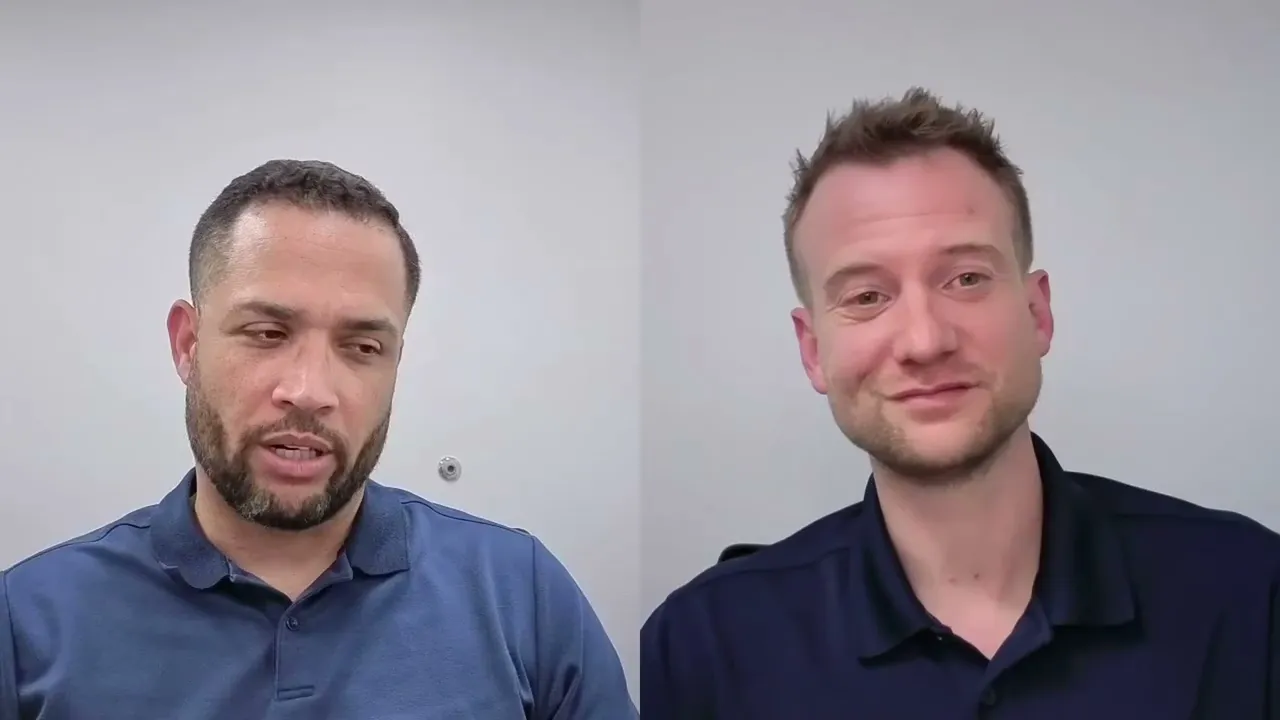
Chris Poole, CEO of Hatch, returns for a closer look at referral management itself. He explains why the front office is the last undigitized part of a specialty practice, what it actually costs to work a single referral, and why leakage usually happens in the days between a referral arriving and anyone reaching the patient.
LATEST · E-- · —
0:00 / 0:00
Top takeaways
1. There isn't as much data as leaders assume, and it isn't as good
Chris names two recurring problems, and the first is that the data mostly doesn't exist. In early conversations, CEOs tend to assume there's more of it and that it's higher quality than turns out to be true.
The clearest example is referral source. A practice may point to a physician name on a fax — but there can be twenty physicians with the same last name in a geography, and that name doesn't resolve to the specific practice or group actually sending you volume. So market-level acquisition insight is poor.
The same gap runs through the internal process: how well does the practice work a referral from triage to intake to scheduling? The tooling he's observed ranges from check marks on a spreadsheet, to a blank sheet of paper turned in at the end of the day for someone to hard-key later. Some groups use the EHR to count appointments booked — which, as he points out, is not the same number as referrals received.
2. The front office is the last undigitized office
This is the argument the episode is named for. Clinical teams — what Hatch thinks of as the mid-office — have the EHR and a plethora of software for delivering care efficiently. The back office has practice management and revenue cycle tools.
The front office is still largely running on notebook paper and Excel sheets. Which means referrals get muscled through with bodies, and the reporting and insight simply aren't there.
Chris's aside is worth keeping: a year ago he'd have told you there was nowhere left in healthcare that hadn't been digitized. This part hadn't been.
3. It is emphatically not a people problem
Both he and Joe are firm on this. Front office staff manage an extraordinary amount with limited tooling and homegrown processes, and Chris describes it as fascinating to watch.
The trap is precisely that it appears to work. Because the surface looks fine, the front office gets overlooked as a place to drive practice performance from — while the people doing it absorb a great deal of manual, repetitive work that isn't the part of the job they find meaningful.
4. What the insight is actually for
His example is a group expanding value-based care referrals under bundled payments, and the questions they want answered are concrete:
How many referrals is each group sending?
Of those, how many end up in surgery — and what types?
Are we delivering on what we promised those value-based agencies, in terms of the time it takes to move a patient through triage, intake and scheduling?
Do we communicate back to them well?
Underneath all of it is a harder one — how do you quantify the value of a relationship, from both sides? With limited resources and limited time to grow a practice, the question Chris poses is simply whether you're equipped with the data to make those decisions at all.
He finds this genuinely surprising, since physicians are among the most data-driven people he encounters, and this piece of the practice has stayed dark.
5. What a referral costs to work
Based on work Hatch has done with its customers, Chris puts the administrative cost of working a single referral from intake to scheduling at roughly $30 on average — his figure, and an average rather than a rule. For certain patient types, workers' comp being his example, he suggests it can run ten or twenty times higher.
The sequence behind that number is what makes it plausible. A fax arrives. Someone manually pulls information out of it and populates an electronic health record — which has to be created for every referral, before anyone knows whether the patient is even in network. Then back out to collect missing information. Then determine network status. Then more communication with the referring physician or the patient.
As he puts it, the process is often backwards, and much of the work is rudimentary data entry.
6. The referral got harder while the tools stayed the same
Value-based care, CMS requirements around closing the loop with the referring provider, and bundled-care organizations routing health plan members on behalf of employers have all added conditions to the referral. Joe's framing in the conversation: the game changed, the tools didn't.
Chris reframes access away from brick and mortar entirely. How easy is it for me — as a patient, or as a case manager referring a patient — to start the process and get through to scheduling? And how easy is it to understand where I am in that process? If it isn't easy, the competing group down the street or the walk-in option is right there.
7. Where the leakage actually happens
Two patterns, both fixable.
The first is giving up too early. Chris describes groups that attempt to reach a patient twice for scheduling and then stop. He views those patients as a perfect pool to retarget — either to understand why they didn't convert, or to bring them back into the practice later.
The second is speed. Groups he talks to are typically two to three days out from receiving a referral before anyone reaches the patient; some are a week. Joe's point is that by the time that call happens, you may have already lost it — and much of the delay is the manual work standing between the referral arriving and anyone being in a position to reach out.
One counter-tactic from a group they'd spoken to that day: when they can't reach a patient, they close the loop back to the referring provider — and a large majority of those patients then contact the specialist themselves to schedule.
8. Why referral-first architecture is a different build
Chris's explanation for why nobody had gone after referrals alone is that it's a cumbersome thing to build, because you sit at the intersection of many workflows. Existing patient engagement platforms and EHRs have offered features that address the edges of the problem rather than the whole of it.
Starting from how practices actually acquire referrals means ingesting from eFax, email, text messages and phone calls. Then accommodating that the order of triage, intake and scheduling varies by practice. Then integrating with the EHR — which remains the source of truth — so the front office can work almost exclusively in one place.
The design constraint he emphasizes is that this shouldn't force change management on anyone else. Mid-office and back-office teams keep working out of their existing tools.
9. Portals, but not the kind everyone hates
Chris gets in front of the obvious objection: portals have a reputation as a headache, and he thinks that reputation was earned by how they've historically been delivered.
Their version connects through email — a natural workflow — is HIPAA-compliant, and requires no password, so nobody is remembering a username or resetting credentials. Inside it, bi-directional communication about a patient in something close to real time: messaging, document sharing, status updates. And because it's integrated with the EHR, those updates can push automatically rather than requiring someone to relay them.
10. Private access doors as a relationship, not just a channel
The capability Chris singles out as unusual — he believes Hatch is the only platform in the market offering it — is private digital access doors for referring groups: co-branded pages that a specific partner's population can refer into directly.
His employer example makes the point. A group with a close employer relationship can give that employer's employees a co-branded route to self-refer. Practices describe it as VIP access. It's still a referral, but it's being used to create new forms of access and new benefits rather than just moving paper.
And the guardrail stays consistent: it was built to work alongside existing workflows. If a referrer wants to keep faxing, that's fine — behavior change isn't required.
Note on the figures in this episode
Two numbers here are forward-looking statements made at the time of recording in April 2026, and are presented as Hatch's own measurements and expectations rather than independently verified results. Chris cites a roughly 30% reduction in administrative time spent working a referral achieved to that point, an expectation of north of 50% by the end of that year, and a belief that a subset of referrals could be fully automated the following year. Joe separately references widely cited industry data that around 50% of referrals are never completed.
Questions this episode answers
Why is the front office still the least digitized part of a practice?
Because software followed the chart, not the referral. Clinical teams have the EHR and a wide range of care delivery tools; the back office has practice management and revenue cycle systems. Chris Poole's observation is that the front office is still largely running on notebook paper and Excel — which means referrals get pushed through with people rather than process, and there's no reporting underneath any of it.
What does it cost a practice to work a single referral?
Based on Hatch's own work with customers, Chris Poole estimates roughly $30 in administrative cost to move one referral from intake to scheduling on average, and suggests certain types — workers' comp being his example — can run ten or twenty times higher. The sequence behind it explains the number: manually pulling data out of a fax, creating an EHR record for every referral before anyone knows whether the patient is in network, chasing missing information, then confirming network status.
Where does referral leakage actually happen?
In the gap between a referral arriving and anyone reaching the patient. Chris Poole notes that groups are commonly two to three days out, sometimes a week — by which point a patient who doesn't know where their referral went may have diverted to a walk-in option. The second pattern is stopping too early: many practices attempt contact twice and then give up, abandoning a pool of patients worth retargeting. One counter-tactic he cites is closing the loop back to the referring provider, after which most patients call the specialist themselves.
Scale referral operations to drive growth and efficiency
Full transcript
Transcript
[00:00:00] And specialty healthcare growth is not optional, but scaling with operational excellence. That's the hard part. I'm Joe Zboch. This is Scaling Specialty Growth.
[00:00:09] Joe: Welcome back to another episode of Scaling Specialty Growth. I'm your host, Joe Zboch, and we are joined by Chris Poole, CEO of Hatch. Again, today we're gonna dive deep into the Hatch side of things. I'm really excited about this. Chris, obviously at the helm of Hatch, but a long-time CEO, with experience in venture capital as well as health system innovation.
And so in terms of scaling business as well as scaling specialty practices, he's got a lot of great insights. Today we're gonna dive deep into Hatch's bread and butter, which is — we're all about referrals and referral management, which for some reason is not solved, even though the primary-to-specialty care referral has been kind of the backbone of healthcare for a very long time.
So we'll dig into that. I'm really excited. Chris, you wanna say hi?
[00:00:51] Chris: Hello, hello. Glad to be here. Glad to be with you, Joe.
[00:00:55] Joe: Yes, sir. Obviously referrals are a huge area for scaling growth. We have a bunch of conversations every week with operations and executive leaders in the market, every day, that are looking to meet aggressive growth goals, maintain operational excellence, and really ensure that they can deliver on the brand promise that they make not only to patients, their staff, but also the referring partners.
So what challenges are you seeing practices facing, particularly because of the inefficiencies around referrals?
[00:01:27] Chris: There's probably two core themes that we see here at Hatch in terms of challenges. The first is that there's just really no data. And oftentimes the initial conversation we have about data with, for example, CEOs — they assume that there's more data, and what data they have is of higher quality than it really is.
And the fact of the matter is, they generally don't have great insights. One, they don't understand where patients are coming from. In some cases we'll hear like, oh, there's a physician name on the fax, that's fine. There could be 20 physicians with the same last name in a geography. And really that doesn't get back to a specific practice or group that's referring into you. So, really poor market-level acquisition insights.
And then it sort of just transcends through that referral process. They generally don't have great data in terms of how well practices work through a referral from triage to intake to scheduling.
In some cases, what we see is practices are using very rudimentary tools. We've seen things from, they're making check marks on a spreadsheet, or a blank piece of paper that they're turning in at the end of the day that someone's hard-keying into a spreadsheet to try to get some operational insights from. To, in other cases, maybe they're able to use the EHR to determine how many appointments they booked. But that's not the same thing as the number of referrals.
And so our very core and strong belief is that the front office, as we say, is just as critical as any other part in the back office. Your clinical teams, that we think of at Hatch as the mid-office, they have EHR tools. There's a plethora of software tools that they use to efficiently deliver their care. The back office has practice management. There's revenue cycle tools, so on and so forth. But the front office is still operating largely on notebook paper and Excel sheets.
And so it's terribly inefficient in terms of not only the data and reporting and insights, but you're generally muscling referrals through with bodies.
[00:03:36] Joe: Yeah, let's get to that in a second, because I think that's a great topic. The data piece — you talked about the market data as well as the operational data. And you alluded to the reason that there's not really a complete data story there is that the workflow and the technology is really fragmented. You mentioned the EHR, you mentioned spreadsheets, a lot of phone calls.
Can you tell me a little bit more about why it is so difficult for these teams to put together a data story that they can actually make informed decisions behind?
[00:04:07] Chris: The crux of it is the process has not been digitized — which I would've told you a year ago, there was nowhere else left in healthcare that hadn't been digitized. But the reality is that it hasn't.
And so because of that, you're still working off of tooling that doesn't scale. It doesn't facilitate reporting and insights and so on and so forth. And so the general approach that practices take is they hire a couple care coordinators, they generally develop some type of homegrown process — which oftentimes, I think kudos to them, it's fascinating to watch them work with the limited tooling and resources that they've been given.
[00:04:51] Joe: Well, it's gotta get done, right? You mentioned this word in the last episode, which I thought was great — it's like sometimes the successful orchestration of either a referral or any other workflow in specialty care is kind of like a miracle. And so these groups are asking a lot of their people, and they're doing fantastic and heroic work.
But like you said, it's a lot of manual work. It's a lot of repetitive work that might not necessarily be very life-giving. I think we hear from the referral coordinating and referral teams that they really like helping patients get to the next step of care — the critical thinking of making sure that the patient population is taken care of. But unfortunately, while the process works to a degree, there's a lot of manual effort there. I just wanted to call that out — it's definitely not a people problem, right?
[00:05:40] Chris: It's not a people problem. I'm amazed at the degree to which front office staff are able to manage a number of these challenges, if you will, and the systems they have in place.
I think, because it appears on the surface to be working, it is overlooked as being an area to drive practice performance from. But we've seen through the work that we do with our clients the degree of impact that you can have.
Even just the reporting and insights alone — we work with one group that is expanding their value-based care referrals. They take bundled payments, they want to know a number of things. How many referrals is each group sending? Of those referrals, how many end up in surgery? What types of surgery? They want to know things like, are we delivering on the promise to those value-based care agencies in terms of the time it takes us to get a patient in through triage, intake, and scheduling? Or, do we do a good job communicating back with them?
And ultimately, how do you quantify, in some respects, the value of a relationship from both sides? And having that data — how does that inform you? You have limited resources and time to grow your practice. Are you equipped with data to help you make those decisions?
I'm often amazed, because physicians, to me, are some of the most data-driven people. And I think they have had to contend with having a critical piece of the practice that has not been — quote unquote — digitized at the very foundational level, in such a way that they can actually claim some insights and make some informed decisions from.
[00:07:26] Joe: Yeah, I think it's interesting — when you talk to the executive leadership quite often, as you've mentioned, they'll talk about wanting to have more insight into their referral sources, where their best referrals come from. And I think as we have developed further and further into this space, we now know: okay, if you want that level of insight, the process has to be digitized. Oh, look at that — the infrastructure for referral management from end to end just isn't there.
And when you dig into the individual steps of the manual referral management workflow itself, you've got people on your team that are spending five minutes doing this, seven minutes creating the patient chart inside of the EHR. Oh, we gotta do that before we even know if this is a relevant or qualified referral. And, oh, by the way, it's taken us seven minutes to go to Google Maps because the website doesn't have the listings, so I can route the patient. So it's been, for me at least, really interesting to see.
There are these high-level strategic items that every single one of our clients wants to get to — can get to, obviously, through the Hatch platform — but there's some fundamental building blocks that need to be in place, because the data source, the data, and the workflows are fundamentally broken and fragmented.
Can you speak a little bit on that in particular — why the EHR perhaps is not lending organizations any favors when it comes to referral management?
[00:08:57] Chris: Yeah, the EHRs have for a long time been focused on the electronic health record. Everything that they provide is sort of built around and orbits that. They've expanded into practice management, but they haven't touched referrals.
And one of the things I want to call out is the cost of working a referral. We've done some work with our customers, and I would say on average you're probably looking at $30 of administrative cost just working a referral from intake to scheduling. It's frankly nuts when you look at some of the very rudimentary data-entry-type activities that these care coordinators have to contend with to get a referral worked.
I mean, a fax comes in and you have to manually pull information out of the fax and populate it into an electronic health record — which, by the way, you have to create for every referral, to your point, whether or not they actually are in network, so on and so forth. So the process is often backwards. It's very rudimentary data-entry-type task that's associated.
And so our estimates are coming back to the $30 per referral, and that generally is sort of an average. If you look at certain types of patients — workers' comp would be an example — you're talking about potentially 10 times more, maybe 20 times more than that. Because most executive leaders, I don't think, have taken the time to understand what does it mean for a referral to move through this practice.
You ingest it, you take it from eFax to create an EHR record, you populate that. Then you go back to try to collect missing information. From that, you then determine are they in network or not. If they are, maybe they move through the process, but you've got more communication with the referring physician or the patient.
[00:10:57] Joe: And that's all before you layer on what we talked about in the first episode — just the changing macro environment, the rise of value-based care. There are even CMS requirements on closing the loop on the referring provider side of things. And so when you look at some of these bundled care organizations, these value-based organizations that are working on behalf of employers to route health plan members to high-quality care — now all of a sudden the referral itself has more riders or strings attached or requirements.
And so in a lot of ways what I hear you talking about is the game — or the referral itself — has changed, but the tools haven't. There's some things, the blocking and tackling, that absolutely has to get done. And those inefficiencies are quite frankly exacerbated by the changing nature of referrals becoming increasingly competitive.
[00:11:50] Chris: Yeah, that's driven by a lot of macro-level changes within healthcare. In terms of things like when you think about access — let's take away brick-and-mortar access — how easy is it for me as a patient, or me as a case manager referring a patient? How easy is it for me to get that patient in to start the process, all the way to scheduling?
And how easy is it for me to understand where I'm at in that process? And if I can't get through quick enough, does the competing group down the street, or the competing hospital — whatever the competitive dynamics are of your market — how easy is it for me as a patient to divert to another pathway?
I mean, we all have stories about being referred to a specialist. The primary care physician sends the referral, we don't know where it's at in the process, we may not even remember and know what group they sent it to. And if we don't hear from that group pretty quickly, we may just divert to some sort of walk-in option.
And so this is an example of where leakage occurs. We talk to groups today where they will reach out to a patient twice for scheduling. And if they don't get in contact with that patient, they basically stop reaching out. And this is a perfect pool of patients to retarget — whether it's to figure out why didn't they convert, or to ultimately drive them back into the practice at a later time.
[00:13:33] Joe: I agree. I wanna click on one thing that for me I thought was really interesting — perhaps reaching out via phone isn't the best way to get somebody on the schedule. It is the de facto way, or part of the process, for many of these groups. But one of the things I've learned is if you're making that phone call three, four, five days — a week, two weeks after the referral is initially made — a lot of times you've already lost it at that point.
And learning more and more about the amount of manual time it even takes a team to get to the point where they can do some of that patient engagement, some of that patient communication — days. And by simply automating that part of the process, you can really positively impact your referral-to-appointment ratio.
[00:14:25] Chris: Yeah, we talk to groups — some groups we've talked to are probably a week out. A lot are two to three days out, as well as they can determine.
We were talking to a group earlier today and they said if they aren't able to get in contact with a patient, they'll reach back out to the referring provider to close the loop. And a vast majority of patients at that point will then reach back out to that specialist and schedule that appointment.
And so I think the reality is — and obviously at Hatch we're passionate about this — but we can talk about the issues and challenges of referral management front, left, top down, and center, because it's a myriad of problems that exist within it. And it largely today, I think, is the absence of a digitized process.
But also, beyond just cleaning up the process so you have those insights, one of the things that I'm assuming at some point we'll talk about, Joe, is the administrative costs that can be alleviated through the right type of technology. And also the ability to increase that referral-to-appointment conversion, which we think represents for many practices a sizable lift in revenue.
[00:15:49] Joe: For sure. I think there's a lot of industry data out there that 50% of referrals are actually never completed. And so, depending on the volume of referrals for the practice, 1, 2, 3 percentage points — that can be a very meaningful amount of revenue.
So we've dug pretty deep into the problem and where it manifests, where that problem shows up. And of course it's costly, not just in terms of administrative burden, but expected revenue that's left on the table due to inefficient or manual processes.
Let's talk a little bit about Hatch and specifically the technology solution. I think from a fundamental perspective, one of the key things about Hatch is it's built from the ground up around the idea of referrals — a referral-first architecture. Tell me a little bit about why that matters, especially in comparison to some of the other tools or technology you see out there — the EHR, patient engagement apps.
[00:16:39] Chris: Yeah, it's a great question. I would say generally speaking, no one has historically gone after referrals by itself. And a big part of why we think that is true is that it's a fairly cumbersome piece of technology to build, because you're at the intersection of a lot of different workflows that have to be considered.
And so when you think about other tools — some of the well-known patient engagement tool platforms, and certainly the EHR — they have offered features that sort of get at the edge case or needs of working referrals. But for Hatch, we started really from the ground up in understanding: how do practices acquire referrals?
Well, we know they come from a number of different places. They come from eFax, they come in some cases from email, they come from text messages, they come from phone calls. And so we needed to think about the ability to ingest referrals from a number of different areas.
At the point at which you do that, you have workflow considerations — in terms of what are the processes practices have, in terms of the order in which they triage, and then intake, and then scheduling. And ultimately, beyond just those workflows, knowing that the EHR by and large is the source of truth for the practice.
And so you need to be able to integrate with those EHRs such that the front office more or less is working exclusively off of Hatch, and that the platform has been built to service the needs that the practice has. Because again, we're looking at ways to reduce the administrative time spent on them. You get better data. In some cases we're automating entire steps of the process. But at the same time, it doesn't require change management in the mid-office or the back office — those teams can still work out of their existing tools.
And so the platform itself has to function and meet practices where their needs are at, and the nuances that exist within each practice. It is quite the undertaking. And I would say we strongly believe that our core competency is referral management. And if you want a sufficient tool to service that front office, it's gotta be that way. It can't be a secondary thought.
[00:19:14] Joe: As we continue to develop a leading referral management platform, there are four or five, six core capabilities that need to be really robust if you're going to not just solve a piece of the referral management problem, but the whole pie.
So there's obviously been a lot of work on AI-powered document processing on the ingestion side of things. And quite frankly, just a centralized referral queue — not just from a visual UI standpoint, but from a conceptual standpoint — is novel, when the standard is multiple screens where you're toggling and chasing a referral through the EHR.
Multi-stakeholder messaging — a referral doesn't exist in a vacuum. There's the referring provider, the rendering provider, the patient, of course, and then in some cases for more complex or value-based referrals there's a nurse case manager, or some kind of manifestation of an employer-based stakeholder. There are a lot of people involved.
And then of course the referral portal is key for really cutting down a lot of what you'd call administrative sludge, or just excessive phone calls from folks checking in — hey, what's the status? What's the status?
And I think you touched on this at the very beginning — the only way that you're able to tell a complete data story is by having end-to-end infrastructure in place, so that you can get those performance insights, not just on growth and operations. I said a lot there. I covered probably about five different capabilities that seem to be really fundamental for a robust referral management solution. Any other color you want to add onto those, or things you're excited about in the future?
[00:20:45] Chris: Yeah, I would probably start by coming back to the point I made previously, which is we spent an inordinate amount of time understanding the workflow of a practice and where all different types of referrals come from.
So if you think about the features that we have — for example, I think one of the things that's very unique about us is that we offer these referral portals. Now, I'll get right in front of this: a lot of people are like, oh, portals are a headache. Well, the way portals have historically been delivered, we believe has been a headache.
What we did is we took a lot of consumer insights and feedback and built a portal that you can connect into via email, which is a very natural workflow for people. HIPAA-compliant, doesn't require a password, and so they don't have to go and remember how to log in and update their username and all of that.
And what it allows us to do is help our clients facilitate bi-directional communication about a patient in real time. They can message in the platform, they can share documents, they can provide status updates. Also, while this is integrated in the EHR, these updates can be pushed automatically. So it's really about simplifying workflows and frankly automating steps that just don't need a human to do it. There's no additional value, per se, provided.
Beyond that, we are spending a lot of time thinking about where does AI intersect. I won't go into all the detail about some of the things that we have coming, but I will tell you that today we have been able to reduce the amount of administrative time spent working a referral by about 30%. We expect to be at north of 50% by end of year. And we do believe that we will be able to fully automate a subset of referrals sometime next year.
And so all of this translates to just a better practice in terms of that top of funnel, better access.
Maybe the other thing to mention that we haven't covered is that we are one of the only — I think we're the only platform in the market at all — that provides private digital access doors for referring groups. And this is a way for them to refer — if they want to do fax, that's fine. One of the things I want to make clear is that we built it to work with existing workflows so that behavior change is not required.
But we do have groups, for example, that have very close relationships with employers. This is a type of referral. Our system allows for them to have co-branded pages for — in this case — employees to self-refer into. It is more of a fortified relationship, so to speak. VIP access is what we hear our practices talk about a lot. And again, it's still at the end of the day a referral, but we're using referrals as a way to create new ways of access and new benefits.
And so it's a comprehensive platform. It requires that to provide the value that you need to, and that practices expect. So yeah, we're certainly proud of it, and look forward to doing more.
[00:23:55] Joe: Clearly the referral is as important as ever. The tools and the infrastructure around it need to grow up. I think Hatch is ready for the task. Chris, thank you so much for your time, man.
[00:24:05] Chris: Thank you, Joe.
[00:24:07] Joe: All right, y'all, that was episode two of Scaling Specialty Growth. We are excited to work with more and more operations and access leaders in the space, going deep into those leaders who are doing the work — from the front office workflows to the boardroom strategy, we're gonna cover it all.
And so if you are someone who's responsible for turning growth goals into operational reality, this is gonna be a show for you. And of course we want to bring on the best of the best. So if you have a peer that you think would be a great fit, Scaling Specialty Growth is just getting started and we're really excited for what we have coming. Thanks, y'all.
[00:24:40] Hey, it's Joe. Thanks for listening. If you like what you hear, share with a peer. And if you're looking to scale referral operations to drive growth and efficiency, visit hatchcare.com.