
All Episodes
EPISODE 1
·
·
20:50
Rising costs and specialty org growth
Chris Poole
·
Chief Executive Officer,
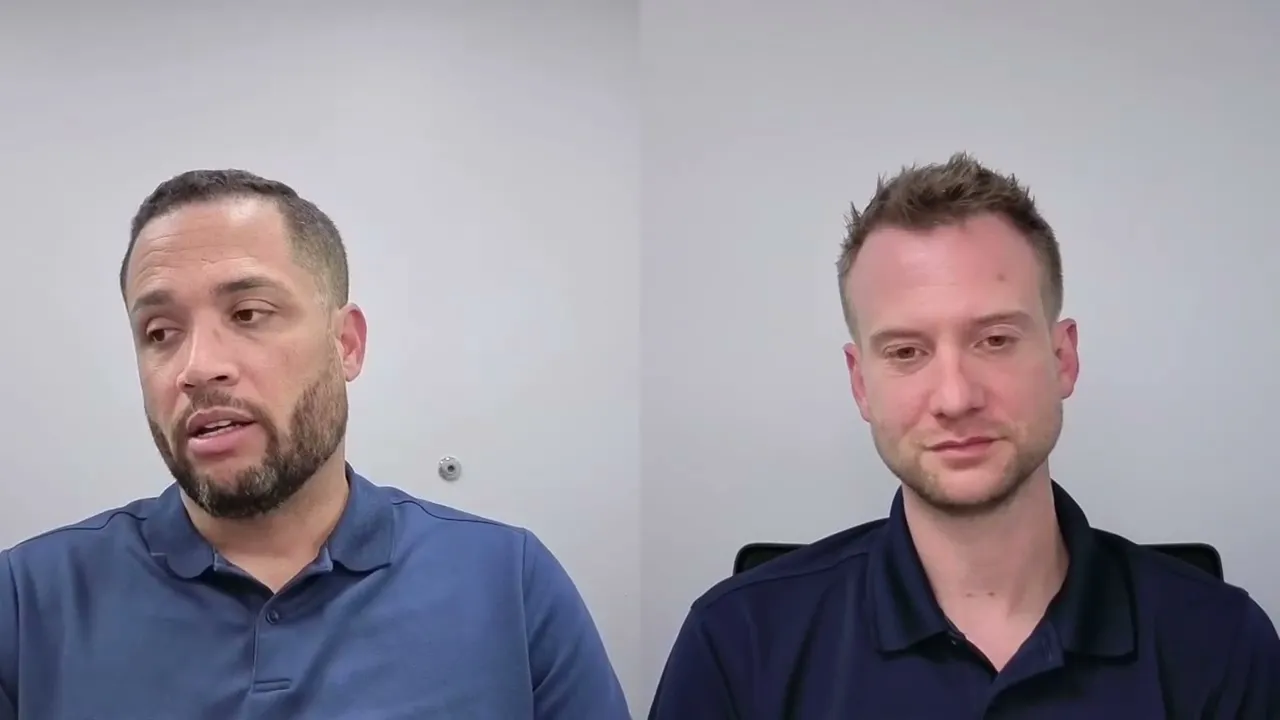
The first episode of Scaling Specialty Growth. Chris Poole, CEO of Hatch and a three-time healthcare CEO with time in venture capital and health system innovation, lays out the macro picture: margin compression, why growth is a sustainability question rather than a profitability one, what patient yield actually means, and why the front door of the practice deserves as much investment as the clinical care path.
LATEST · E-- · —
0:00 / 0:00
Top takeaways
1. Margin compression, unpacked
Chris comes at this from a finance background — he started as an accountant before moving into venture investing — and he's upfront that margin compression is just a tidy phrase for rising costs meeting shrinking reimbursements.
On the cost side: labor, plus a stack of expectations that all cost money to meet. Contending with payers. Consumer expectations. Staying on the cusp of clinical innovation. Practices face what he describes as an almost insurmountable amount of increasing cost.
On the other side, shrinking reimbursement has been the trend for several decades. And new value-based care models complicate it further by disrupting the natural flow of patients. He notes this isn't unique to specialty care — rising cost was the constant at both health systems where he worked on innovation.
2. Growth is a sustainability question, not a profitability one
This is the premise the whole show rests on. Growth is critical to sustainability: you need patient volume to offset rising cost. For a physician-owned practice, it's what allows the group to keep operating in that capacity at all.
But Chris is careful that it isn't only about the top line. It's equally about optimizing internally to bring the expense side down. Both halves — volume and cost — determine how long a practice can sustain itself.
3. What "yield" actually means
Yield is the term Joe pushes him to define, and it's the one that ties growth and cost together: the value of a particular patient — payer mix, the type of care they need — set against the cost and complexity of serving them.
His analogy is the airline industry: a largely commoditized offering where one carrier looks much like another, yet different classes within a single plane optimize revenue and drive profitability.
He's deliberate about the line he won't cross with this idea. It doesn't mean patients aren't equal — they are, and you want to provide care to all of them. It means being cognizant of where the higher-yield patients are, because that awareness can make a real difference to a practice's financial health.
Which lever you pull depends on where you're standing. Groups with strong volumes tend to lean into yield. Groups whose volumes aren't where they want them are in a take-most-any-patient mindset. Micro-level dynamics in a specific market drive that choice.
4. What practices are trying in response
Value-based pathways, which mean different things to different providers — fully at risk at one end of the spectrum, bundled pricing arrangements at the other.
Casting a wider net on where patients can be acquired.
Diversifying reimbursement streams through ancillary services — something practices have expanded into for years. His caution: you can't do everything, so which ancillaries actually bear fruit becomes the critical question.
5. Everyone believes they're clinically differentiated. Patients can't tell.
Almost every group Chris talks to is confident about its clinical differentiation. The problem is that a large part of the market can't distinguish quality between one group and another — especially when a referring physician is championing and guiding the patient's care journey, which pushes price transparency and quality data out of the foreground.
So differentiation increasingly runs through convenience. Some of that is brick and mortar: is there a clinic somewhere I don't have to cross the interstate to reach? He points to the rise of orthopedic urgent cares as a genuinely good idea, while noting many groups still lack real evidence for which specific site to choose.
His benchmark for what that could look like comes from business school case studies on Starbucks, where the depth of research behind location selection is, in his word, profound — for a cup of coffee. Specialty care should be doing at least that much thinking.
Beyond location, convenience is the whole arc of the experience: how the referral felt, how check-in went, how communication ran along the way, and how easy it is to reach the practice with a question — or whether that means a call tree and an hour on hold. As consumer expectations of instant availability keep rising, he expects that to shape which practices grow.
6. The front door hasn't had the investment the care path has
Chris flags this one as self-serving for Hatch, then makes it anyway. Enormous money has gone into improving the clinical care path — EHRs are imperfect but far better than they were, and there are practice management tools, ambient note-taking tools and more besides.
The top of the funnel is still fragmented, and in his view it deserves as much focus as anywhere else. You can have the best physicians in the area, excellent revenue cycle, and every clinical tool available — but if you don't know how to get patients through the door, that's the cart before the horse.
The phrase Hatch uses internally for a patient successfully moving through a practice is a miracle, given how many people are involved, how much they have to remember, and how antiquated the tools remain.
7. You can't keep solving paperwork with people
Joe raises the widening gap between growth in the number of providers and growth in the number of administrators in healthcare — while being upfront that he can't cite the exact source — and the implication is hard to avoid: adding bodies isn't a sustainable answer.
Chris's response has two parts. Build a brand and deliver on the brand promise, a tried and true strategy in other industries for differentiating and fortifying your position. And use technology to bring down cost specifically in the parts of the practice where the lift is undifferentiated.
The boundary matters. Patients want to know the physicians — that's where the relationship lives, and it should never be replaced. Physicians are the product the market cares about, and they belong at the forefront. What should be targeted is administrative bloat, which doesn't build a stronger patient relationship and, where it's excessive, actively erodes one. Labor remains generally the biggest line item on a practice P&L.
8. Specialty practices have two relationships to maintain, not one
A point that runs through the rest of the series: in specialty care there's the patient, and there's also the referring physician or source. Both relationships need building.
And as healthcare moves toward more value-oriented arrangements, payers are injecting additional people into the equation who influence a patient's decisions and journey. Chris's position is that the ability to fortify those referring relationships — and to monitor them over time — is critical to a sustainable practice.
9. Why the referral is where he ended up looking
He'll happily concede the referral isn't the sexiest topic in healthcare. But studied closely, it's dense with problems, gaps and opportunities — and it's a microcosm of insight a practice can act on downstream: how patient acquisition is trending, how long it takes a patient to get from a faxed referral to a scheduled appointment, who is sending referrals, what types they're sending, and how all of that moves over time.
Then the question underneath it — where's the leakage? He references published reports that up to 50% of referrals never convert to an appointment, and says the executives he speaks with generally don't have good insight into their own number.
Which produces the challenge he puts to them: while you're chasing more patients through a new partnership or a new site across town, do you know how many are already falling through the net, and what improving that even incrementally would do for the practice?
He's candid that he missed this himself. Across two decades working on healthcare challenges, including at two health systems, referrals were never something he thought about from a place of innovation.
Questions this episode answers
What is margin compression, and why does it make growth non-optional?
Chris Poole calls it a fancy way of describing rising costs meeting shrinking reimbursements. Costs climb through labor, payer administration, consumer expectations and keeping pace with clinical innovation, while reimbursement has trended down for decades and value-based models disrupt patient flow. That's why he frames growth as a sustainability question rather than a profitability one — volume offsets cost, and for a physician-owned practice it's what preserves independence.
What does "patient yield" mean for a practice?
The value of a particular patient — payer mix, the type of care needed — measured against the cost and complexity of serving them. Chris Poole compares it to airlines, where a commoditized product still supports different classes on the same plane. He's careful about the boundary: it doesn't mean patients aren't equal, it means knowing where higher-yield patients are. Groups with strong volumes lean into yield; groups short on volume take most any patient.
How do specialty practices actually differentiate themselves?
Increasingly through convenience, not clinical claims. Chris Poole's observation is that nearly every group is confident in its clinical differentiation, while patients often can't distinguish quality between groups — particularly when a referring physician is guiding the journey. What patients can judge is location, the referral experience, check-in, communication, and whether reaching the practice means a call tree and an hour on hold. His benchmark for site selection is the depth of research Starbucks puts into choosing a location.
Scale referral operations to drive growth and efficiency
Full transcript
Transcript
[00:00:00] And specialty healthcare growth is not optional, but scaling with operational excellence. That's the hard part. I'm Joseph Zboch. This is Scaling Specialty Growth.
[00:00:10] Joe: Welcome to the first episode of Scaling Specialty Growth. I'm your host, Joseph Zboch. Today's guest is our very own Chris Poole, CEO of Hatch. He's a healthcare industry veteran with time in venture capital, health system innovation, and is a three-time healthcare CEO. So really, he's the perfect person to dive into some of the scaling challenges specialty operators are facing.
At Hatch, we help specialty orgs modernize their referral workflows. So we are constantly having conversations with operations and access leaders that are responsible for the systems required to scale growth. Chris, episode one — welcome to the show.
[00:00:47] Chris: Thank you, thank you. Excited to get started.
[00:00:50] Joe: Yeah, man. Let's just dive right into it. From a macro level, what are we hearing time and time again? What are specialty orgs facing today?
[00:00:58] Chris: I think a lot of what they're facing at the macro level is the things that they've been contending with probably since COVID. Ultimately the focus is on growth. And I think growth is not just about the profitability per se of a practice, but the sustainability of it.
And you look at the face of some of the things occurring in healthcare — on the finance side, we often talk about margin compression, which is really a fancy way of categorizing rising costs and shrinking reimbursements.
[00:01:30] Joe: And your background is finance, right?
[00:01:34] Chris: It is. I started as an accountant and then moved into venture investing and did that for a number of years. So sometimes I'll use terms that are more finance terms than operator, but I like to think I have experience on both sides of the table.
But coming back — we've got rising costs, obviously labor is one. At the same time you've got a myriad of expectations from the market as it relates to contending with payers, consumer expectations, staying on the cusp of innovation from a clinical perspective.
And so practices contend with, in some ways, what you might consider an insurmountable amount of increasing cost. And at the same time, shrinking reimbursements, which has largely been a trend over probably the past several decades within healthcare. And that's probably further complicated by the fact that you have a lot of these new value-based care models coming to market that are kind of disrupting the natural flow of patients.
And so it's a difficult operating environment. This is certainly true within specialty care, but I think it extends beyond that. Having spent time at two hospitals looking at innovation, one of the things we were constantly contending with was rising costs. So it's definitely a difficult operating environment for a specialty practice.
[00:02:54] Joe: So this show, obviously — Scaling Specialty Growth. Growth is not optional. Why is that? You've talked about the cost side of things, and how that's almost becoming insurmountable. Is that what makes the growth imperative just not optional? Tell me a little bit about growth.
[00:03:12] Chris: Well, it's critical to sustainability. You need to continue to grow patient volumes to help offset rising cost. But it's not just simply growing that top line. It's also, in many respects, about optimizing within the business to minimize that expense side of operating a practice.
And the better that a practice is able to do that, the more they're able to continue to sustain themselves. And depending on the type of practice — if it's physician owned, it continues to allow them to operate in that capacity.
So it's really about looking at, yes, top line growth and how do you increase volume, but also how do you increase the value of the yield of a patient. And you can do that a number of different ways, but operational cost — bringing those down, managing those more successfully — is certainly one of the tactics that we talk to a lot of practices about.
[00:04:08] Joe: I don't know if it's a finance word, but let's double click on the word yield a little bit. I feel like I'm hearing that more and more in the conversations we're having with leaders in the market. What's the simple equation of yield? Because I feel like it encapsulates both the growth and cost components of this formula.
[00:04:22] Chris: Yeah, I think it's a combination of what is the actual value of a particular patient — whether it's payer related, whether it's the type of care the patient needs — and then what are the cost and complexities of servicing that patient.
And so it's no different than a lot of other industries, frankly. You can look at the airline industry — fairly commoditized offering, yet you've got different classes within a plane, and that helps optimize revenues and drives profitability in an industry that oftentimes is undifferentiated in terms of one airliner compared to the other.
And so as a practice — and as a health system, we talked about this a lot within the two health systems I worked for — which is, where do we have our best patient yield? And I don't know that that means that all patients aren't created equal. They certainly are, and you wanna provide care to those. But being cognizant of where those high yield patients are can make the difference in terms of a practice's financial health. And so your ability to identify who those patients are, and to manage those accordingly, can make a big impact on the performance of a practice.
[00:05:33] Joe: Okay, so we talked about the macro environment in terms of cost, in terms of growth, and then yield being this idea that brings them together. So what are orgs trying to do in this environment?
[00:05:42] Chris: Yeah, you see a lot of different things. Certainly there's a subset of providers that are exploring the value-based care pathway. That means different things to different providers — it could be, on one end of the spectrum, completely at risk; on the other, maybe you have bundled pricing arrangements in the marketplace.
But the real crux of it is, how do you cast a wide net in terms of where you can acquire patients?
I think beyond that, it's also looking at things like diversifying your reimbursement streams. So you're looking at ancillary services. This is something that practices have been expanding into for a number of years, and in some respects, which of those services bear fruit versus others becomes critical — in terms of, you can't do everything, so you gotta be thoughtful about which ones you choose to invest in and grow.
But ultimately it's a function of yes, volume, but also yield. For some we talk to, if volumes are fairly strong, they lean a bit more into yield. If your volumes aren't where you want them to be, then you're more in a mindset of, we'll take most any patients that we can get. So it depends on the practice, in terms of the more nuanced — what I would think of as micro level — dynamics within their particular marketplace, and that driving some of the decisions they make.
[00:07:08] Joe: Let's talk a little bit about differentiation. You kicked off the episode saying that on the coattails of COVID there's been a lot of focus around differentiation, around innovation. And that has driven — I've been in digital health for over a decade now — there was a lot of innovation acceleration that happened during the COVID years, because a lot of practices, a lot of systems were caught not able to meet the moment.
And so there was a lot of investment in technology and rapid rollout of new things that really put, quite frankly, the patient experience into the phone — to where they could act on their own behalf, be their own advocate. And so in a lot of ways, differentiation historically has meant being digital first, and then giving patients control.
How has that evolved? In our conversations, the term differentiation can mean a lot of different things. It's an obscure term in some ways. What's your take on that?
[00:08:06] Chris: Beyond healthcare, I think differentiation in other industries could be things like the specific set of offerings that you bring to market. It could be price. It could be convenience.
What I will say is that almost all groups that we talk to feel very confident about their clinical differentiation. I think a subset of the market, particularly patients, don't know how to distinguish between quality from one group to the other. There's been a lot of talk and innovation within that space — certainly as it relates to price transparency, that too has been a focal point of innovation over the last decade or so. But these things generally aren't always at the forefront of the consumer's mind, particularly if they're being referred, for example, by a physician who's championing or guiding that patient's care journey.
Beyond that, I think what you often see is a differentiation through convenience. And I think this is something that's relatively new within healthcare. We have seen the brick and mortar differentiation in terms of, do you have a clinic in an area that's convenient to me? I don't wanna drive across the interstate, for example. And so how do you think about where you place clinics?
I think there's been some advancements in the ability to garner insights to inform location selection. But there are a lot of groups that still are challenged with really knowing and having evidence of where to place a particular clinic. If you think about orthopedics, you're seeing the emergence of a lot of ortho urgent cares — great idea, by the way, I think it makes a ton of sense. But the question is, how do you determine what specific site?
During time I spent in business school, we did some case studies on companies like Starbucks. And the amount of research and insights that drive their location selection is frankly profound, when you think about it simply being a cup of coffee. I think that should be present too within specialty care.
Beyond brick and mortar, I think about the overall experience of coming into the practice, and then obviously as you progress through that care journey with your specialist. It could be a lot of different things — obviously starting from, how was the referral experience? To when I get to the site of care, how's check-in? How's the communication along the way? If I have questions, how easy is it for me to access that practice? Am I calling a call tree and sitting on the phone for an hour? That's not a great experience.
And as we see the evolution of society in terms of expectations of convenience and wanting things to be instantly available — that will continue to grow, and those consumer expectations and preferences will, I think, have a lot of impact on a practice's ability to acquire and grow.
[00:11:07] Joe: You're getting to the crux of the show, and a really important idea — we have, as an organization, aggressive growth goals, and we have an operations team that's responsible for implementing them. And the challenge being hitting those goals while maintaining that operational excellence and a really great patient experience.
So there's this diversifying of where patients are coming from, meeting them where they are in the market, whether that's brick and mortar or convenient digital experiences. Tell me about the challenges or the struggles that these teams are facing when they go through this. Obviously a great way to think about this is the people, the process, the technology. Can you share a little bit about what you see those challenges being?
[00:11:53] Chris: Within the practice — a couple of things. One, and this is a bit self-serving for Hatch, but the one thing that I'll say is that we've invested a lot of money via innovation in improving the clinical care path. EHRs aren't great. They're certainly better than they were. We've got a lot of other tools, practice management tools, et cetera, that teams are using.
But the reality is that that front door, top of funnel for a practice in terms of patients, is very much still fragmented. And frankly, I would argue that it deserves as much focus and attention as anywhere else in the practice.
You can have all the great revenue cycle tools and teams. You can have the best physicians in the area. You can have the great EHR tools, or these ambient note-taking tools that simplify and improve the physician's job. But if you don't know how to get patients through the door and optimize that top of funnel, you're sort of putting the cart before the horse, in my eyes.
And so the orchestration of patients moving through the practice is what we often refer to at Hatch as a miracle. If you look at the number of people involved and what they need to remember and the types of tools they need to leverage, it's still very antiquated, and lacks, I think, sophistication to ensure that all of the other things that practices invest in — great clinical care, orthopedic urgent cares, physician liaisons, the list goes on — you can optimize there, but it really doesn't come full circle until you understand how patients move into the top of the funnel and through that top piece within your practice.
[00:13:41] Joe: I think historically you've been able to throw bodies at a lot of these problems — the manual tasks, the error prone, the burnout, the inefficiencies. I can't cite the exact source, but there's a chart that I've seen of the rise in providers versus the rise in administrators in healthcare — just a huge divergence over time. And so clearly unsustainable in terms of the people side of scaling and meeting the operational moment.
So my question is, quite frankly, what needs to change? You touched on the tools, you've touched on some of the process — in your mind, to really scale specialty growth in a way that is sustainable?
[00:14:24] Chris: That's a great question. There's a couple different angles you could come at.
One is we are big proponents of practices really developing a brand and delivering on that brand promise — tried and true strategy for a number of other industries as it relates to differentiation and really fortifying one's existence.
Beyond that, it is looking at how technology continues to emerge and evolve to simplify and bring down the cost of areas of the practice where we think of the lift being undifferentiated. We talked about this a lot within the health systems. The patients wanna know the physicians. That's where the relationship exists, and you should never replace that. Your physicians are the talent — in many respects you may think of it as, that's the product that you bring to market that the market cares about. And so you want to keep them at the forefront of your practice.
But you should be looking at areas within the practice where there is just inherently a lot of administrative bloat. Because this generally doesn't translate to a more fortified relationship with a patient. In fact, I think the opposite happens — in places, it erodes it.
And so in healthcare services — having founded a virtual care company about a decade ago — we learned that our success was going to be very much dependent upon removing administrative bloat, both in terms of the cost that it drives, labor generally still the biggest line item on a practice P&L, but also improving the patient experience and the referring physician experience.
This is one of the dynamics that are true within specialty practices, where yes, you have the patient, but you also have a referring physician or source that you need to continue to build a relationship with — particularly as we continue to move into more of a value oriented type of healthcare ecosystem. Because the payers certainly are injecting people into the equation that are influencing the patient's decisions and journey.
And so we believe strongly that your ability to fortify and strengthen those relationships with those referring groups, and be able to monitor them over time, is critical to building a sustainable practice.
[00:17:02] Joe: Yeah. Clearly at a point where the solution of people for paperwork is not sustainable. Tell me a little bit about — you've touched on it — the referral problem. That'll be the focus of our next episode. If you wanna give a little bit of a preview of what Hatch is doing within this corner of overall specialty growth, and working with operational leaders.
[00:17:27] Chris: A couple of things. Let's just be honest — the referral is not, dare I say, the sexiest topic within healthcare. But if you really study and analyze it, there's a lot of problems and gaps and opportunities within a referral.
Healthcare is about care first. I fully subscribe to that, have many family members who are on the clinical side. But we all know that it also has to be run, to a degree, like a business. And so from that particular lens — if you think about other industries, the amount of consumer insights that they have, at this point where technology's at, is probably infinite.
And the referral in a lot of respects is a microcosm of information and insights that practices can glean, that influence a number of things they could do downstream.
And so as we think about it, certainly at Hatch, the referral gives you the ability to garner insights about patient acquisition and how that's trending over time. How long does it take patients to move through that process, from the referral first being faxed over to them actually being scheduled? And who's sending you those referrals, and what type of referrals are they sending you? Again, how does that trend over time?
And furthermore, where is the leakage at? You read these reports about up to 50% of referrals never converting to appointment. We talk about this with a lot of our executive leaders at the practices that we work with, and frankly, they don't have great insights into this.
And so many times we have the conversation — while you're chasing, trying to acquire more patients through partnering with this organization, or deploying a practice in this particular area of town, do you even know how many are just inherently falling through the net? And how would improving that even incrementally change your practice?
And so, having spent two decades looking at healthcare challenges and working to innovate around those — I overlooked referrals. It was never something that, while I was at the health systems, we thought about from a place of innovation. And so from the time we've spent here at Hatch working with our groups, it's very clear that managed correctly, it becomes as critical a piece of the business from a strategic standpoint as anything else.
[00:20:10] Joe: Thank you. We've got another episode coming up where we're gonna deep dive into the Hatch side of things. I appreciate you doing this first episode about the macro challenges with scaling specialty growth, and what the job of the operations and access leader is going to be in order to meet those goals in this environment.
So next episode is all about diving into Hatch, and we'll see you there.
[00:20:36] Hey, it's Joe. Thanks for listening. If you like what you hear, share with the peer, and if you're looking to scale referral operations to drive growth and efficiency, visit hatchcare.com.