
All Episodes
EPISODE 17
·
·
21:20
Expanding orthopedic access without adding physicians
Alissa Ashley-High
·
Practice Administrator,
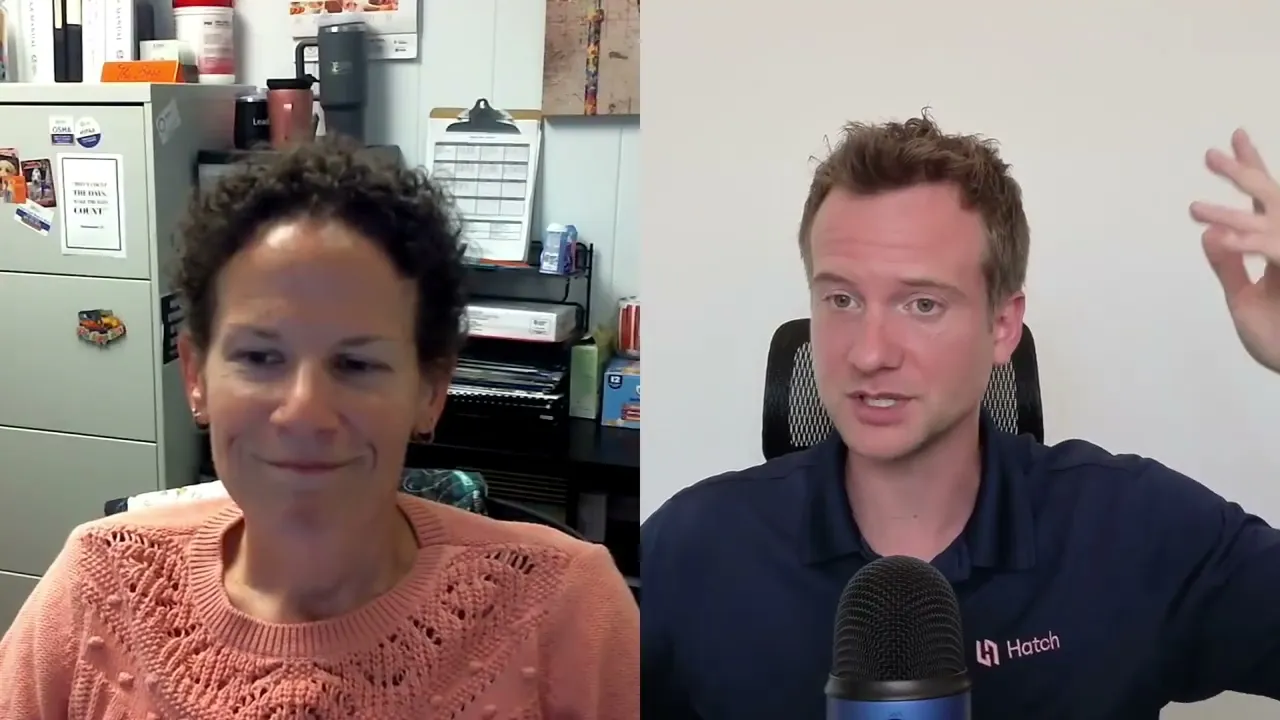
Alissa Ashley-High runs an independent orthopedic practice that has served the same Massachusetts community for over 50 years, with three surgeons and a staff she sits directly beside. She explains why growth and operational excellence cannot compete in a practice without unlimited resources, how an AAOE member benefit brought back an injection they had stopped offering, and how OAM NOW expanded access without adding a physician or an office hour.
LATEST · E-- · —
0:00 / 0:00
Your Staff Already Has the Solution. Ask Them.
Not Trying to Be the Biggest. Trying to Be the Best.
Top takeaways
1. Growth in a small independent practice is not scale, it is fit
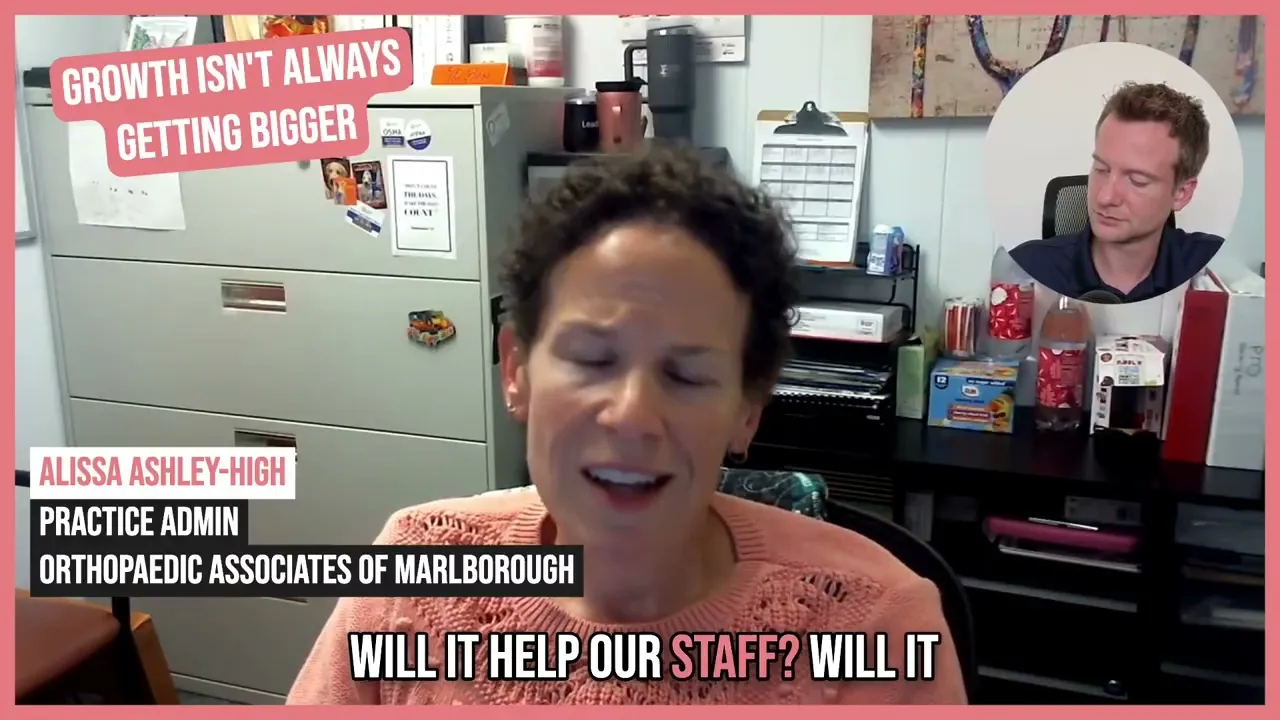
Alissa is direct that growth means something very different for a small independent practice than it does for a large health system. She is not trying to become the biggest. She is trying to become the best for her patients and her community, and every investment has to support both the mission and financial sustainability.
Three questions decide it: is this going to improve patient experience, will it help our staff, and will it strengthen the practice five years from now.
Her definition of operational excellence is worth borrowing. It is not about perfection, it is about building reliable systems so physicians can focus on patient care while staff have the tools they need. And in a small practice, growth and operational excellence cannot compete — they have to support each other, because there are no unlimited resources and every decision truly does matter.
2. Sitting next to the core is the operational feedback loop
The practice runs three surgeons, four physicians total and one mid-level, with roughly four medical assistants and two administrative assistants. Alissa's office sits directly beside what they call the core — the opening where the work happens.
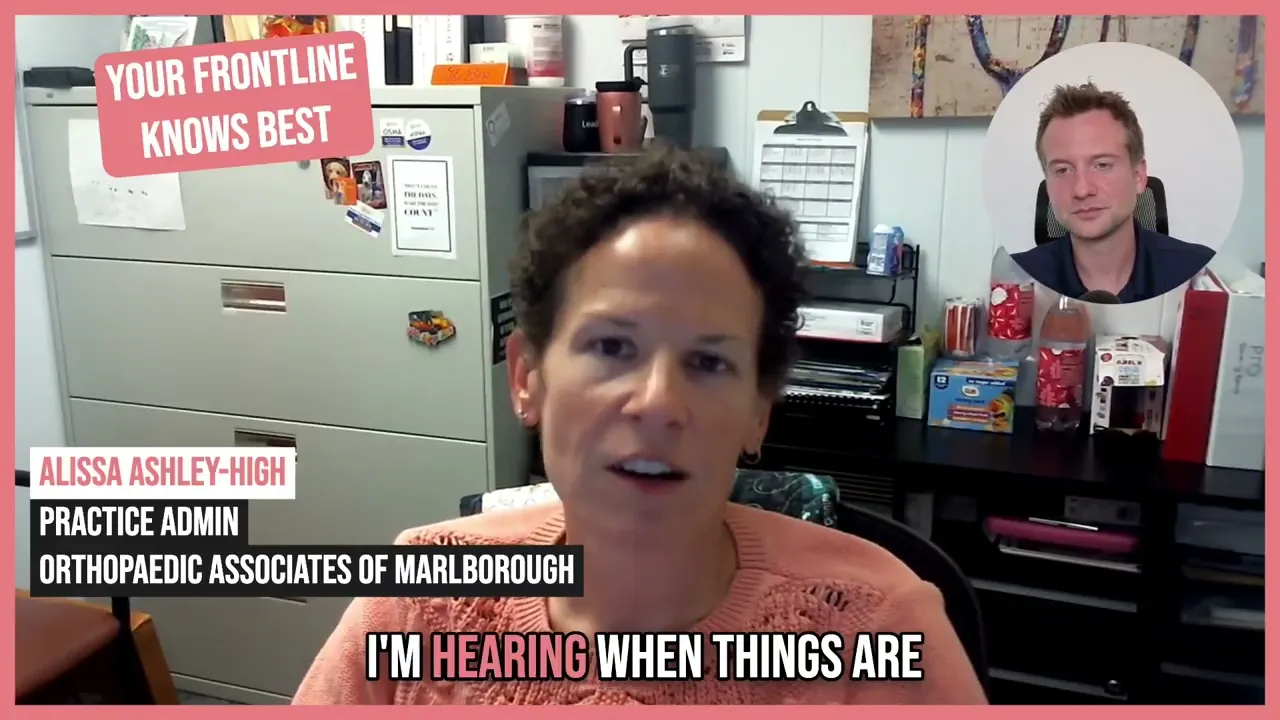
That seat is the system. She talks to her staff every day throughout the day, so she hears when things are going well, when they are not, and when something needs to be tweaked, and she can get her hands dirty immediately.
Her reasoning: the frontline staff often have the best solutions and may not even realize it. So she asks two questions in ordinary conversation — what would make this easier for you, and what are patients asking for that we do not offer. From there she researches, brings it to the surgeons off the cuff every other day or so, then presents a full proposal with the ROI at the formal board meeting.
3. The injection that came off the shelf, and what brought it back
Patients arrive with joint pain, and cortisone is short-term. Hyaluronic acids and viscosupplements do more, but they carry a high price tag and insurance either will not cover them or reimburses poorly.
The real cost was staff time. In a small practice, one person might spend an hour and a half chasing a single approval — hours taken from something else. Then the injection would be given, the insurance would deny it, and the practice would lose money on it. So they stopped, and referred patients out to pain management.
Patients pushed back: I am coming to see you, I have been getting this for years, why can't you do this? Alissa's answer was to leverage a resource she already had. AAOE's member benefits include peer-reviewed companies, and one offered an injection at a discount through the AAOE relationship, came in and did all the training, and provided a tool that got the authorization done. One product, streamlined, and it works.
Her framing is the part that matters: it was not about generating revenue. It was about keeping care local instead of sending patients elsewhere.
4. OAM NOW: expanding access without adding physicians or office hours
Marlborough sits in the center of Massachusetts, within an hour of several states and in the shadow of Boston. The competitive problem is a stigma — why go to Marlborough when I can go to Boston and get the best care. Alissa's answer is that most of her surgeons trained in Boston, and they brought that knowledge back to the community without parking fees or hidden facility fees.
The access problem was harder. Adding physicians or adding office hours was simply not realistic for the practice. So this past year she launched OAM NOW, a virtual orthopedic urgent care partnership. The partner provides immediate orthopedic guidance 24 hours a day, seven days a week, triages the patient, and sends the practice an alert so they can schedule right away.
And being small turns into the advantage at exactly that moment. Where a large Boston hospital may have month-long waiting lists, her doctors will double and triple book, work through lunch, open early and stay late — so access improves without overwhelming staff or sacrificing quality of care.
5. Fifty years of word of mouth, and the move into reviews
The practice has been in the same community for over 50 years and has seen generations. The doctors cast babies with club feet, then treated those patients' children, and are now doing hip replacements on the original patients. That history made marketing unnecessary for a long time.
Changing it has been Alissa's focus this past year. Some of it is social media on Facebook and Instagram. Some of it is that her providers live in the community they serve and are visible in it — one plays baseball and skis, another is a triathlete. Some of it is still grassroots: her surgeons knock on the doors of primary care offices and urgent cares and hand out their cell phone numbers, telling referrers they are reachable.
Targeted mailers are harder to justify as postage costs climb. So the bigger bet is reviews. Through another AAOE peer-reviewed company, patients get a survey request that feeds Healthgrades, Yelp, WebMD and Google. Patients have told her directly that they picked the practice because the reviews were good — and she wants the true picture, not a wall of five stars, which she notes reads as fake anyway.
6. Some problems cannot be solved inside your own walls
Alissa credits owners who invest in her development, sending her to conferences and programs on the theory that her bettering herself betters the practice. That has put her on AAOE's advocacy council and on Capitol Hill alongside AAOS, the surgeons' organization.
She went with one of her own surgeons to meet the staffers of senators and representatives, so both sides of the story were in the room at once — the administrator's view and the physician's. The subject was Medicare reimbursement and prior authorization requirements, and her point about them is structural: those things cannot be solved within the walls of the practice. Getting anything done requires numbers, resources and people, which means joining other administrators and going outside.
Bonus: independence does not mean outdated
The line Alissa keeps returning to is that independence does not mean outdated. Small practices are often the most personal health experience a patient can get — we know our patients, we know their families, we know their stories — and her job as administrator is to make sure the practice can keep doing that for another 50 years.
What is next is more customization: custom braces molded to the patient in the office through their DME suppliers, and cold therapy injections that freeze the nerve, which are used elsewhere in the country but not yet in their area. That second one solves a specific operational trap. Today an injection starts a 90-day clock during which the patient cannot have surgery — so a patient in enough pain to need the injection to get to surgery ends up blocked from it. Cold therapy could deliver the pain relief without stopping the clock, and may help after surgery too.
Questions this episode answers
Why would an orthopedic practice stop offering hyaluronic acid injections?
Because the economics stop working. Hyaluronic acids and viscosupplements carry a high price tag, insurance does not always cover them, and reimbursement is poor. At Orthopaedic Associates of Marlborough the larger cost was staff time: one person could spend an hour and a half chasing a single prior authorization, pulled off other work to do it. Then the injection would be given, the claim would be denied, and the practice would lose money on it. They stopped offering it and referred patients out to pain management until they found a way to make it viable again.
How can a small practice expand patient access without hiring more physicians?
Partner for it. Orthopaedic Associates of Marlborough launched OAM NOW, a virtual orthopedic urgent care partnership, precisely because adding physicians or adding office hours was not realistic for a four-physician practice. The partner provides immediate orthopedic guidance 24 hours a day, seven days a week, triages the patient, and sends the practice an alert so the patient can be scheduled right away. Being small then becomes the advantage: rather than quoting a month-long wait, the practice's physicians will double and triple book, work through lunch, open early and stay late.
What questions should a practice ask before making an investment?
Three, in Alissa Ashley-High's framing: will this improve the patient experience, will it help our staff, and will it strengthen the practice five years from now. Every investment also has to support both the mission and financial sustainability. Her underlying point is that in a small independent practice growth and operational excellence cannot compete with each other, they have to support each other, because there are no unlimited resources to fall back on and every decision matters.
How does an independent practice compete with a nearby academic medical center?
By naming what it actually offers instead of competing on reputation. Orthopaedic Associates of Marlborough sits in the center of Massachusetts, within reach of Boston, and patients carry a stigma that the best care is in the city. Alissa Ashley-High's counter is that most of her surgeons trained in Boston and brought that knowledge back to the community, delivered without parking fees or hidden facility fees. Add faster access than a hospital carrying month-long waiting lists, and the argument is not that the practice is bigger, it is that it is closer, cheaper to visit and quicker to get into.
What can a practice administrator do about prior authorization and Medicare reimbursement?
Go outside the practice, because those requirements cannot be solved within its walls. Alissa Ashley-High sits on the advocacy council of AAOE, the American Alliance of Orthopaedic Executives, and has gone to Capitol Hill alongside AAOS, the surgeons' organization. She brought one of her own surgeons so that both the administrator's view and the physician's were in front of senators' and representatives' staffers at the same time. Her point is that getting anything done requires numbers, resources and people, which means joining other administrators rather than working the problem alone.
Scale referral operations to drive growth and efficiency
Full transcript
Transcript
[00:00:00] And specialty healthcare growth is not optional, but scaling with operational excellence. That's the hard part. I'm Joseph Zboch. This is Scaling Specialty Growth.
[00:00:08] Joe: Thanks for listening. Today's guest is Alissa Ashley-High, practice administrator at Orthopaedic Associates of Marlborough in Massachusetts, a role she's held for over eight years. She's been a nurse since 2005, and that clinical background shapes how she runs the practice today, blending frontline care with the operational and revenue cycle side of the business.
Alissa is also a board member of AAOE, where she's active across membership, education, and advocacy councils, and helps lead their Women in Medical Practice Management conference. Alissa, welcome.
[00:00:37] Alissa: Thank you so much for having me, Joe.
[00:00:39] Joe: The show, Scaling Specialty Growth, that's the name of it, and I love to start conversations around the balance of operational excellence as well as hitting growth goals. And that formula, being an independent practice as well as being on a smaller side of a practice, that's really interesting.
Leading into this conversation, we were chatting just a little bit backstage, and you had some really interesting thoughts on your philosophy and how it's helped you inform how you approach this role over the last eight years. Can you share a little bit about that balance of ops and growth?
[00:01:13] Alissa: Absolutely. I think that growth means something very different for our small independent practices than it does for, let's say, a large healthcare system, because we're not trying to become the biggest. We're really trying to become the best for our patients and our community. Every investment has to support our mission and our financial sustainability.
So we have to ask ourselves when we're thinking of something, is this gonna improve patient experience? Will it help our staff? Will it strengthen the practice five years from now? And knowing that operational excellence isn't about perfection, it's about building reliable systems so our physicians can focus on patient care while our staff has the tools they need to be successful.
And one thing that I've learned in a small practice is that growth and operational excellence, they can't compete. They have to support each other because we don't have unlimited resources, so every decision truly does matter.
[00:02:08] Joe: Yeah. So I imagine, being in a smaller practice, the conversations are more fluid. They're not gonna be isolated, or at least I wouldn't think so. And so when you do have a conversation around ops, it's almost a conversation around growth as well.
So bring me into the room of some of these conversations. What does it really look like? Do you sit down with staff before taking anything to the physicians, or what does it look like in your role orchestrating across to make sure that folks are heard?
[00:02:43] Alissa: Sure. So my practice is very small. We have three surgeons, four total physicians and one mid-level. And I have generally four medical assistants and two administrative assistants, and I literally sit next to them. So I talk to my staff every single day throughout the day. My office is literally right next to the... We call it the core, the opening.
So I'm hearing these conversations. I'm hearing when things are going well, when things aren't going right, if something needs to be tweaked. So I can kinda jump right in and get my hands dirty, I guess you'd say. And just talk to people, have normal everyday conversations, 'cause I find that the frontline staff often have some of the best solutions, and they may not even realize it.
It's just having that conversation about what would make this easier for you? What are patients asking for that we don't offer them, or that we think that they're missing? And then I'm able to do some research. And then, again, because I only have a few surgeons, I talk to them every other day or so, depending on who's in the office, and I'm able to bring them up off the cuff.
But then we do have a formal board meeting where we'll sit down with our agenda, bring things up, and I can give them the full proposal of this is what we're thinking, this is the ROI of it. And that's kind of how things go.
[00:04:02] Joe: Yeah. It sounds like because you're so close to the frontline staff that there's a lot of things that bubble up, so almost like a bottoms-up in terms of, hey, I'm gathering all these data points across the practice. Is there an aspect of your role that's more top-down? Are you working with physician owners specifically, say, to chart, here are the growth goals, and then meeting in the middle?
[00:04:28] Alissa: I honestly think it depends on what the project is, and where I need to focus. The problem sometimes in our practice specifically is that we've been in this area of the community for over 50 years, and we know our patients. We know our staff. It's like family.
And so my surgeons, they love their patients. They are truly family to them. And so sometimes they'll forget the bottom line. They didn't get to become surgeons because they were businessmen. They wanted to be surgeons. And so sometimes I struggle with them to realize, look, we can't do everything pro bono. We can't always give away all the supplies or not charge or do things on off hours, because I see them getting burnt out.
So it really all depends on what that need is that we're looking for. Then other times it's saying, you know what, you've been so rigid maybe doing this for so many years. This is the newest advancement. We have to move on, move up, change it. I know it's working, but if we're not improving, we're not gonna be competitive with the practice down the street. So how do we balance those two things?
[00:05:39] Joe: Yeah. I think that's a really good transition to my next question. 50 years in the community, you really know your patients. We were talking earlier about high-cost injectables where the margin there is thin already and a little bit risky. So without giving too much away, can you walk me through, hey, here's a service that we offer that our patients really find valuable, but you took it off the metaphorical shelf for a little bit. Can you walk me through that scenario and where you are today?
[00:06:11] Alissa: Yeah. So people come in with joint pain. Their knees hurt, they want an injection. And sometimes just a cortisone injection isn't gonna cut it 'cause that's very short-term, or we need something that's gonna add a little bit more oomph to that and help the body really bring some things in there.
There's hyaluronic acids and viscosupplements and things like that. But those things come at a very high price tag and insurance doesn't always cover them, or the reimbursement is very poor. So one of the things is, again, small practice, I have one person that might be working for an hour and a half trying to get an approval for this patient, and so I'm taking man-hours and things away from something else.
So then we would give the patient the injection and then it would come back and then the insurance would deny it, and then something would happen and we would lose $5 on the injection or something like that. So we stopped doing it, and we were referring our patients to pain management specialists to do that.
But our patients were like, I'm coming to see you. I've been getting this for years, why can't you do this? I don't understand. So this is where being a small practice, or even a large practice, you gotta leverage your resources. And I went back to AAOE, and one of our member benefits was we have peer-reviewed companies that offer our members great things, and one of them had an injection that if we used our relationship through AAOE, we would get a discount on, and they would come in, do all the training, provide a great service tool so we could get that authorized for our patients.
And, again, very streamlined. We offer one product, and it seems to be working. So we found that leveraging that relationship was able to bring that service back to us, and it wasn't about generating revenue. It was about keeping our care local for our patients instead of sending them elsewhere.
[00:08:02] Joe: I really like how that story brings in the resourcefulness piece and also the closeness that you have with the patients and really listening. Earlier you mentioned how the frontline staff basically sees all, and while they might not catch everything, you're able to filter through and keep a pulse on the patient experience.
And so that's an interesting way of looking at data, almost analytical data. Are there other data sources that you're paying attention to when you're making, if you wanna call it bets or taking swings, or, hey, here's an initiative we're interested in? What other forms of data might you be looking at, given that being resourceful is so important as a smaller practice?
[00:08:48] Alissa: Well, I use just the networking aspect of what are other practices doing? What is really working well? What isn't working well? We have monthly calls for our New England AAOE group, so I'm talking to several practices and hearing what their successes or failures are.
And then you have to be involved in social media. What are patients asking for? Reviews. We ask our patients to give us reviews. We have platforms. We will do surveys that way and, what are they looking for? And then patients will just reach out and say, do you have this product? Can I get this here? My loved one or so-and-so I know had this down in Florida, can I get this here?
And so we'll research it, and then again, I ask my colleagues, has anyone done this? Is this working? And what can we do? Can we bring it here and will this work?
[00:09:41] Joe: Yeah. Tell me a little bit about your approach to access as well as advocacy. Being around for 50 years, being smaller, wanting to stay independent, and while also knowing north, south, east, west, there's other options, there's big competitors. So do those two ideas interplay? Maybe let's start with the advocacy side of things.
[00:10:03] Alissa: Yeah, I think getting involved and knowing what's going on is super important. So I am very thankful that I have bosses that care about me as an individual and my development as a leader. And so they have been very generous in allowing me to go to conferences and getting more education and participating in programs, because they know that by me bettering myself, I'm bettering the practice.
And so I have been able to be part of the advocacy council with AAOE, go to Capitol Hill, and meet with a partner organization, AAOS, which is the surgeons for orthopedic surgeons, and come together and hear their side of the story. I was able to actually go to Capitol Hill with one of my surgeons to talk about his take, my take, and bring that together to the staffers for our senators and representatives.
And really talking about both aspects of the patient and the physician side of how Medicare reimbursement and prior authorization regulatory requirements really affect practice, because those things can't be solved within the walls of our practice. We have to go outside.
And you need a bigger avenue. And in order to get anything done these days, you have to have numbers behind it, and you have to have resources and people. And how do you do that? Well, sometimes it's just going out there and marching in the grass and really getting out there and knocking on doors and saying, hey, do you know this is a problem? And joining my other fellow administrators, we've been able to do that with certain things and really have an impact on that.
[00:11:46] Joe: Yeah. That's amazing. Take me to the access side of things. What are maybe some projects that you've worked on over the past year or so to expand access? I know accessibility is absolutely huge. With your location, there can be a little bit of a drive time as well. So just tell me, first of all, high level, how do you think about access and the patient experience? And then maybe we can dive into a specific project or two.
[00:12:09] Alissa: Yeah. So we're unique. We're in the center of Massachusetts, so we can be in multiple different states within an hour. And we have Boston, which is world-renowned for healthcare. So we're competing with just people having that stigma of, why do I wanna go to Marlborough when I can go to Boston and get the best care?
Well, most of my surgeons, they trained in Boston, so they have all the knowledge. But we're bringing it back to the community and doing it at an affordable level where we don't have parking fees and we don't have hidden facility fees and things like that.
But also that we're trying to share that our practice is a neighborhood practice. You are family. We know you, and getting that message out there. But because we're small, we have to do different things to really let people know who we are and where we are, and sometimes it's thinking outside of the box.
And so one of the projects that I'm proud of launching this past year was called OAM NOW. It's our virtual orthopedic urgent care partnership. Because we truly wanted to make access to orthopedic expertise easier for our patients to get, and we couldn't do it by adding more physicians or adding office hours. It's just not realistic for our practice.
So we partnered with another company that is able to provide immediate orthopedic guidance 24 hours a day, seven days a week. They can triage the patients for us, and then they send us an alert and then we can schedule that patient right away.
And then being small, I don't have the same constraints as some of the larger hospitals in Boston where they may have month-long waiting lists. Like, my doctors, they will double, triple book. They'll work through lunch. They'll open the practice up early. They'll stay late, and my staff is great, and they'll do it for them.
So we're able to improve that access without, again, overwhelming our staff or sacrificing the quality of care. It's one of the things that makes us sustainable as a small practice.
[00:14:10] Joe: Yeah. I can't stress enough, just personally, how as a patient I've valued that sort of approach. I have a four-year-old son now, and when he was maybe one or two, the pediatrician office that we worked with, they had an on-call line. And it's interesting. Since then, that practice has been acquired by a much larger one.
So listen to the juxtaposition here. Previously, hey, Remy, he seems to be breathing kind of fast. We're not sure. We're first-time parents. And so on the call, they ask a couple questions, and then just like that, it was able to transition into a FaceTime.
You're already smiling, right? Next kid post-merger, call the line. It's like an 800 or 866 number. Nurse practitioner, very knowledgeable, very helpful. Not sure, based on what you're telling me, it could be this. Three hours in the emergency room for mouth croup.
So there's real weight behind the neighborhood approach, the focus on the patient experience. It's true. And just because you're a smaller practice, it doesn't mean that you're locked into any sort of type of marketing. But there's a real truth behind how you've chosen to position your practice as the we know our patients, that community. You've made very tangible decisions about services based on what you're hearing from your community of patients and that neighborhood approach. So I think that's really cool that you offer a service like that.
[00:16:02] Alissa: Yeah, absolutely. 'Cause you hit some nails on the head there. And independence does not mean outdated. And if you really think about it, small practices are often the most personal health experience patients can receive. We know our patients, we know their families, we know their stories.
So my job as an administrator is to make sure that we can do that for another 50 years, because that's what we're here for.
[00:16:26] Joe: Yeah. One question about getting the word out before moving into looking forward. I'm just curious, what are the channels that you're using almost from a marketing standpoint to get the message out there? Obviously you have the website. Are you active on social? Do you have partnerships where you're showing up in YMCA lobbies or churches or other organizations? How does that marketing mix work?
[00:16:52] Alissa: You know, we're kind of new to the game of marketing. That's where we have been more old school because we've been here for 50 years, so we've literally seen generations. And we're general orthopedics, so we would see people, they would be born back 50 years ago, they'd have club feet. The doctors would cast the babies, and then now they have kids, and now we're seeing their kids. And now that they're older, now we're doing hip replacements on them, or their parents and things like that.
So we really relied on that. So the past year that's kind of been my big focus is how do we change that? How do we become more present? And that has been a little bit with social media marketing with Facebook and Instagram, and getting out there. But because we're local, my providers live in the community that they serve. They're playing sports. One's a baseball player, and he's out there and then he skis. Another one is a triathlete, so they're out there marketing themselves all the time.
But then it's still that grassroots effort of my surgeons go and they knock on doors of primary care offices and urgent cares. They give their cell phone number out and say, I am reachable if you need me. A lot of people don't like doing that, so I say I'm very lucky. I have these great surgeons that I work for that are still very approachable. And so people know them, and they're always, hey, I'm friends of so-and-so. They told me to call you. Yep, yep, we'll get you in.
And that's really what we're focusing on. Broader than that, sometimes we'll do a few marketing aspects of targeted marketing mailers and things like that. It's a little harder because you can spend a lot of money, and as we all know, the price of everything is going up, and so postage is just getting crazy, and is that really gonna do as much as possible?
And then we know that we're in this consumer market of reviews, and everybody looks at reviews, so we've really focused on getting our name out there for the review platforms, partnering again with another AAOE peer-reviewed company that will send out our patients just a request to do a survey, and then that survey will go to Healthgrades and Yelp and WebMD and just Google.
And so we're looking at that constantly of what's happening, and we want the true picture of really what's going on. And people have come to us and said, yeah, I picked you because your reviews were great. It really — people still look at that. I mean, who doesn't go on Amazon and look at a product, and if it has 30 reviews versus 15,000 reviews, okay, I'm gonna go to that 15,000 review hopefully, and as long as they're not all five stars, then I think it's fake. So read the good, the bad, and come up with a decision, but it does help.
[00:19:36] Joe: Yeah. You said earlier that independent doesn't mean outdated. You're spinning up, for lack of a better word, more modern marketing channels and testing things and really leaning into reviews. What else is next for your practice as you look forward and you make another smart and measured bet on keeping relevant, while again staying focused on the patients in your community?
[00:19:57] Alissa: Yeah, we're really working on, again, more like customization. So everyone can do kind of just out of the box bracing. We're working with our DME suppliers for nice custom braces that are molded to the patients that happen right there in the office.
And then, again, focusing on the injections, doing some cold therapy injections that we haven't really done yet, and a lot of people in our area aren't doing yet. It's throughout the country, but it's just not really in our area. So just really freezing that nerve, and it's been really beneficial for people prior to surgery. 'Cause right now if a patient gets an injection, that immediately stops the clock or starts the clock. They can't have surgery for 90 days.
So they needed that injection to get to the surgery because they're in so much pain, but now we can't do it. So we're gonna work with this program to get people pain relief, and then it'll hopefully help out post-surgery as well.
[00:20:51] Joe: Yeah. Just constantly expanding when smart and enriching where needed the services that you offer to patients in your community.
[00:21:00] Alissa: Absolutely. Yeah.
[00:21:01] Joe: Thank you so much for your time. I really appreciate it and enjoyed the conversation.
[00:21:05] Alissa: Thank you so much.
[00:21:06] Hey, it's Joe. Thanks for listening. If you like what you hear, share with the peer, and if you're looking to scale referral operations to drive growth and efficiency, visit hatchcare.com.